曼荼羅まんだら
mandara
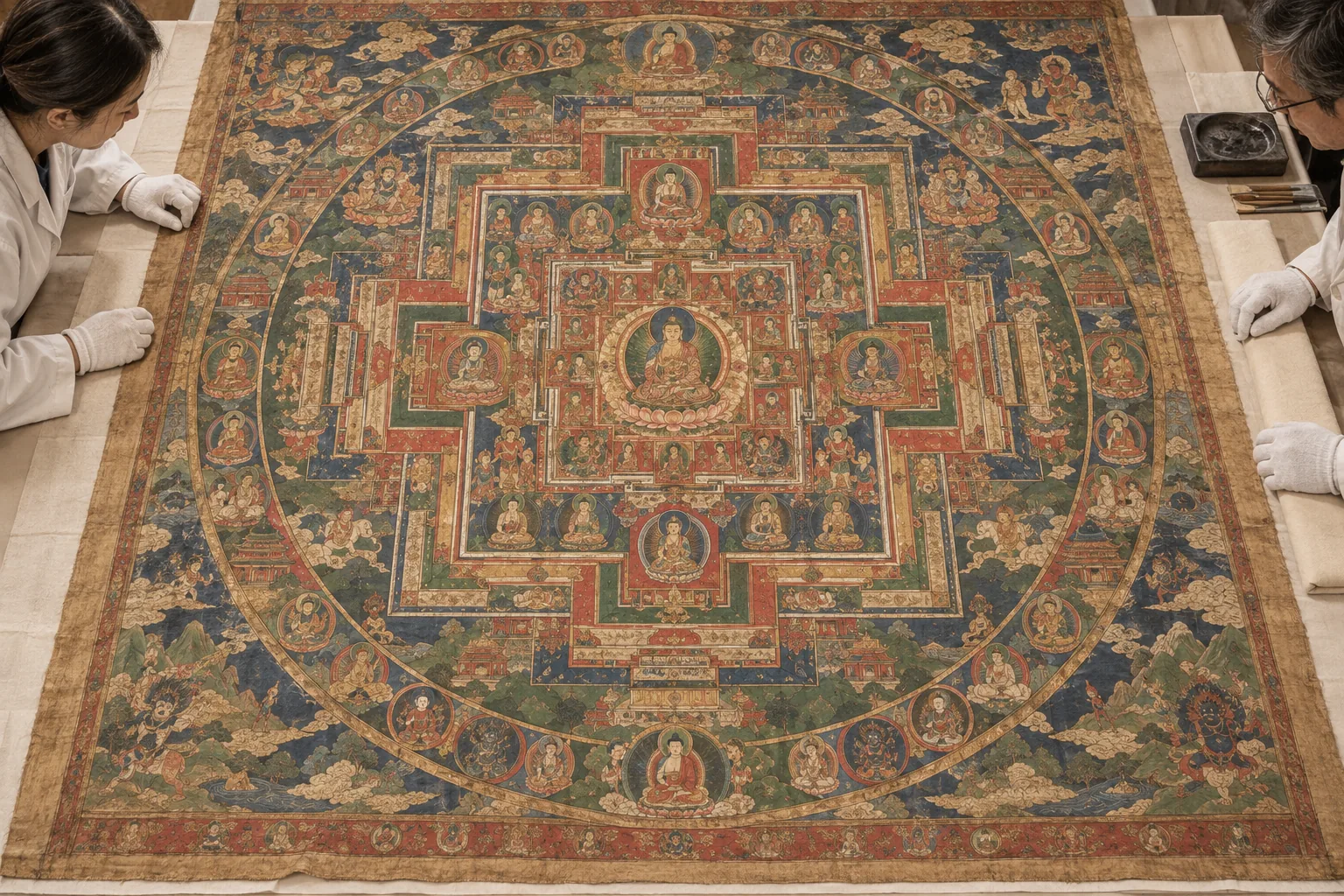
a diagram of the Buddhist universe used in esoteric ritual and meditation
仏の世界を図で表したもの。密教の修行と切り離せない。
一言で言うと
これだけ覚えれば最低限伝わる一文
Mandara, or a mandala, is a diagram of the Buddhist universe used in esoteric ritual and meditation, not mere decoration.
曼荼羅とは、仏の世界を図に表したもので、飾りではなく密教の儀式や瞑想に使うものです。
30秒で説明する
外国人に説明するときの標準サイズ
A mandala is a geometric diagram representing the Buddhist universe, most closely associated in Japan with Shingon Buddhism, the esoteric school brought back from China by the monk Kukai in the early 800s. The two most important are the Diamond Realm and Womb Realm mandalas, displayed together as a pair, each packed with rows of buddhas and deities arranged in a precise structure that a practitioner studies or visualizes during meditation and ritual. Unlike a decorative painting, a mandala is meant to be used: in one initiation rite, a blindfolded person drops a flower onto it to find the buddha they are linked to.
曼荼羅とは仏の世界を表す幾何学的な図で、日本では特に、9世紀初めに空海が唐から持ち帰った密教の宗派である真言宗と結びついています。もっとも重要なのは金剛界曼荼羅と胎蔵界曼荼羅の二つで、一対として並べて掲げられ、それぞれに整然とした構成で仏や諸尊が並びます。修行者はそれを見つめたり、瞑想や儀式の中で心に描いたりします。単なる装飾画とは違い、曼荼羅は使われることを前提としています。たとえば灌頂という儀式では、目隠しをした人が曼荼羅の上に花を投げ、落ちた先の仏と縁を結びます。
スピーチ・英作文
通訳案内士の二次口述・大学入試の自由英作文に
A mandala can look, at first glance, like an intricate decorative pattern, rows of small figures arranged in circles and squares, but within Shingon Buddhism it's closer to a diagram or a map than a painting. Shingon is Japan's main esoteric Buddhist school, brought from Tang China in the early 800s by the monk Kukai, later known as Kobo Daishi, and its central teaching relies on two mandalas displayed as a pair: the Diamond Realm, representing the unchanging wisdom of the Buddha, and the Womb Realm, representing the compassion that develops from it in the world.
Each is filled with precisely arranged buddhas and deities, and a trained priest studies their positions and relationships as part of ritual practice, sometimes visualizing the entire structure during meditation. This is why a mandala isn't really meant to be appreciated the way a landscape painting is; it functions more like sacred technical instruction, and fully explaining what any given figure or position means usually requires years of study within the tradition, which is part of why esoteric Buddhism is called exactly that, esoteric.
曼荼羅は一見すると、円や四角に並ぶ小さな像の精緻な装飾模様のように見えるかもしれませんが、真言宗の中では絵というより、図や地図に近いものです。真言宗は日本の主要な密教の宗派で、9世紀初めに空海、のちの弘法大師が唐から持ち帰りました。その中心の教えは、対になった二つの曼荼羅に基づいています。
仏の変わらない智慧を表す金剛界と、そこから世の中に展開する慈悲を表す胎蔵界です。それぞれに仏や諸尊が正確な配置で描き込まれており、修行を積んだ僧はその位置関係を儀式の実践の一部として学び、時には瞑想の中でその構造全体を心に思い描きます。
だからこそ曼荼羅は、風景画を鑑賞するように味わうためのものではありません。むしろ神聖な技術的な指示書のように機能し、ある像や配置が何を意味するかを完全に説明するには、たいていその伝統の中で何年もの修行が必要です。密教がまさに「密」(秘めた教え)と呼ばれる理由の一つがここにあります。
こう聞かれたら
外国人から実際にされる質問と、その答え方。
Is a mandala just a piece of religious art to look at?
曼荼羅はただ眺めるための宗教美術なのですか。
Not primarily. It's used in ritual and meditation by trained priests as something closer to a structured diagram or study tool, though many people outside the tradition do appreciate it visually as well.
主にはそうではありません。修行を積んだ僧が儀式や瞑想で使う、構造化された図や学習の道具に近いものです。ただ、その伝統の外の人が視覚的に鑑賞することもよくあります。
What's the difference between the two main mandalas?
二つの主な曼荼羅にはどんな違いがあるのですか。
The Diamond Realm mandala represents the unchanging wisdom of the Buddha, while the Womb Realm mandala represents the compassion that unfolds from that wisdom into the world; they're displayed together as a complementary pair.
金剛界曼荼羅は仏の変わらない智慧を表し、胎蔵界曼荼羅はその智慧から世の中へ広がる慈悲を表します。両者は補い合う一対として並べて掲げられます。
Can anyone learn to read what a mandala means?
曼荼羅の意味は誰でも読み解けるようになるのですか。
In theory yes, but in practice it takes formal training within the esoteric tradition, since the meaning of specific figures and their arrangement is traditionally transmitted from teacher to student rather than published for general study.
理論上は誰でも学べますが、実際には密教の伝統の中での正式な修行が必要です。特定の像やその配置の意味は、伝統的に師から弟子へと伝えられるもので、一般向けに公開されているものではないからです。
そのまま使えるフレーズ
- These two mandalas are usually displayed as a pair.この二つの曼荼羅は、ふつう一対で掲げられます。
- Kukai brought this teaching back from China.空海がこの教えを唐から持ち帰りました。
- Each figure has a precise position and meaning.それぞれの像に正確な位置と意味があります。
- This isn't just decoration — it's used in ritual.これは単なる装飾ではなく、儀式で使われます。
- Understanding it fully takes years of training.完全に理解するには何年もの修行が必要です。
説明に使う語句
- esoteric Buddhism密教
- Diamond Realm mandala金剛界曼荼羅
- Womb Realm mandala胎蔵界曼荼羅
- deity, buddha figure諸尊
- ritual儀式
動画で見る
YouTube より豆知識
曼荼羅は密教の中心的な図像で、日本では9世紀初めに空海が唐から伝えた真言宗と深く結びついている。対になる金剛界曼荼羅と胎蔵界曼荼羅がもっとも知られ、それぞれ仏の智慧と慈悲を表すとされる。京都の東寺には、現存する彩色の両界曼荼羅としては最古級とされる「伝真言院曼荼羅」が伝わり、国宝に指定されている。曼荼羅は観賞用の絵画ではなく、儀式や瞑想における修行の道具として用いられ、その意味を読み解くには専門的な修行が必要とされる。
