組踊くみおどり
kumiodori
Okinawan musical theater, created for Chinese envoys
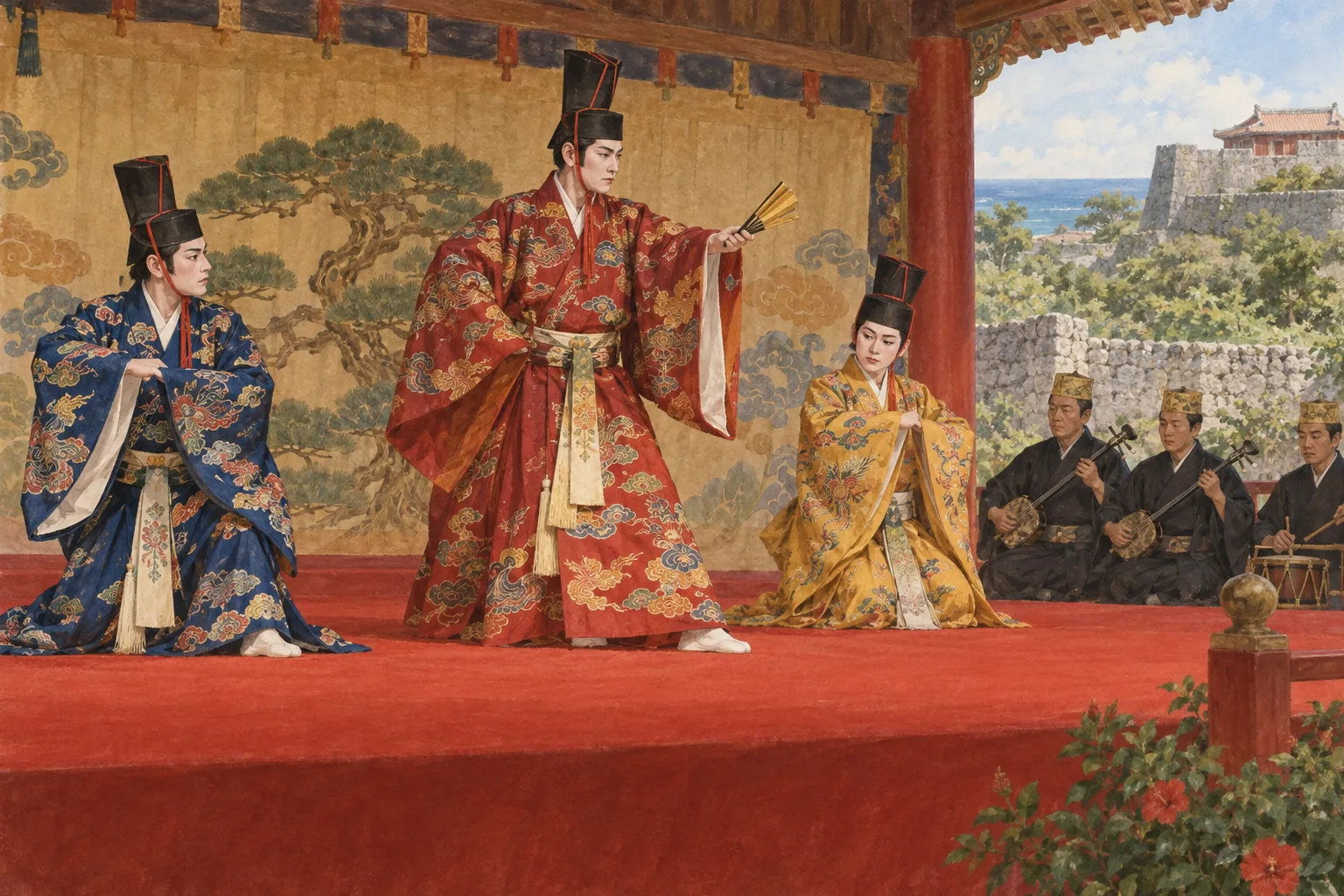
1719年、中国からの使節をもてなすために琉球で作られた舞台。言葉は琉球語。
一言で言うと
これだけ覚えれば最低限伝わる一文
Kumiodori, or Okinawan music theater, was created in 1719 for envoys from China and is performed in Ryukyuan.
組踊とは、1719年に中国からの使節をもてなすために琉球で作られた歌舞劇で、琉球の言葉で演じられるものです。
30秒で説明する
外国人に説明するときの標準サイズ
Kumiodori combines spoken lines, song and dance, and was devised in 1719 by a Ryukyuan court official to entertain envoys sent from China to install a king. It draws on Okinawan dance and song and on Japanese noh and kabuki, and is performed in the Ryukyuan language to the sanshin. It was designated an important intangible cultural property in 1972 and listed by UNESCO in 2010.
組踊は、せりふと歌と踊りを組み合わせた舞台で、1719年、国王を冊封するために中国から来た使節をもてなすため、琉球の役人が作りました。沖縄の踊りと歌に、日本の能や歌舞伎の型を取り入れています。言葉は琉球語、伴奏は三線です。1972年に重要無形文化財に指定され、2010年にユネスコの一覧に記載されました。
スピーチ・英作文
通訳案内士の二次口述・大学入試の自由英作文に
Kumiodori is worth knowing because it is evidence of something people often forget: that Okinawa was a separate kingdom with its own diplomacy. The Ryukyu Kingdom received envoys from China who came to formally install each new king, and entertaining them was a matter of state. In 1719, for one such visit, a court official named Tamagusuku Chokun created a new form of theater by combining Okinawan dance and song with what he had seen of noh and kabuki on visits to Japan.
The result has spoken lines delivered in a stylized cadence, songs accompanied by the sanshin, the Okinawan three-stringed instrument covered in snakeskin, and dance, and the language is classical Ryukyuan, which even most Okinawans today cannot follow without help, so performances are surtitled.
The plots are mostly about loyalty and revenge and filial duty, and the pace is slow in the way noh is slow. It lost its place as court art when the kingdom was abolished in the 1870s, survived through local performers, and is now supported by a national theater in Okinawa, designated domestically in 1972 and listed by UNESCO in 2010.
組踊を知っておく値打ちは、忘れられがちなことの証しだからです。沖縄はかつて、独自の外交を持つ別の王国でした。琉球王国は、新しい国王を正式に認めるために中国から来る使節を迎え、そのもてなしは国の仕事でした。1719年、その一度の来訪のために、玉城朝薫という役人が新しい舞台を作ります。
沖縄の踊りと歌に、日本で見た能や歌舞伎の型を組み合わせたのです。できあがったものには、独特の抑揚で語るせりふと、蛇皮を張った三本の弦の楽器、三線に合わせた歌と、踊りがあります。言葉は古い琉球語で、いまの沖縄の人にもそのままでは分かりません。上演では字幕が出ます。
筋の多くは忠義と仇討ちと親への務めで、進み方は能のようにゆっくりです。1870年代に王国が廃されると宮廷の芸としては絶え、地域の演者によって受け継がれました。いまは沖縄の国立劇場が支え、1972年に国内で指定され、2010年にユネスコの一覧に記載されています。
こう聞かれたら
外国人から実際にされる質問と、その答え方。
Can Japanese people understand it?
日本人は言葉が分かるのですか。
Not without help. It is performed in classical Ryukyuan, which differs greatly from Japanese, so theaters provide surtitles for the audience.
そのままでは分かりません。古い琉球語で演じられ、日本語とは大きく異なるため、劇場は字幕を出します。
Is it the same as Okinawan folk dance?
沖縄の民俗舞踊と同じものですか。
No. Folk dance and eisa are community forms. Kumiodori is court theater with written scripts, fixed roles and a known author, closer in status to noh.
違います。民俗の踊りやエイサーは地域のものです。組踊は台本と役と作者を持つ宮廷の演劇で、位置づけは能に近いものです。
Where can I see it?
どこで見られますか。
Mainly at the national theater in Urasoe, Okinawa, which programs it regularly, and occasionally on tour in mainland Japan.
主に沖縄県浦添市の国立劇場で、定期的に上演されています。本土で公演が行われることもあります。
誤解されやすい
MYTHKumiodori is a regional version of kabuki.
組踊は歌舞伎の地方版だ、と思われがちです。
FACTIt borrowed from noh and kabuki but was created in the Ryukyu Kingdom for its own diplomatic purposes, in its own language and music.
能や歌舞伎から取り入れてはいますが、琉球王国が自らの外交のために、自らの言葉と音楽で作ったものです。
そのまま使えるフレーズ
- It was created in 1719 for Chinese envoys.1719年、中国の使節のために作られました。
- It's performed in the Ryukyuan language.琉球の言葉で演じられます。
- The accompaniment is the sanshin.伴奏は三線です。
- Okinawa was a separate kingdom then.当時の沖縄は別の王国でした。
- There are surtitles, even for Japanese audiences.日本人の客にも字幕が出ます。
説明に使う語句
- Ryukyu Kingdom琉球王国
- envoy for investiture冊封使
- three-stringed instrument三線
- script台本
- surtitles字幕
動画で見る
YouTube より豆知識
組踊は1719年、尚敬王の冊封のために来琉した使節をもてなす宴で初演されたとされ、作者は踊奉行の玉城朝薫。代表作に「執心鐘入」「二童敵討」がある。1972年の沖縄復帰の年に国の重要無形文化財に指定され、2010年にユネスコ無形文化遺産の代表一覧表に記載された。2004年に国立劇場おきなわが浦添市に開場している。
