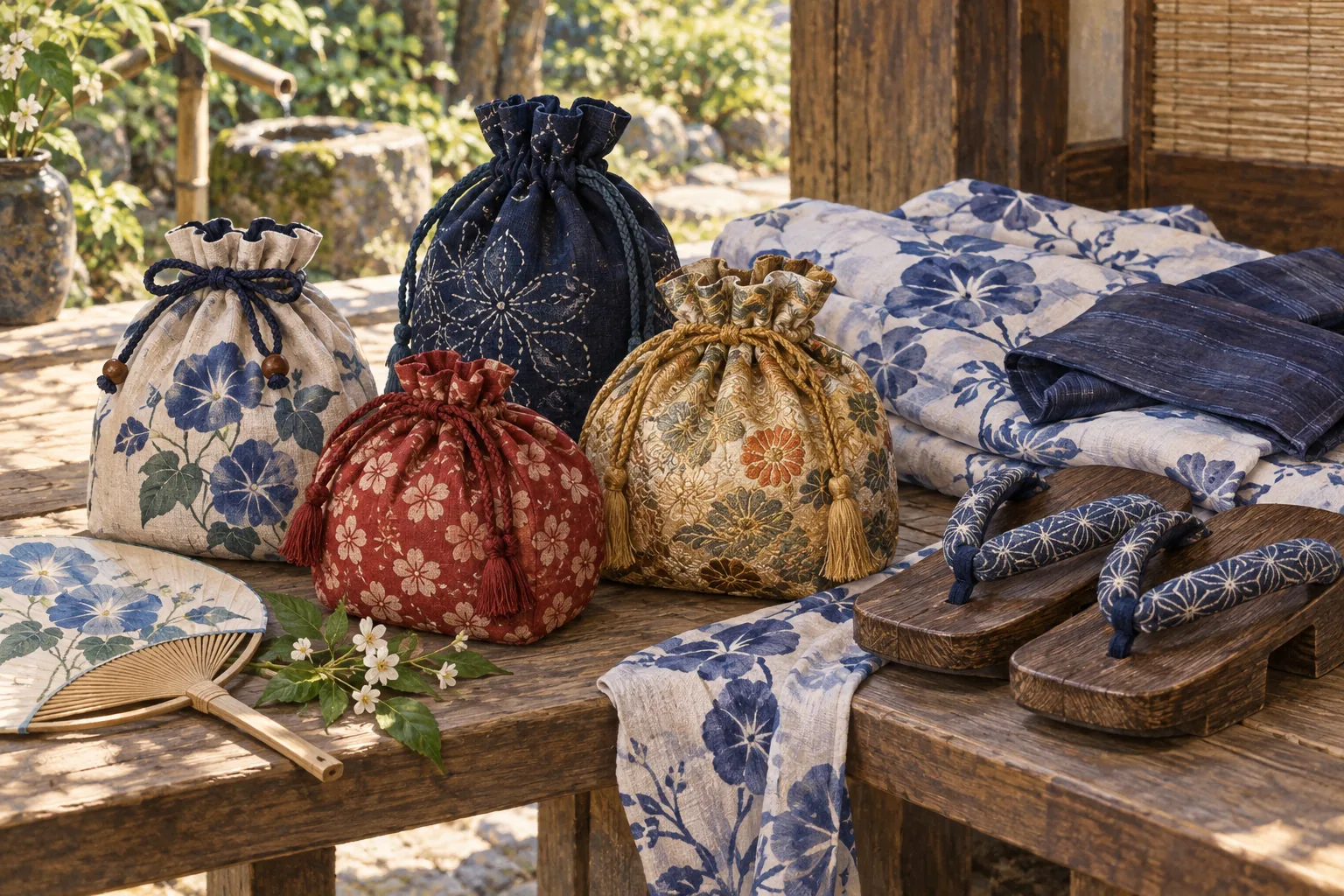
巾着きんちゃく
kinchaku
a small drawstring pouch used with a kimono, or as a kids' bag
着物にはポケットがない。だから巾着で持ち歩く。
一言で言うと
これだけ覚えれば最低限伝わる一文
A kinchaku is a small drawstring pouch, traditionally carried with a kimono because kimono have no pockets.
巾着は、ポケットのない着物を着るときに持ち歩く、ひもで口を閉じる小さな袋です。
30秒で説明する
外国人に説明するときの標準サイズ
A kinchaku is a small fabric pouch that closes with a drawstring, once carried with a kimono since kimono have no pockets. It holds small things like coins, a folding fan, or tissues. But the same shape lives on far beyond kimono culture: many Japanese preschools ask children to bring a kinchaku bag for their lunch box or indoor shoes. Many Japanese people meet the kinchaku years before they ever wear a kimono.
巾着は、ひもで口を閉じる小さな布の袋で、かつてはポケットのない着物を着るときに持ち歩きました。小銭や扇子、ティッシュなど、小さな物を入れるのに使います。ですが同じ形は着物文化の外でも広く使われていて、多くの日本の保育園・幼稚園では、お弁当箱や上履きを入れる巾着袋を子どもに持たせます。実は多くの日本人にとって、巾着との出会いは着物を着るよりずっと前、園児の頃です。
スピーチ・英作文
通訳案内士の二次口述・大学入試の自由英作文に
A kinchaku is a small drawstring pouch, closed by pulling two cords tight. It was originally a practical answer to a real problem: a kimono has no pockets, so anything you needed to carry — coins, a folding fan, tissues — had to go in a separate pouch, either held in the hand or tucked into the obi sash.
Today the kinchaku survives in an unexpected place: Japanese preschools and kindergartens. Parents are often asked to sew or buy small kinchaku bags for their child's lunch box, cup, or change of clothes, each one usually made from cheerful, colorful fabric. So while the word sounds traditional, most Japanese people's first kinchaku memory has nothing to do with a kimono at all.
巾着は、二本のひもを引いて口を閉じる小さな布袋です。もともとは実用的な工夫で、着物にはポケットがないため、小銭や扇子、ティッシュなど持ち歩きたい物は別の袋に入れて手に持つか、帯に挟む必要がありました。
今日、巾着は意外な場所で生き続けています。日本の保育園や幼稚園です。親は、お弁当箱やコップ、着替えを入れるための小さな巾着袋を、色とりどりの布で手作りしたり買ったりするよう頼まれることがよくあります。
言葉の響きは伝統的でも、多くの日本人にとって最初の巾着の記憶は、着物とはまったく関係のないところにあるのです。
こう聞かれたら
外国人から実際にされる質問と、その答え方。
Why don't kimono have pockets?
なぜ着物にはポケットがないのですか。
The flat, layered construction of a kimono doesn't leave room for a sewn-in pocket without spoiling the silhouette, and the wide sleeves and the obi sash already work as informal storage. A kinchaku or a small pouch tucked into the sleeve or obi filled the gap instead.
着物は平らな布を重ねて仕立てるため、ポケットを縫い付けるとシルエットが崩れてしまいます。また、広い袖や帯そのものがちょっとした収納代わりになるため、それで間に合わせてきました。巾着や、袖・帯に挟む小袋が、そのすき間を埋めてきたのです。
Is a kinchaku the same as a coin purse?
巾着は小銭入れと同じものですか。
It can be used that way, but a kinchaku is really just a shape — a drawstring pouch — not a fixed size or purpose. They range from tiny coin-sized ones to bags large enough for a lunch box or a change of clothes.
そのように使われることもありますが、巾着は本来「ひもで口を閉じる袋」という形を指すだけで、大きさや用途が決まっているわけではありません。小銭が入る程度の小さなものから、お弁当箱や着替えが入る大きなものまであります。
Can I buy one as a souvenir?
お土産として買うことはできますか。
Yes, kinchaku made from traditional fabrics like chirimen crepe are a common, inexpensive souvenir, and they're genuinely useful as a small bag for a phone or cosmetics, not just decorative.
はい、ちりめんなどの伝統的な生地で作られた巾着は、手頃な値段のお土産としてよく売られています。飾りとしてだけでなく、スマートフォンや化粧品を入れる小さなバッグとして実用的に使えます。
そのまま使えるフレーズ
- This kinchaku is handmade from leftover kimono fabric.この巾着は着物の余り布から手作りしたものです。
- Could you put your shoes in this kinchaku bag?この巾着袋に靴を入れていただけますか。
- I need to sew a kinchaku for my child's lunch box by Friday.金曜日までに子どものお弁当箱用の巾着を縫わないといけません。
- A chirimen kinchaku makes a nice, light souvenir.ちりめんの巾着は、軽くて良いお土産になります。
- Just pull the cords to close it.ひもを引っ張れば閉まります。
説明に使う語句
- drawstring巾着のひも
- crepe fabricちりめん
- sewing kit裁縫道具
- indoor shoes上履き
- souvenirお土産
動画で見る
YouTube より豆知識
江戸時代の巾着は、お金や薬などの小物を入れる実用品で、帯から提げて持ち歩くこともあった。現代では保育園・幼稚園の通園グッズとして定着し、入園前に親が布を選んでミシンで縫うのが恒例行事になっている地域もある。既製品も多いものの、手作りの巾着を子どもに持たせる文化は今も根強く残っている。いつも誰かにくっついて離れない人を「腰巾着」と呼ぶのは、腰に提げた巾着のように離れないことからである。
