外国人お断りがいこくじんおことわり
gaikokujin okotowari
why some businesses refuse foreign customers, and what the law does and does not say
日本には人種差別を包括的に禁じる法律がなく、裁判所は民法で救済してきた。
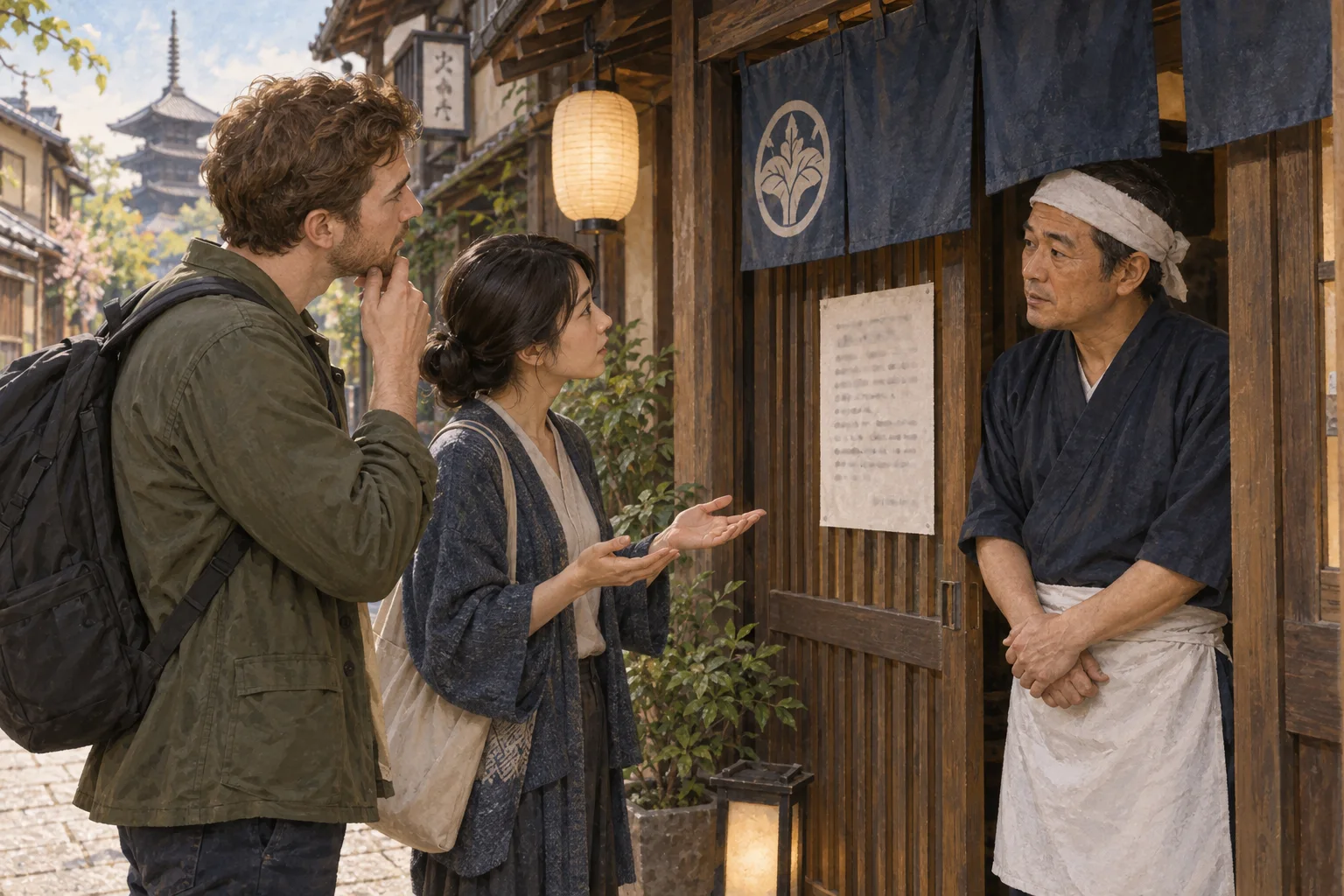
一言で言うと
これだけ覚えれば最低限伝わる一文
A few businesses in Japan refuse foreign customers, and there is no general law banning racial discrimination.
日本には外国人の客を断る店がわずかにあり、人種差別そのものを禁じる一般法はありません。
30秒で説明する
外国人に説明するときの標準サイズ
Signs reading Japanese only are rare but real, mainly at some bars, bathhouses and rental agencies. Japan has no comprehensive law prohibiting racial discrimination, so cases are brought under the civil code as unlawful acts. In a 2002 case a court ordered a bathhouse in Otaru to pay damages for refusing foreign customers, while dismissing the claim against the city.
「Japanese only」の掲示はまれですが実在し、主に一部の飲食店、浴場、不動産の仲介です。日本には人種差別を包括的に禁じる法律がないため、訴訟は民法の不法行為として争われます。2002年には、小樽の浴場が外国人の入浴を断ったことについて、裁判所が損害賠償を命じました。市に対する請求は認められませんでした。
スピーチ・英作文
通訳案内士の二次口述・大学入試の自由英作文に
This is uncomfortable but worth being straight about. Signs saying Japanese only exist in Japan. They are not common, and you can travel for weeks without seeing one, but they turn up at some bars in nightlife districts, at a few bathhouses, and most often in housing, where agents say the owner will not rent to foreigners.
The legal position is the part people find surprising. Japan joined the international convention against racial discrimination in 1995 but has never passed a general law banning discrimination, so there is no statute to point to. Courts have instead used the civil code.
In 2002 a district court in Hokkaido ordered a bathhouse in Otaru to pay damages to three men it had turned away, ruling that refusal on the basis of appearance was racial discrimination and beyond what society can accept. That ruling is the standard reference, and it also shows the limit: a lawsuit after the fact, not a rule that stops it happening.
居心地の悪い話ですが、率直に言う価値があります。「Japanese only」の掲示は日本に存在します。多くはありませんし、何週間旅をしても見ないこともありますが、繁華街の一部の飲食店、いくつかの浴場、そしてもっとも多いのは住まいです。
不動産の仲介で「大家が外国人には貸さない」と言われる形です。意外に思われるのは、法的な位置づけのほうです。日本は1995年に人種差別撤廃条約に加入しましたが、差別を一般的に禁じる法律は作っていません。指し示せる条文がないのです。そこで裁判所は民法を使ってきました。
2002年、北海道の地方裁判所は、小樽の浴場が三人の入浴を断った件について損害賠償を命じ、外見を理由とする拒否は人種差別であり社会的に許される限度を超えると判断しました。この判決が基準として引かれます。同時に限界も示しています。起きたあとの訴訟であって、起きないようにする規則ではありません。
こう聞かれたら
外国人から実際にされる質問と、その答え方。
Will this happen to me as a visitor?
旅行者として、こういう目に遭いますか。
Probably not. Most refusals happen in housing and in a small number of nightlife venues. Shops, restaurants, hotels and trains you will use as a tourist are almost never an issue.
おそらく遭いません。断られるのは主に住まいと、夜の店のごく一部です。旅行で使う店、飲食店、宿、鉄道でまず問題になりません。
Why do some places do it?
どうしてそういう店があるのですか。
The reasons given are usually language, trouble with rules such as tattoos or noise, and past bad experiences. Whatever the reason, a blanket refusal based on nationality or appearance is what the courts have found unlawful.
挙げられる理由は、言葉、入れ墨や騒音といった決まりをめぐる摩擦、過去の嫌な経験です。理由が何であれ、国籍や外見で一律に断ることを、裁判所は違法だと判断してきました。
Is anything being done about it?
何か対策はされているのですか。
A 2016 law addresses hate speech against people from outside Japan, but it has no penalties and does not cover refusal of service, though some local governments have their own ordinances. The government has said existing laws such as the civil code are adequate, while United Nations committees and civil groups call for a national anti-discrimination law.
2016年に、日本の外から来た人に対するヘイトスピーチに関する法律ができましたが、罰則はなく、入店拒否は対象外です。独自の条例を持つ自治体もあります。政府は民法など既存の法律で対応できるという立場で、国連の委員会や市民団体は国の差別禁止法を求めています。
誤解されやすい
MYTHDiscrimination is illegal in Japan, so a Japanese only sign must be against the law.
日本でも差別は違法なのだから、「Japanese only」の掲示は法律違反のはずだ、と思われがちです。
FACTThere is no general law banning racial discrimination. Courts have awarded damages under the civil code as an unlawful act, case by case, which is a remedy after the fact rather than a prohibition.
人種差別を一般的に禁じる法律はありません。裁判所は民法の不法行為として、一件ごとに損害賠償を認めてきました。これは禁止ではなく、起きたあとの救済です。
そのまま使えるフレーズ
- Such signs exist, but they are not common.そういう掲示は存在しますが、多くはありません。
- Japan has no general law banning discrimination.日本には差別を一般的に禁じる法律がありません。
- Courts have awarded damages under the civil code.裁判所は民法に基づいて賠償を認めてきました。
- Housing is where it happens most.いちばん多いのは住まいの場面です。
- The 2002 Otaru case is the standard reference.2002年の小樽の裁判が、基準としてよく引かれます。
説明に使う語句
- to refuse entry入店を断る
- racial discrimination人種差別
- unlawful act (civil)不法行為
- damages損害賠償
- local ordinance条例
動画で見る
YouTube より豆知識
日本は1995年に人種差別撤廃条約に加入したが、差別を包括的に禁じる国内法は制定していない。平成14年(2002年)11月11日、札幌地方裁判所は小樽市の浴場が外国人の入浴を断った件について、人種差別にあたる不法行為として300万円の賠償を命じた。原告3名に各100万円である。同時に、小樽市の責任は認めなかった。平成28年(2016年)にはヘイトスピーチ解消法が成立したが、理念法であり罰則はない。住宅については、国土交通省が外国人の入居を拒まない賃貸住宅の登録制度を設けている。
