2026年11月24日(火)(バックナンバー)
今日の日本文化
和食と鰹節と、虹が隠れる日
今日11月24日は「和食の日」で、同じ語呂合わせ好きの「鰹節の日」でもあります。暦の上では、七十二候の「虹蔵不見(にじかくれてみえず)」の時期にあたります。だしの香りが恋しくなる季節に、和食を英語で説明する練習をしてみませんか。
今日は何の日
-
和食の日Washoku Day
November 24th is Washoku Day, set by a group that works to protect Japanese food culture. The date is a pun: 11-24 can be read as "ii nihonshoku," or "good Japanese food." It's meant to remind people why washoku, which was added to UNESCO's intangible heritage list in 2013, is worth passing on. The whole month of November is called Washoku Month.
11月24日は「和食の日」で、和食文化を守る活動をしている団体が定めました。日付は語呂合わせで、11・24を「いい・に・ほんしょく」と読みます。2013年にユネスコ無形文化遺産に登録された和食を、次の世代に伝える大切さを考える日とされています。11月全体は「和食月間」です。
辞典でくわしく › -
鰹節の日Katsuobushi Day
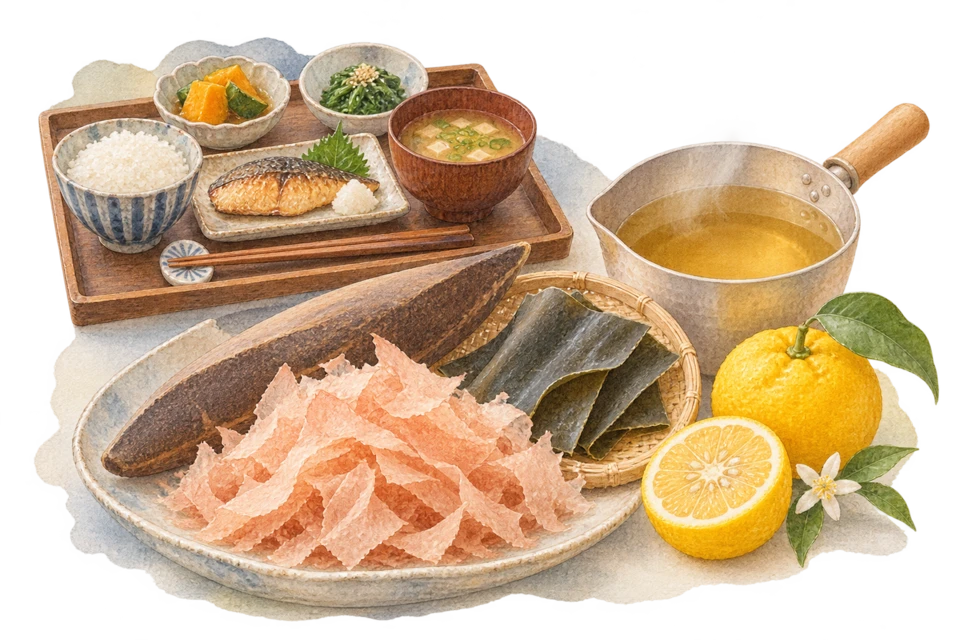
It's also Katsuobushi Day, because 11-24 can be read as "ii fushi," or "good fushi," and fushi is short for katsuobushi. Katsuobushi is skipjack tuna that has been simmered, smoked and dried until it's rock hard. You shave it into thin flakes and use it to make dashi, the soup stock behind miso soup and noodle broth.
11・24を「いい・ふし」と読めることから、「鰹節の日」でもあります。「ふし」は鰹節のことです。鰹節は、カツオを煮て、いぶして、石のように硬くなるまで乾かしたものです。薄く削って、みそ汁や麺つゆのもとになるだしを取るのに使います。
辞典でくわしく › -
七十二候「虹蔵不見」Rainbows Hide Away
From about November 22nd to 26th, the old calendar's 72 micro-seasons call this time "rainbows hide away." As the air gets colder and drier, rainbows become rare. It's the partner of a spring micro-season called "rainbows first appear." These poetic names come from an old calendar that Japan adapted from China.
11月22日ごろから26日ごろまでは、七十二候で「虹蔵不見」と呼ばれる時期です。空気が冷たく乾いてくると、虹を見ることが少なくなります。春の「虹始見(にじはじめてあらわる)」と対になる候です。こうした詩のような名前は、中国から伝わった暦を日本に合わせて改めたものに由来します。
今日の三択クイズ
11月24日が「和食の日」なのは、なぜでしょう?
正解は語呂合わせです。和食文化国民会議が、11・24を「いい・に・ほんしょく(日本食)」と読んで定めました。ユネスコ無形文化遺産への登録は2013年12月で、日付は別です。同じ11月24日は「いい・ふし」で鰹節の日でもあり、語呂合わせの記念日は日本の暦の名物です。
外国人に聞かれたら
What exactly counts as washoku?
和食って、どこまでが和食なの?
There's no strict line. When UNESCO listed it, washoku was described less as a list of dishes and more as a food culture: using seasonal ingredients, balanced meals like rice with soup and side dishes, and eating together on special days like New Year. So sushi and tempura are washoku, but so is a simple home meal of rice, miso soup and grilled fish. Dishes like curry rice or ramen are usually called Japanese-style rather than washoku.
はっきりした線はありません。ユネスコに登録されたとき、和食は料理の一覧というより食文化として説明されました。季節の食材を使うこと、ごはんに汁物とおかずという栄養のバランスのよい食事、正月のような特別な日にみんなで食べることなどです。ですから、すしや天ぷらも和食ですが、ごはん・みそ汁・焼き魚という家庭の食事も和食です。カレーライスやラーメンは、ふつうは和食というより「日本風の料理」と呼ばれます。
今日のひとこと英語
Dashi is the base of almost every Japanese dish.
だしは、ほとんどすべての和食の基本です。
「だし」を soup と訳すと、完成したスープのことだと思われます。料理のもとになる液体なので、stock や broth と言うか、dashi, or soup stock のように言い換えを添えると伝わります。
今日の一文
Today is both Washoku Day and Katsuobushi Day in Japan, thanks to puns on the date. If you want to understand Japanese food, start with dashi, the stock made from dried bonito flakes and kelp.
今日は日付の語呂合わせで、和食の日でもあり、鰹節の日でもあります。和食を知りたいなら、まずは鰹節と昆布で取るだしから始めるのがおすすめです。
今日の読みもの
今日に関係する項目
- 食べもの必修 和食washokutraditional Japanese cuisine ユネスコ無形文化遺産に登録されたのは「料理」ではなく「食の習わし」だった。
- 食べもの必修 鰹節katsuobushidried, smoked and fermented bonito, shaved into flakes for stock 世界一硬い食品と言われる。魚を燻し、干し、カビをつけて作る。
- 食べもの標準 出汁dashithe stock at the base of Japanese cooking うま味という言葉は、ここから世界に出ていった。しかも作るのに10分もかからない。
- 食べもの必修 一汁三菜ichiju sansaione soup and three dishes, the standard shape of a Japanese meal 主食は数に入らない。ご飯と汁のほかに、おかずが三つという意味。
- 食べもの必修 昆布konbuthe kelp that gives Japanese stock its savory depth 「うま味」は、この昆布のだしから見つかった。1908年のことである。
- 年中行事標準 冬至とゆず湯toji to yuzuyuthe winter solstice and citrus baths 一年でいちばん夜が長い日に、柚子を浮かべた風呂に入る。