Tuesday, November 24 (archive)
Today in Japan
What day is it?
-
Washoku Day和食の日
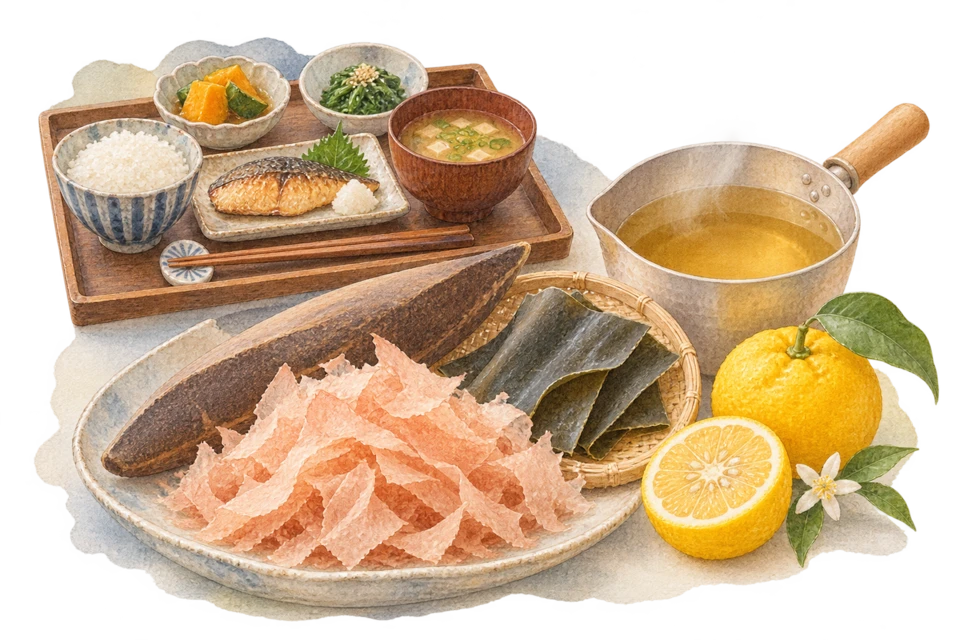
November 24th is Washoku Day, set by a group that works to protect Japanese food culture. The date is a pun: 11-24 can be read as "ii nihonshoku," or "good Japanese food." It's meant to remind people why washoku, which was added to UNESCO's intangible heritage list in 2013, is worth passing on. The whole month of November is called Washoku Month.
Read more › -
Katsuobushi Day鰹節の日
It's also Katsuobushi Day, because 11-24 can be read as "ii fushi," or "good fushi," and fushi is short for katsuobushi. Katsuobushi is skipjack tuna that has been simmered, smoked and dried until it's rock hard. You shave it into thin flakes and use it to make dashi, the soup stock behind miso soup and noodle broth.
Read more › -
Rainbows Hide Away七十二候「虹蔵不見」
From about November 22nd to 26th, the old calendar's 72 micro-seasons call this time "rainbows hide away." As the air gets colder and drier, rainbows become rare. It's the partner of a spring micro-season called "rainbows first appear." These poetic names come from an old calendar that Japan adapted from China.
If someone asks you
What exactly counts as washoku?
There's no strict line. When UNESCO listed it, washoku was described less as a list of dishes and more as a food culture: using seasonal ingredients, balanced meals like rice with soup and side dishes, and eating together on special days like New Year. So sushi and tempura are washoku, but so is a simple home meal of rice, miso soup and grilled fish. Dishes like curry rice or ramen are usually called Japanese-style rather than washoku.
Phrase of the day
Dashi is the base of almost every Japanese dish.
Sentence of the day
Today is both Washoku Day and Katsuobushi Day in Japan, thanks to puns on the date. If you want to understand Japanese food, start with dashi, the stock made from dried bonito flakes and kelp.
Related topics
- Food & DrinkEssential washoku和食traditional Japanese cuisine
- Food & DrinkEssential katsuobushi鰹節dried, smoked and fermented bonito, shaved into flakes for stock
- Food & DrinkStandard dashi出汁the stock at the base of Japanese cooking
- Food & DrinkEssential ichiju sansai一汁三菜one soup and three dishes, the standard shape of a Japanese meal
- Food & DrinkEssential konbu昆布the kelp that gives Japanese stock its savory depth
- Annual EventsStandard toji to yuzuyu冬至とゆず湯the winter solstice and citrus baths