washoku
traditional Japanese cuisine
和食(わしょく)
In one line
The shortest answer that works
Washoku is traditional Japanese cuisine, built around rice, soup and seasonal ingredients.
和食とは、ご飯と汁物と季節の食材を中心に組み立てられた、日本の伝統的な食のことです。
In 30 seconds
The standard explanation
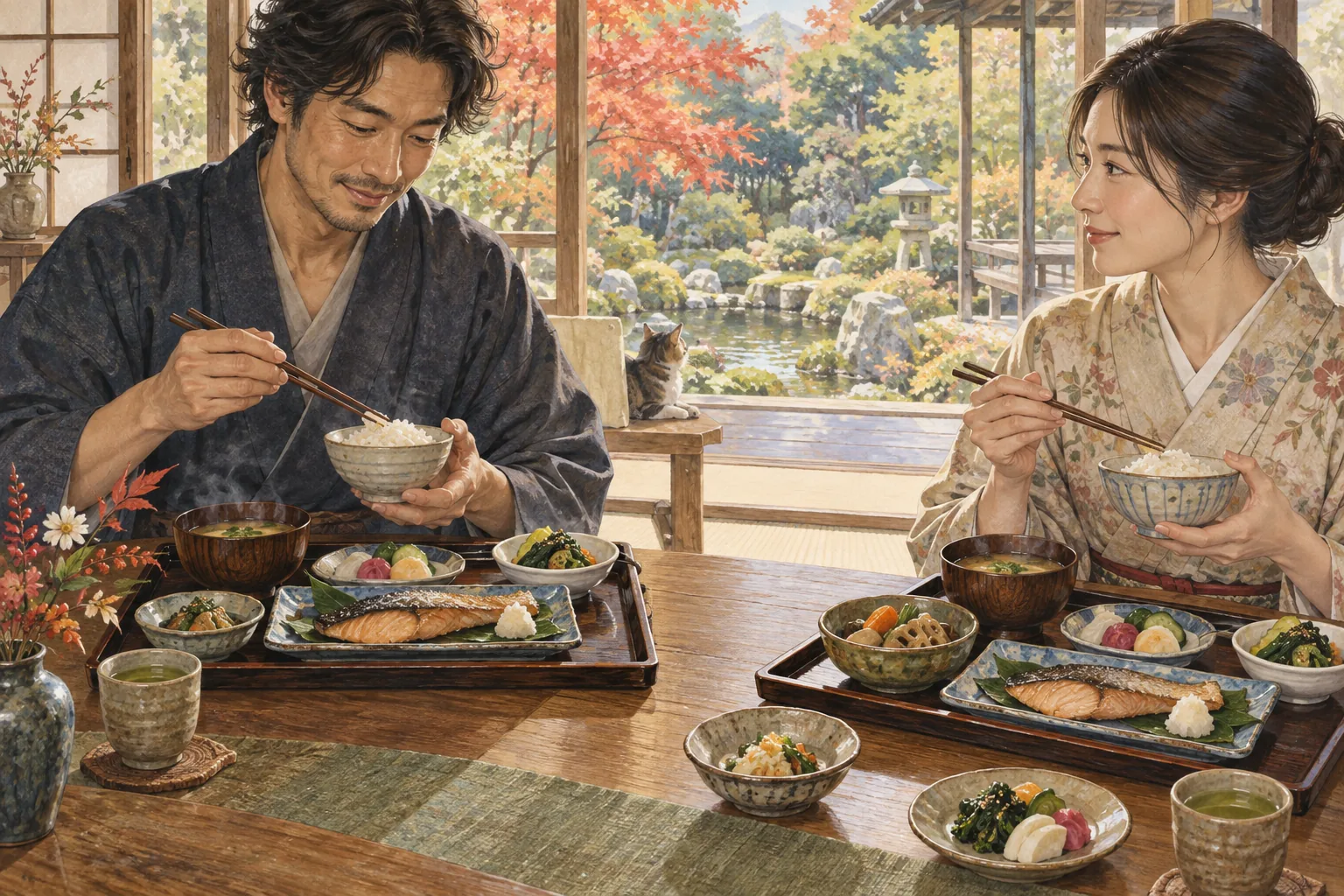
Washoku means Japanese food as a whole system rather than any single dish. The basic form is one soup and three dishes served with rice. Ingredients change with the season, seasoning is light so the ingredient still tastes of itself, and how food looks on the plate matters. In 2013 it was added to UNESCO's intangible cultural heritage list, as a set of customs rather than a list of recipes.
和食とは、特定の料理ではなく、食の体系全体を指します。基本の形は、ご飯に汁物一つとおかず三品の「一汁三菜」。食材は季節で変わり、味つけは素材の味が立つよう控えめで、盛りつけの見た目も重視されます。2013年にユネスコの無形文化遺産に登録されましたが、それはレシピの一覧ではなく、習わしの体系としてでした。
As a short speech
A full paragraph you can read aloud
Washoku is the word for traditional Japanese cuisine, and it describes a whole approach rather than a list of dishes. The standard shape of a meal is rice, one soup and three side dishes.
Seasoning is deliberately restrained, because the aim is for the ingredient to taste of itself rather than of the sauce. What is in season decides what is cooked, and the same dish will look different in spring and autumn. Presentation counts as part of the cooking, not decoration added afterwards.
In 2013 UNESCO added washoku to its list of intangible cultural heritage, and it is worth noticing what was registered: not recipes, but social practices. Eating with the seasons, sharing New Year food with family, respecting natural ingredients. That is a fair description of what the word actually means.
和食は日本の伝統的な食を指す言葉で、料理の一覧というより、ひとつの考え方全体を表します。食事の基本の形はご飯と汁物一つ、おかず三品です。味つけをあえて抑えるのは、たれの味ではなく素材そのものの味を立たせるためです。
何が旬かが献立を決め、同じ料理でも春と秋では見た目が違います。盛りつけは、あとから足す飾りではなく料理の一部として数えられます。2013年、ユネスコは和食を無形文化遺産に登録しましたが、何が登録されたかに注目する価値があります。
レシピではなく、社会的な習わしです。季節とともに食べること、正月の食を家族で分かち合うこと、自然の食材を尊ぶこと。それがこの言葉の実際の意味をよく表しています。
Questions people actually ask
And how to answer them.
Is Japanese food healthy?
Parts of it are. It is low in fat and high in fish and vegetables. But it is also high in salt, from soy sauce, miso and pickles, and Japan has one of the higher salt intakes among wealthy countries.
一部はそうです。脂質が少なく、魚と野菜が多い。一方で醤油・味噌・漬物から来る塩分は多く、日本の食塩摂取量は先進国のなかでも高いほうです。
So is ramen or curry washoku?
Strictly, no. Both came from outside and were adapted here, and they are usually grouped as yoshoku or chuka. Japanese people eat them constantly, so "washoku" describes a tradition, not what is actually on the table tonight.
厳密には違います。どちらも外から来て日本で作り変えられたもので、洋食や中華に分類されます。日本人は日常的に食べているので、「和食」は伝統を指す語であって、今夜の食卓の中身ではありません。
What is kaiseki?
The formal end of washoku: a course of small seasonal dishes served in a set order. One kind grew out of the meal served at a tea gathering; the banquet-style courses at inns and high-end restaurants are written with different characters but pronounced the same.
和食の最も改まった形で、季節の小皿を決まった順に出すコース料理です。茶事で出す食事から発展した「懐石」と、旅館や料亭で出る宴席向けの「会席」があり、字は違いますが読みは同じです。
Phrases you can use
- The standard meal is rice, soup and three dishes.基本は一汁三菜です。
- The seasoning is light so you can taste the ingredient.素材の味が分かるよう、味つけは控えめです。
- What's in season decides the menu.旬のものが献立を決めます。
- It was listed by UNESCO in 2013.2013年にユネスコに登録されました。
- Honestly, we eat curry and pasta at home too.正直、家ではカレーやパスタも食べます。
Words you need
- cuisine料理、食文化
- in season旬の
- presentation盛りつけ
- intangible cultural heritage無形文化遺産
- staple food主食
Watch
From YouTubeBackground (Japanese)
2013年にユネスコ無形文化遺産に登録された正式名称は「和食;日本人の伝統的な食文化」で、登録対象は個々の料理ではなく、多様で新鮮な食材の尊重、栄養バランス、自然の美しさの表現、年中行事との結びつきという4つの特徴とされた。「一汁三菜」は室町時代の本膳料理に由来する形式とされる。日本の食塩摂取量は成人で1日10グラム前後で推移しており、世界保健機関の推奨(5グラム未満)を大きく上回る。一方で魚介と大豆製品の摂取が多く、こうした食習慣は長寿との関連が指摘されている。