shojin ryori
Buddhist temple cuisine
精進料理(しょうじんりょうり)
In one line
The shortest answer that works
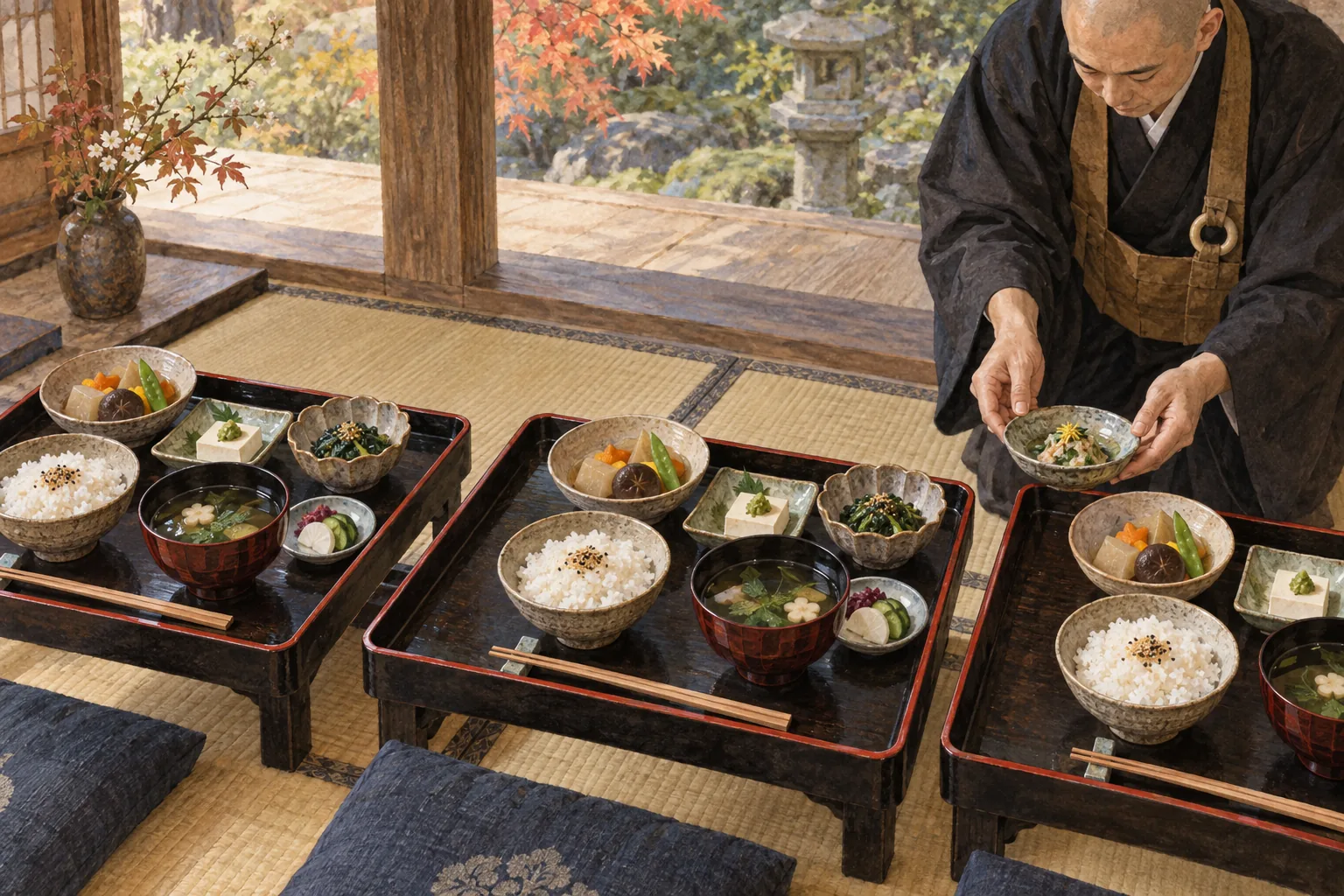
Shojin ryori is the vegetarian cuisine of Buddhist temples, which avoids meat, fish and strong-smelling vegetables.
精進料理とは、仏教寺院で発達した菜食の料理で、肉・魚に加え、においの強い野菜も使いません。
In 30 seconds
The standard explanation
Shojin ryori is the food cooked and eaten in Buddhist temples. It uses no meat or fish, and also excludes the five pungent vegetables including garlic and onion, which are thought to disturb the mind. Cooking aims to waste nothing and to use what is in season, and it is the tradition that helped spread tofu, yuba and many vegetarian techniques in Japan.
精進料理は、仏教寺院で作られ食べられてきた料理です。肉も魚も使わず、心を乱すとされるニンニクやネギを含む「五葷」も避けます。無駄を出さず、旬のものを使うことを旨とし、豆腐や湯葉、多くの菜食の技法を日本に広めた伝統です。
As a short speech
A full paragraph you can read aloud
Shojin ryori is the cuisine of Japanese Buddhist temples, and it took its classic form in Zen temples in the 1200s. It follows the Buddhist precept against taking life, so there is no meat and no fish, not even the fish stock that sits under almost all Japanese cooking, which is replaced with kelp and dried shiitake.
It also excludes five pungent vegetables, including garlic, onion and leek, on the grounds that they excite the body and distract the mind. What remains is seasonal vegetables, tofu, soy products, seaweed and grains, prepared with real technique.
A guiding principle is that nothing is wasted: the peel, the stem and the leaf all get used somewhere in the meal. You can eat it at temples in Kyoto and at the mountain temple lodgings of Koyasan, where staying overnight and eating two temple meals is a standard visitor experience.
精進料理は日本の仏教寺院の料理で、13世紀に禅寺で今の形に整えられました。不殺生の戒めに従い、肉も魚も使いません。日本料理のほぼすべての土台にある魚の出汁さえ使わず、昆布と干し椎茸で代えます。
さらに、体を昂らせて心を乱すとして、ニンニク・ネギなど五種の香りの強い野菜も避けます。残るのは旬の野菜、豆腐、大豆製品、海藻、穀物で、確かな技法で調理されます。
基本にあるのは、何も無駄にしないという考え方です。皮も茎も葉も、どこかで使われます。京都の寺で食べられますし、高野山の宿坊では一泊して二度の寺の食事をとるのが、訪問者の定番の体験になっています。
Questions people actually ask
And how to answer them.
Is it fully vegan?
In principle yes: no animal products at all, including dashi made from fish. In practice, check with the specific temple or restaurant, since some modern versions use bonito stock.
原則としてそうです。魚の出汁を含め、動物性のものは一切使いません。ただし鰹出汁を使う現代的なものもあるため、寺や店に確認してください。
Why exclude onion and garlic?
They are among the five pungent roots, said to stimulate desire and anger and to interfere with practice. The same exclusion appears in Chinese and Korean temple cooking.
五葷(ごくん)と呼ばれ、欲や怒りを昂らせ、修行を妨げるとされるためです。同じ考え方は中国や韓国の寺の料理にもあります。
Can I eat it as a visitor?
Yes. Some temples run restaurants, and temple lodgings at Koyasan and elsewhere include two shojin meals with an overnight stay. Booking ahead is usually required.
食べられます。食事を出す寺もありますし、高野山などの宿坊は一泊二食の精進料理つきです。たいてい予約が必要です。
Phrases you can use
- No meat, no fish, and no fish stock either.肉も魚も、魚の出汁も使いません。
- The stock is made from kelp and dried shiitake.出汁は昆布と干し椎茸で取ります。
- Garlic and onion are excluded as well.ニンニクやネギも使いません。
- Nothing is wasted — even the peel gets used.皮まで使って、何も無駄にしません。
- You can stay overnight at a temple and eat it.宿坊に泊まれば食べられます。
Words you need
- vegetarian / vegan菜食の、完全菜食の
- precept戒律
- pungentにおいの強い、刺激の強い
- temple lodging宿坊
- waste nothing無駄にしない
Watch
From YouTubeBackground (Japanese)
精進料理は鎌倉時代に禅宗とともに体系化された。道元は『典座教訓』で、寺で食事を作る役である典座の心得を説き、料理を修行そのものとして位置づけた。豆腐・湯葉・がんもどき・胡麻豆腐などは精進料理の技法から広まったもので、「もどき料理」と呼ばれる肉や魚に似せた調理法もある。五葷はニンニク・ネギ・ニラ・ラッキョウ・アサツキなどを指すが、宗派や地域で内容に違いがある。高野山には50を超える宿坊があり、一泊二食で精進料理を提供している。なお「精進落とし」は、もとは忌明けに通常の食事に戻ることを指し、いまは葬儀のあとの会食を指すことが多い。