itadakimasu
what we say before eating
いただきます(いただきます)
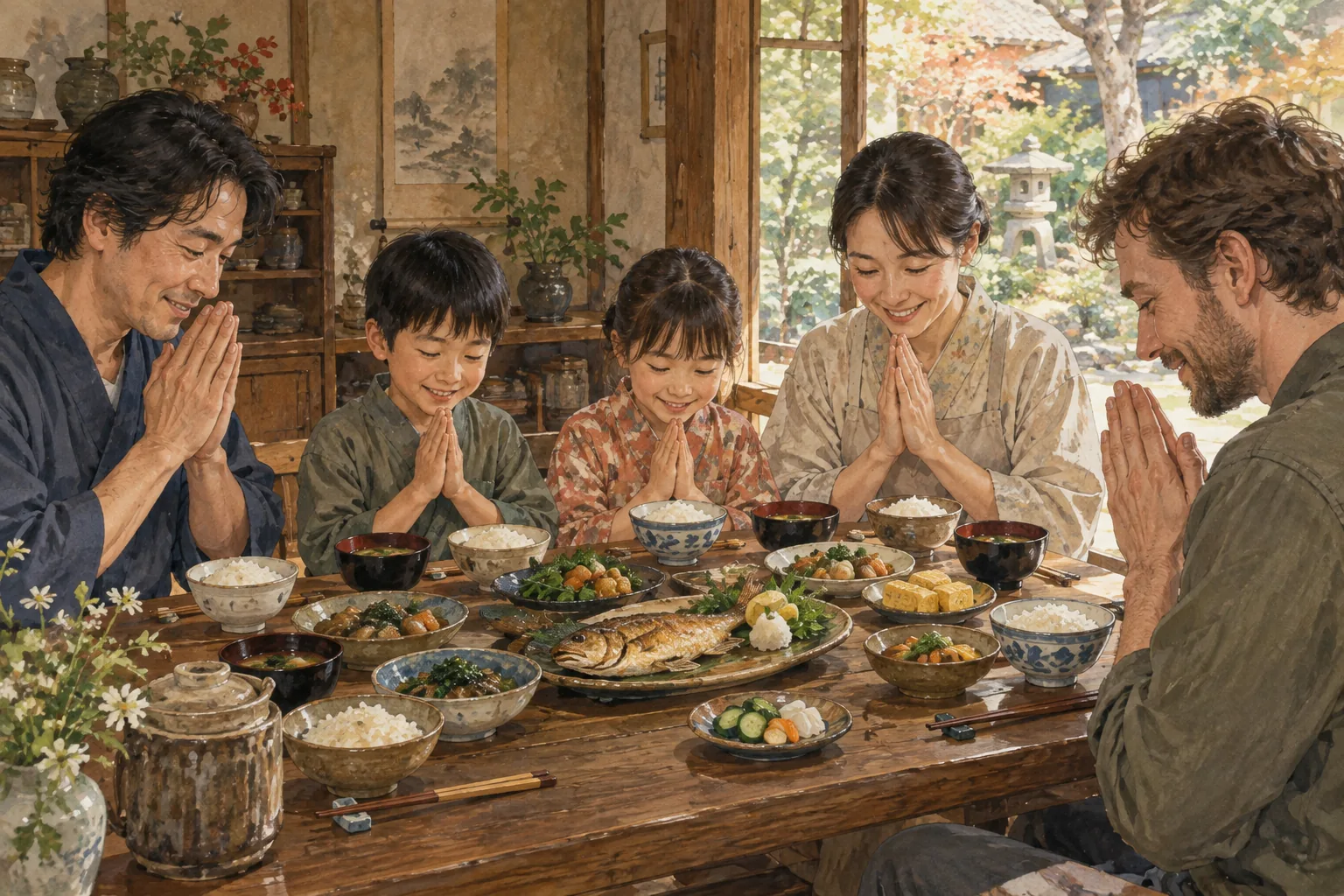
In one line
The shortest answer that works
Itadakimasu is said before eating, to thank everyone and everything that made the meal possible.
いただきますは、食事の前に、その食事を支えたすべてに感謝して言う言葉です。
In 30 seconds
The standard explanation
Japanese people say itadakimasu before they eat, often with their hands pressed together, and gochisosama after. It is often translated as "let's eat," but the verb literally means "I humbly receive." The thanks is not only to the cook. It includes the farmer, the fisherman and the plants and animals that became the meal. It is said even when eating alone.
日本人は食事の前に、しばしば手を合わせて「いただきます」、食後に「ごちそうさま」と言います。よく「さあ食べよう」と訳されますが、動詞そのものは「謹んで受け取る」という意味です。感謝の相手は作った人だけではありません。農家、漁師、そして食べものになった動植物も含まれます。一人で食べるときにも言います。
As a short speech
A full paragraph you can read aloud
Before eating, Japanese people say itadakimasu, often with their hands pressed together. It is usually translated as "let's eat," but that misses what the word does. The verb is a humble form meaning to receive, so you are saying that you are receiving this food, gratefully, from something larger than yourself.
That includes the person who cooked it, the people who grew and caught it, and the living things that became the meal. Children are taught this in the first years of school, and school lunch starts with the whole class saying it together.
After eating we say gochisosama, which thanks the host for the effort of running around to gather the food. I say both of these alone in my own kitchen, without thinking about it, which is probably the clearest sign of how deeply it is set.
食事の前に、日本人はよく手を合わせて「いただきます」と言います。ふつう「さあ食べよう」と訳されますが、それではこの言葉の働きが抜け落ちます。動詞は「受け取る」の謙譲語です。つまり、自分より大きな何かから、この食べものをありがたく受け取ります、と言っているのです。
そこには料理した人、育てた人、獲った人、そして食べものになった生きものが含まれます。子どもは小学校の最初の数年でこれを教わり、給食はクラス全員で声をそろえて言うところから始まります。
食後には「ごちそうさま」と言います。走り回って食材を集めてくれたことへの感謝です。私は自分の台所で一人のときも、何も考えずに両方言います。それがいちばん、この習慣の深さを表していると思います。
Questions people actually ask
And how to answer them.
Is it a religious thing, like saying grace?
Not in practice. It is not addressed to a god and no religion is involved. It is closer to a habit of acknowledgment, and people of any belief or none say it the same way.
実際には違います。神に向けた言葉ではなく、宗教も関わりません。感謝を口に出す習慣に近く、信仰の有無にかかわらず同じように言います。
Do I have to put my hands together?
It is common but not required, and plenty of adults just say the word. In a restaurant a quiet itadakimasu is enough.
よくやりますが必須ではなく、言葉だけの大人も多いです。飲食店では小さく「いただきます」と言えば十分です。
What do I say afterwards?
Gochisosama deshita. The characters mean running about, because a host once had to run around to gather ingredients. Saying it to restaurant staff on the way out is normal and appreciated.
「ごちそうさまでした」です。「馳走」は走り回ることで、もてなす側が食材を集めに走ったことに由来します。店を出るときに店員に言うのは普通で、喜ばれます。
A common misunderstanding
MYTHItadakimasu is a prayer, so non-religious people would not say it.
FACTIt is not directed at any deity and is used by everyone, including in schools and offices. The gesture of joining hands comes from Buddhist practice, but the phrase itself functions as ordinary courtesy.
Phrases you can use
- We say itadakimasu before we start eating.食べる前に「いただきます」と言います。
- It means something closer to "I gratefully receive this."「ありがたくいただきます」に近い意味です。
- We thank the farmers and the food itself, not just the cook.料理した人だけでなく、作った人や食材にも感謝します。
- After the meal, we say gochisosama deshita.食後は「ごちそうさまでした」と言います。
- You can say it to the staff on your way out.帰りぎわに店員さんに言っても大丈夫です。
Words you need
- gratitude感謝
- humble form謙譲語
- say grace食前の祈りを唱える
- put your hands together手を合わせる
- leftovers食べ残し、残り物
Watch
From YouTubeBackground (Japanese)
「いただく」は本来、頭の上に載せる動作を表す語で、目上の人から物を受け取るとき頭上に捧げ持ったことに由来するとされる。そこから「もらう」「食べる」の謙譲語になった。手を合わせる所作は仏教の合掌に由来するとされるが、家庭や地域による差があり、まったくしない家庭も多い。「ごちそうさま」の「馳走」は走り回ることを指し、もてなすために食材を集めて走った、という意味から「ご馳走」=もてなしの料理になった。学校給食で全員が声をそろえて言う習慣は広く定着しているが、これを強制することへの議論が起きたこともある。