hashi no tabu
things you must never do with chopsticks
箸のタブー(はしのたぶー)
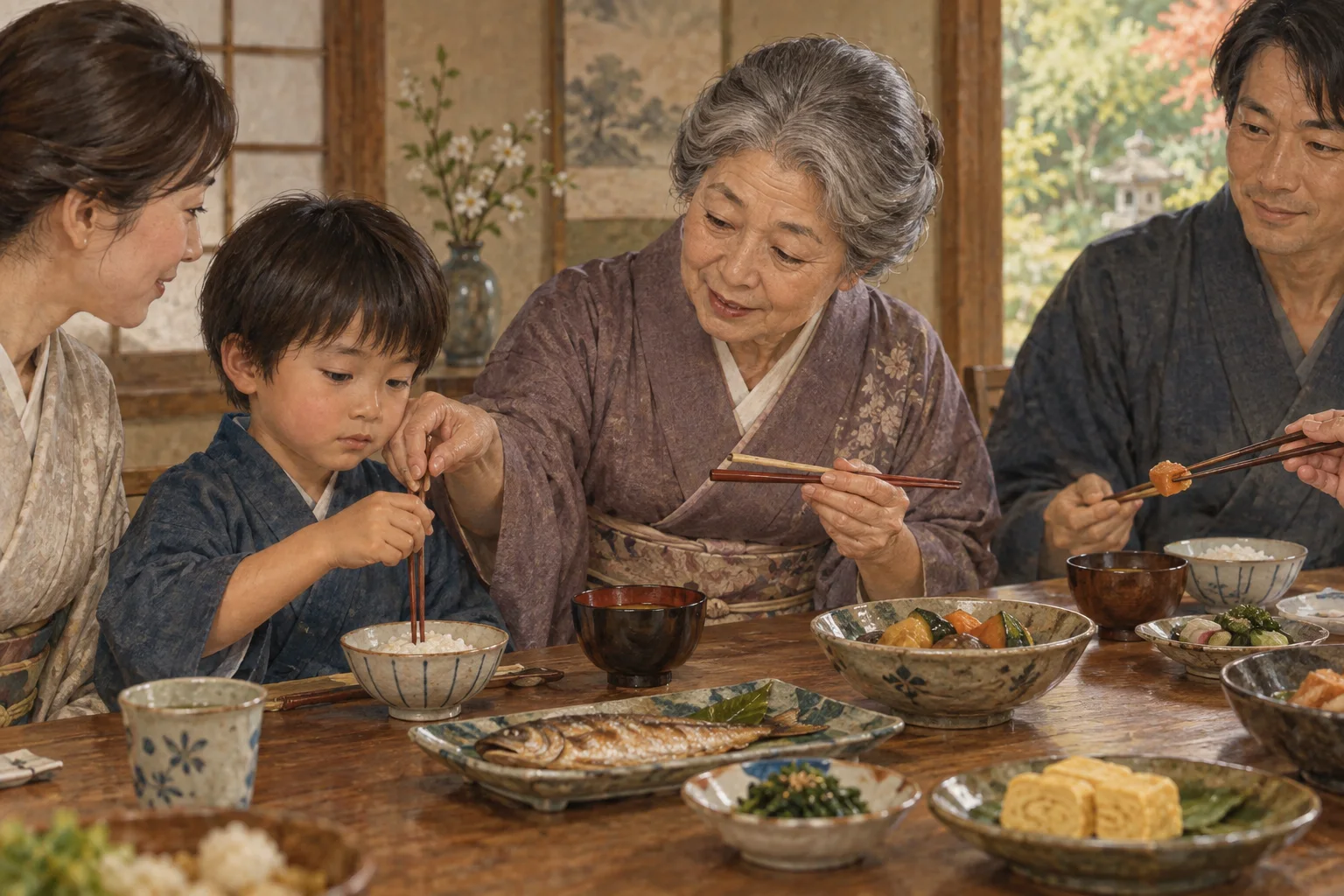
In one line
The shortest answer that works
Two chopstick habits are serious taboos in Japan because both are funeral rituals.
箸の使い方には、葬儀の作法と重なるため本当に避けるべきものが二つあります。
In 30 seconds
The standard explanation
Most chopstick rules are just manners, but two are genuine taboos. Never stand your chopsticks upright in a bowl of rice, and never pass food directly from your chopsticks to someone else's. Both of these are done at Japanese funerals, so doing them at the table is like miming a funeral over dinner. Everything else, like pointing or resting them across the bowl, is untidy rather than shocking.
箸のきまりの多くは単なるマナーですが、二つだけは本当のタブーです。ご飯に箸を垂直に立てること、そして箸から箸へ直接食べ物を渡すことです。どちらも日本の葬儀で行われるため、食卓でやると食事中に葬式を再現していることになります。指さしたり器に渡して置いたりは、行儀が悪いという程度です。
As a short speech
A full paragraph you can read aloud
If you eat in Japan, there are two things you should never do with chopsticks. The first is standing them upright in a bowl of rice. The second is passing food from your chopsticks directly to someone else's. The reason is the same for both.
At a Japanese funeral, a bowl of rice with chopsticks standing in it is offered to the person who has died, and after the cremation the family passes the bones from chopsticks to chopsticks. So these two actions belong to death, and doing them at dinner feels genuinely wrong, not merely impolite.
Other rules are much softer. Do not wave them around, do not stab your food, and do not use them to drag a plate toward you. If you make a small mistake, nobody will say anything. The two funeral ones are the only ones worth memorizing.
日本で食事をするなら、箸で絶対にしてはいけないことが二つあります。一つはご飯に箸を垂直に立てること。もう一つは箸から箸へ直接食べ物を渡すことです。理由は同じです。
日本の葬儀では、亡くなった人に箸を立てたご飯を供えます。また火葬のあと、遺族は箸から箸へ骨を渡します。この二つは死に属する所作なので、食卓でやると単に無作法というより、本当に不吉に感じられます。
他の決まりはもっと穏やかです。振り回さない、刺さない、皿を引き寄せない。小さな失敗なら誰も何も言いません。覚える価値があるのは、葬儀に由来するこの二つだけです。
Questions people actually ask
And how to answer them.
Why is standing chopsticks in rice so bad?
That exact arrangement is placed before the dead at a Japanese funeral and on the family altar. Seeing it at the dinner table is jarring in the same way a coffin in a living room would be.
その形そのものが、葬儀や仏壇で故人に供えられるものだからです。食卓で見ると、居間に棺があるのと同じくらい場違いに感じられます。
So how do I share food with someone?
Put it on their plate instead. For shared dishes, use serving chopsticks, which many restaurants provide. Some people turn their own chopsticks around and use the other end, but formal etiquette frowns on that.
相手の皿に置いてください。大皿の料理には取り箸を使います。出してくれる店も多いです。自分の箸を逆さにして持ち手側を使う人もいますが、改まった作法では好ましくないとされます。
Is it rude if I'm just bad at using them?
Not at all. Nobody expects skill from a visitor, and most people will be pleased you are trying. Restaurants will usually offer a fork if you ask.
まったく問題ありません。外国の方に上手さは期待されていませんし、使おうとしていること自体が喜ばれます。頼めばフォークを出してくれる店も多いです。
A common misunderstanding
MYTHThere are dozens of chopstick rules and breaking any of them is offensive.
FACTThere are two real taboos, both linked to funerals. The rest are ordinary table manners, on the level of talking with your mouth full.
Phrases you can use
- Please don't stand them upright in the rice.ご飯に箸を立てないでください。
- Use the serving chopsticks for the shared dishes.取り分けには取り箸を使ってください。
- Just put it on my plate, thanks.お皿に置いてもらえれば大丈夫です。
- Don't worry, you're doing fine.大丈夫、上手ですよ。
- Could we get a fork as well?フォークもいただけますか。
Words you need
- chopsticks箸
- tabooタブー、してはいけないこと
- serving chopsticks取り箸
- chopstick rest箸置き
- funeral葬儀
Watch
From YouTubeBackground (Japanese)
禁じられた箸の使い方には一つ一つ名前がついており、「嫌い箸」「忌み箸」と総称される。ご飯に立てるのが「立て箸(仏箸)」、箸から箸へ渡すのが「拾い箸(箸渡し)」、迷って料理の上を行き来させるのが「迷い箸」、料理を探るのが「探り箸」、箸で皿を引き寄せるのが「寄せ箸」。数え方には三十以上あるとする説もある。日本の箸が中国・韓国のものより短く、先が細いのは、魚の小骨を取る食文化に合わせたためとされる。また中国や韓国では箸を縦向きに置くことが多いのに対し、日本では横向きに置くのが一般的で、これは箸を自分と料理(神仏)との境界に置く考え方に由来するという説がある。