otagaisama
we all need help sometimes, so no debt is owed
お互いさま(おたがいさま)
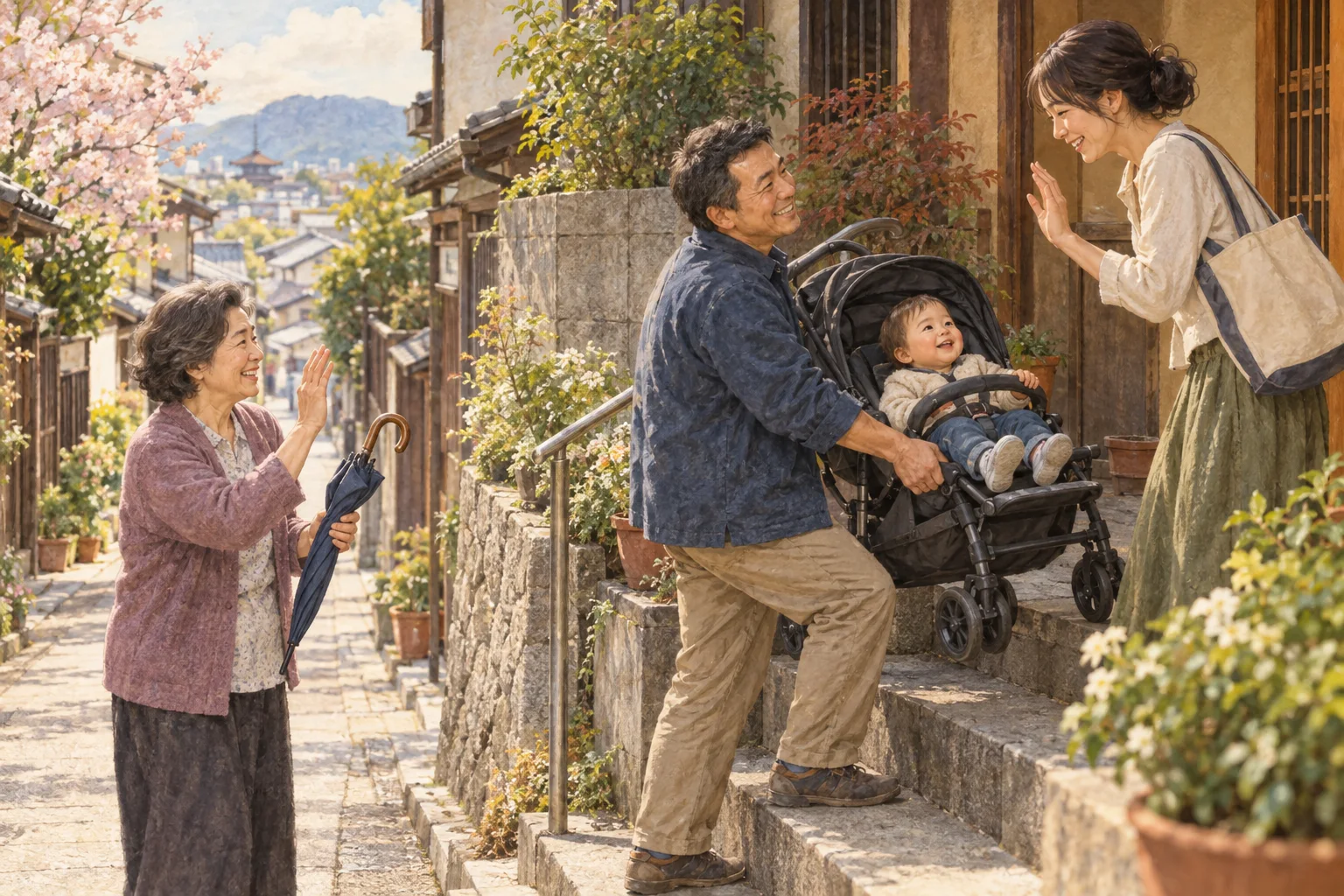
In one line
The shortest answer that works
Otagaisama is what you say to release someone from feeling indebted, because help goes both ways.
お互いさまとは、助け合いは一方通行ではないと伝えて、相手の負い目を解く言い方です。
In 30 seconds
The standard explanation
When you thank someone in Japan for helping you, a common reply is otagaisama. It means that everyone needs help at some point, so there is nothing to repay. It is used between neighbors, parents at a school, and colleagues covering for each other, and it works by canceling the debt rather than accepting the thanks.
日本で助けてもらった礼を言うと、お互いさまですよ、と返されることがよくあります。誰にでも助けの要るときはあるのだから、返す必要はない、という意味です。近所どうし、学校の保護者どうし、仕事を代わり合う同僚のあいだで使われ、礼を受け取るのではなく、負い目を消すことで働きます。
As a short speech
A full paragraph you can read aloud
Otagaisama is one of the most useful phrases in everyday Japanese and it does something English does not have a neat equivalent for. If you thank a neighbor for taking in your laundry during a sudden shower, they will very likely answer otagaisama. Literally it means something like it is mutual.
What it does is cancel the obligation. Japanese has a strong sense that a kindness received creates a debt, called on, and that debt can be uncomfortable, so the recipient may hesitate to accept help at all. Otagaisama removes that: it says that next week it will be me asking you, so there is no account to settle.
You hear it most in contexts where people are going to keep living next to each other, which is exactly where an unsettled debt would be awkward. It is also why people say it while helping, not only afterwards. If someone says it to you, the right response is simply to thank them once more and accept, rather than insisting on repaying.
お互いさまは、日々の日本語でいちばん役に立つ言い方の一つで、英語にはうまく重なる語がありません。にわか雨のときに洗濯物を取り込んでくれた隣の人に礼を言えば、お互いさまですよ、と返ってくる見込みが高いです。文字どおりには、どちらも同じことです、という意味になります。
この言葉がしているのは、義理を打ち消すことです。日本語には、親切を受けると負い目ができるという感覚が強くあり、それを恩と呼びます。その負い目は重く、受け取る側が助けそのものをためらうこともあります。お互いさまはそれを取り除きます。来週は自分が頼む側になるのだから、清算する帳簿など無い、と述べているのです。
この言葉は、これからも隣り合って暮らしていく相手とのあいだで、いちばんよく聞かれます。まさにそこでこそ、片付かない負い目が気づまりになるからです。助けたあとだけでなく、助けている最中にも言うのは、そのためです。そう言われたら、返そうと言い張らずに、もう一度お礼を言って受け取るのが正しい返し方です。
Questions people actually ask
And how to answer them.
When exactly do I say it?
When someone thanks you for a favor, or apologizes for troubling you. It fits ordinary mutual help between people who know each other, and it would sound odd from a shop assistant to a customer.
助けたことに礼を言われたとき、あるいは手間をかけて申し訳ないと言われたときです。互いに助け合う間柄のふつうのやり取りに合います。店員が客に言うと、少し変に響きます。
What do I say if someone says it to me?
Thank them once more and let it go. Insisting that you will repay, or immediately producing a gift, pushes the exchange back into accounting, which is the thing the phrase was trying to avoid.
もう一度お礼を言って、そこで収めます。必ず返すと言い張ったり、すぐに品物を出したりすると、やり取りが貸し借りに戻ってしまいます。この言い方が避けようとしたのは、まさにそれです。
Is it related to okagesama de?
They are a pair in spirit. Okagesama de spreads credit outward so good news is not a boast; otagaisama spreads obligation outward so a favor is not a debt. Both keep things from resting on one person.
気持ちの上では対になっています。おかげさまでは手柄を外へ広げて、良い知らせを自慢にしません。お互いさまは負い目を外へ広げて、親切を借りにしません。どちらも、一人のところに留めないための言葉です。
Phrases you can use
- Don't mention it. We all need a hand sometimes.お互いさまですから。
- You'd do the same for me.逆の立場なら、同じことをなさるでしょう。
- Thank you, that really helped.ありがとうございます、助かりました。
- Please ask me any time.いつでも言ってください。
- Next week I'll be the one asking you.来週はこちらがお願いすることになります。
Words you need
- mutual互いの
- a favor親切・手助け
- to be indebted負い目がある
- to help out手を貸す
- a neighbor近所の人
Watch
From YouTubeBackground (Japanese)
困ったときはお互いさま、という形で使われることが多く、災害のあとや、子育て、介護の場面でよく聞かれます。隣近所で助け合う関係を前提にした言葉なので、都市部でも、子どものいる家庭や長く住んでいる地域では今も生きています。おかげさまでと対になる働きを持ち、片方は手柄を、片方は負い目を、一人に集めないようにします。お礼を言われた側が使う言葉なので、自分から助けを求めるときに使うのは筋が違います。そのときは、お願いしますと頼む形になります。