enryo
holding back out of consideration
遠慮(えんりょ)
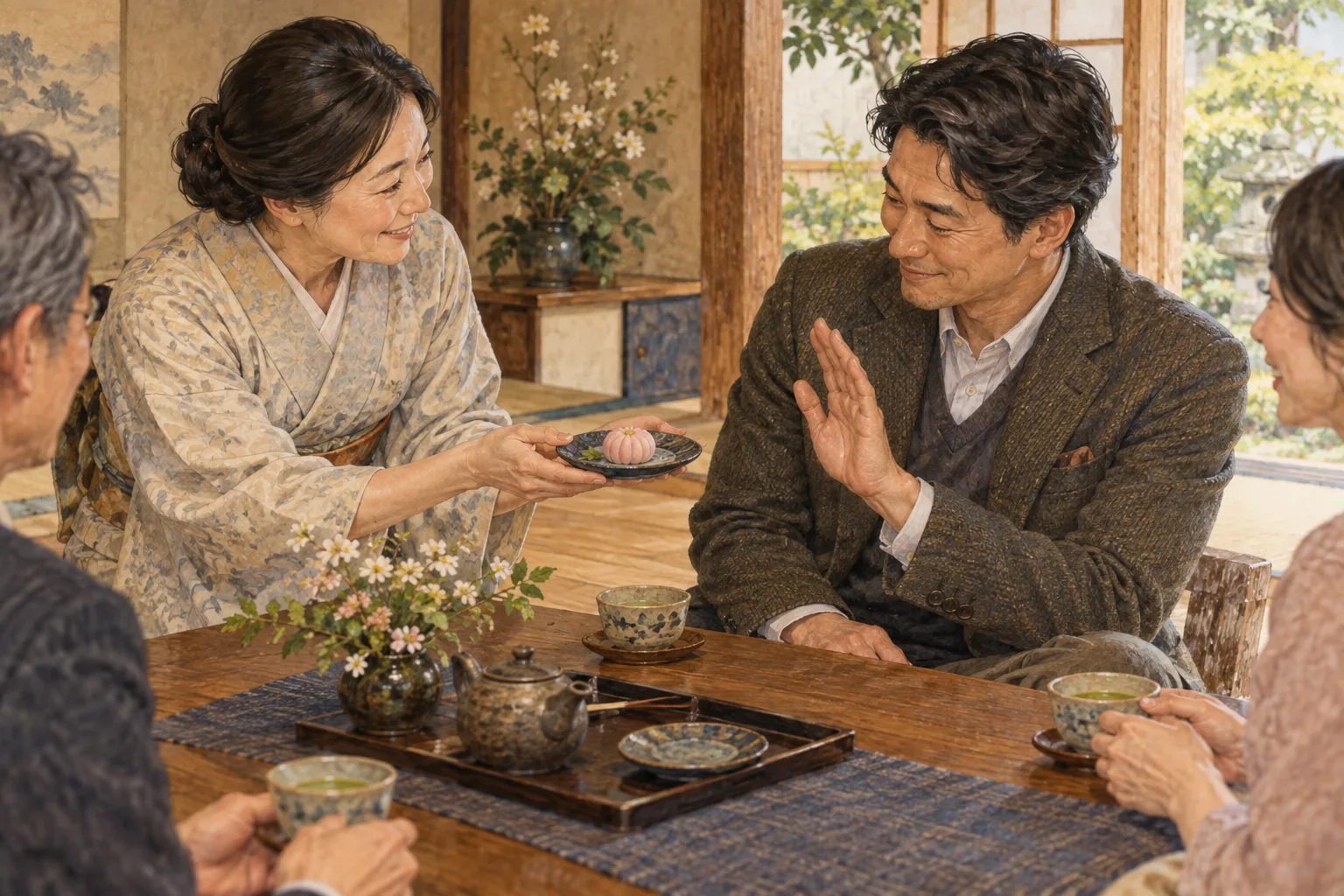
In one line
The shortest answer that works
Enryo is holding yourself back so as not to impose, even when you would like to accept.
遠慮とは、本当は受けたくても、相手に負担をかけまいと自分を抑えることです。
In 30 seconds
The standard explanation
Enryo means restraining yourself out of consideration for others. You refuse the last piece of food, decline the first offer, or do not ask for what you want. The host then presses you, and you accept on the second or third offer. The whole exchange is a form, and "enryo shinaide," meaning don't hold back, is the phrase that releases you from it.
遠慮とは、相手を思って自分を抑えることです。最後の一つを取らない、最初の申し出は断る、欲しいものを言わない。すると相手が重ねてすすめ、二度目か三度目で受けます。このやりとり全体が一つの型で、「遠慮しないで」がその型から解放する言葉です。
As a short speech
A full paragraph you can read aloud
Enryo is restraint shown out of consideration for other people. If there is one piece of food left on a shared plate, it often stays there, because taking it would mean putting yourself first. If someone offers you something, the polite first move is to decline once, even when you want it.
The other person then offers again, and you accept. To someone from a culture where yes means yes, this looks like a waste of everyone's time. What it does is give both people room. A first refusal lets the offer be withdrawn without embarrassment if it was made out of politeness rather than genuine intent.
There is a standard phrase that ends the dance, enryo shinaide kudasai, please don't hold back, and hearing it means you can simply say yes. My advice to visitors is to accept on the second offer, and to always offer twice.
遠慮とは、相手を思って自分を抑えることです。取り分けた皿に一つだけ残ると、たいていそのまま残ります。取れば自分を先に置くことになるからです。何かをすすめられたら、欲しくても一度は断るのが丁寧な第一手です。相手がもう一度すすめ、そこで受けます。
イエスがイエスである文化から来た人には、これは双方の時間の無駄に見えます。この型がしているのは、両方に余地を残すことです。最初の断りは、その申し出が本心ではなく礼儀からのものだった場合に、気まずくならずに引っ込める逃げ道になります。
この往復を終わらせる決まり文句があります。「遠慮しないでください」です。これを聞いたら、素直にはいと言って構いません。訪日の方への助言は、二度目のすすめで受けること、そして自分がすすめるときは必ず二度すすめることです。
Questions people actually ask
And how to answer them.
So if I say no, do they stop offering?
Usually they offer again. If they do not, the offer was probably formality rather than intent, which is exactly what the first refusal is designed to detect without anyone losing face.
たいていはもう一度すすめられます。されなければ、その申し出は本心ではなく形式だった可能性が高いです。最初の断りは、誰も面目を失わずにそれを見分けるための仕組みなのです。
What about the last piece of food?
It has a name: enryo no katamari, the lump of restraint. If you want it, ask the table whether anyone else does, and then take it. That makes it acceptable.
「遠慮のかたまり」という呼び名があります。食べたければ、他に食べる人がいるか一声かけてから取れば大丈夫です。
Is enryo the same as being shy?
No. Shyness is about the self; enryo is about the other person. A confident, senior person still practices enryo, because the point is not to impose, not to avoid attention.
違います。内気さは自分の問題ですが、遠慮は相手のための行為です。自信のある目上の人も遠慮します。目立つのを避けるのではなく、負担をかけないための作法だからです。
Phrases you can use
- Please, don't hold back.どうぞ、遠慮なさらずに。
- Are you sure? Then I'll take you up on it.では、お言葉に甘えて。
- Does anyone want the last one?最後の一つ、どなたか召し上がりますか。
- Offer twice — the first no is a formality.二度すすめてください。最初の断りは形式です。
- There's even a name for the last piece nobody takes.誰も取らない最後の一つには、名前までついています。
Words you need
- hold back遠慮する、控える
- impose on someone負担をかける
- decline politely丁寧に断る
- insist重ねてすすめる
- take someone up on an offerお言葉に甘える
Watch
From YouTubeBackground (Japanese)
「遠慮」はもともと「遠い先まで慮る(おもんぱかる)」で、将来を見通して考えることを意味した。江戸時代には武士に科された謹慎の刑罰の名称でもあり、外出を控えることを指した。そこから「控えること」の意味が残った。皿に残る最後の一つを「遠慮のかたまり」と呼ぶのは主に関西の言い方とされ、ほかにも「関東の一つ残し」など、地域ごとにさまざまな呼び名がある。ビジネスの場では「ご遠慮ください」が禁止の婉曲表現として使われ、「喫煙はご遠慮ください」は実質的な禁止を意味する。この用法は外国人には分かりにくい部分である。