on
a debt of gratitude that you carry and repay
恩(おん)
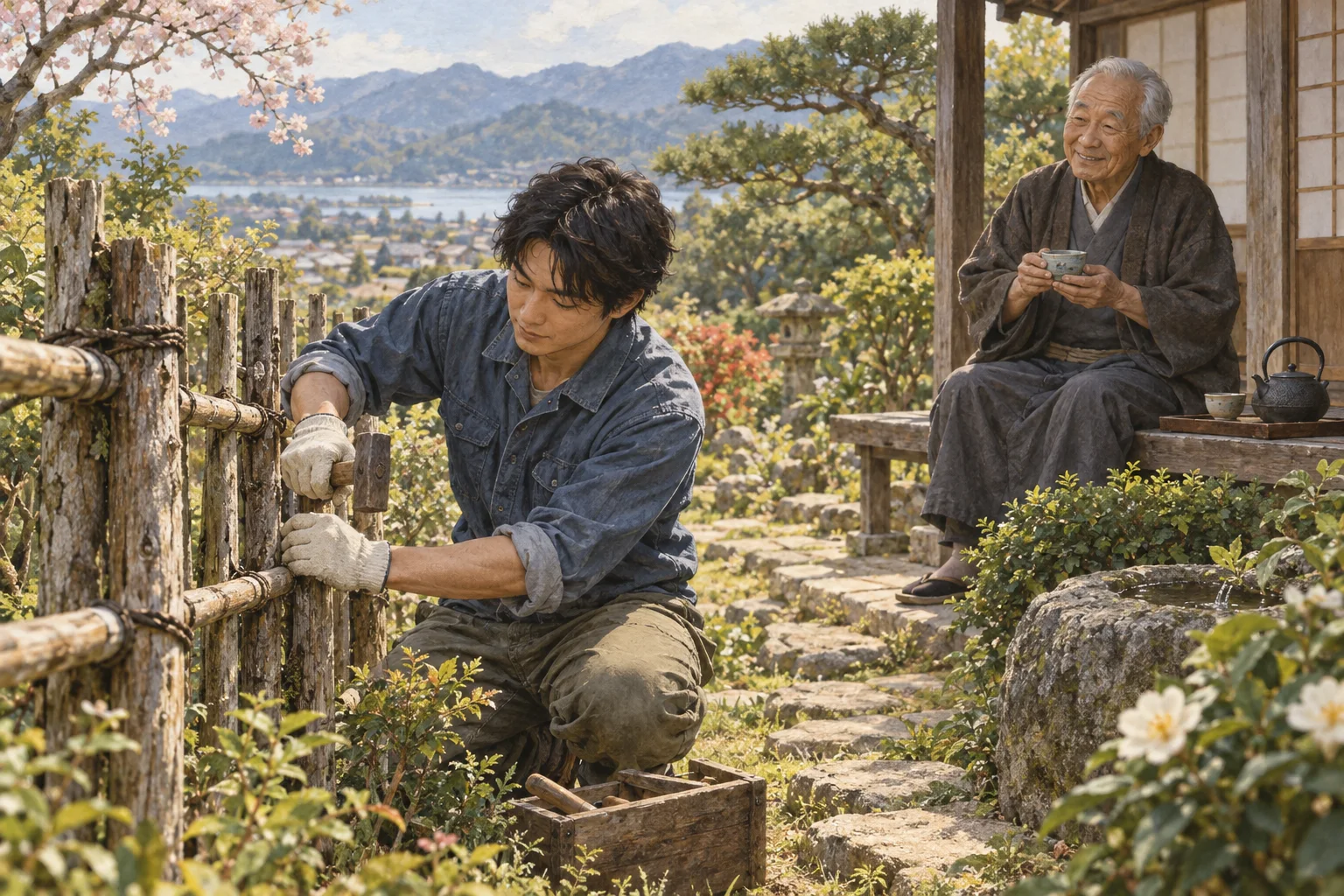
In one line
The shortest answer that works
On is a kindness received that you are expected to remember and repay, sometimes for a lifetime.
恩とは、受けた恵みのことで、覚えておいて返すものとされ、生涯かけて返すこともあります。
In 30 seconds
The standard explanation
On is a kindness you have received from someone above you or before you: a teacher, a parent, a first employer. English has thank you, but it has no ordinary word for the debt that stays afterwards. In Japanese that debt has a name, and repaying it is called ongaeshi. It is not a transaction, because the amount is never fixed and the return may come decades later.
恩とは、目上の人や先に立つ人から受けた恵みのことです。先生、親、最初に勤めた会社などが相手になります。英語には感謝を伝える言葉はありますが、そのあとに残る負い目を言うふつうの語がありません。日本語にはその名前があり、返すことを恩返しと言います。取り引きではありません。額は決まっておらず、返すのが何十年も先になることもあるからです。
As a short speech
A full paragraph you can read aloud
On is a kindness received, together with the sense that you now owe something in return. It is not politeness and it is not a contract. The classic sources of on are a parent, a teacher and the person who first gave you work, and the word for repaying it is ongaeshi.
Japanese folk tales are full of it: a crane rescued from a trap comes back in human form and weaves cloth until she is exhausted, which children understand as showing that a debt of kindness is taken seriously even by a bird. Two things make it hard to translate. First, the amount is never stated, so you can never be sure you have finished.
Second, receiving on creates a relationship rather than closing one, which is why people sometimes hesitate to accept a favor. Younger Japanese use the word less, and a workplace that talked openly about on would sound old-fashioned today. But the feeling behind the New Year card to a former teacher is still this one.
恩とは、受けた恵みと、それに対して何かを返す義務がある、という感覚を合わせたものです。礼儀でもなければ、契約でもありません。恩の典型は、親、先生、最初に仕事をくれた人で、返すことを恩返しと言います。日本の昔話にはこれがあふれています。
罠から助けられた鶴が人の姿で戻ってきて、体を痛めるまで布を織ります。子どもはそこから、受けた恩は鳥でさえまじめに受け止めるのだと学びます。訳しにくい理由は二つあります。一つは、額が示されないので、返し終えたと確かめようがないこと。
もう一つは、恩を受けることが関係を終わらせるのではなく、関係を作ることです。だから人は、親切を受けるのをためらうことがあります。若い世代はこの語をあまり使わず、今の職場で恩を口にすれば古風に響きます。それでも、昔の先生に年賀状を出すときの気持ちは、やはりこれです。
Questions people actually ask
And how to answer them.
How is on different from just saying thank you?
Thanks closes the exchange. On opens an account that stays open. You can thank a stranger for holding a door and never think of it again, but you do not say you have on from them.
お礼はやり取りを終わらせます。恩はそのまま開いたままの帳簿を作ります。戸を押さえてくれた見知らぬ人にお礼を言い、そのまま忘れることはできますが、その人に恩があるとは言いません。
Does it feel like a burden?
Sometimes, and Japanese has words for that too. Being made to feel indebted against your will is unwelcome, and people are careful not to do favors that are too large, because an unrepayable kindness is uncomfortable to receive.
重く感じることはあり、日本語にはそのための言い方もあります。望まないのに借りを作らされるのは歓迎されません。大きすぎる親切は、返せない負い目になって受け取りにくいので、人はそこに気をつけます。
Is it the same as giri?
They overlap but point different ways. Giri is the obligation you owe to your position and to social expectation, while on is owed to a particular person for something they actually did for you.
重なりますが、向きが違います。義理は自分の立場や周りの期待に対して負うもので、恩は、実際に何かをしてくれた特定の相手に対して負うものです。
A common misunderstanding
MYTHOn means Japanese relationships are calculated, with everyone keeping score.
FACTThe opposite is closer to the truth. Because no amount is stated and no deadline exists, it cannot be settled like an account, and that is exactly what makes it a relationship rather than a transaction.
Phrases you can use
- I owe him a great deal.彼には大変お世話になりました。
- I have never forgotten what my teacher did for me.先生から受けた恩は、今も忘れていません。
- I would like to repay the kindness somehow.何かの形で恩返しがしたいです。
- Please do not go to any trouble for me.どうぞお気遣いなく。
- He turned his back on the people who helped him.彼は、世話になった人たちに背を向けました。
Words you need
- a debt of gratitude恩
- to repay a kindness恩を返す
- indebted恩がある・世話になった
- a benefactor恩人
- ungrateful恩知らずな
Watch
From YouTubeBackground (Japanese)
恩を返すことを恩返し、恩をあだで返すことを恩を仇で返すと言い、どちらもふつうに使われる言い回しです。助けられた動物が人の姿で恩を返しに来る話は各地にあり、鶴の恩返しはその代表として知られています。世話になった先生を恩師と呼ぶ言い方は今も生きており、年賀状や同窓会の案内でよく使われます。一方で、若い世代の会話では恩という語そのものは減り、お世話になりましたという言い方に置き換わっています。負い目を作らせない配慮から、大きすぎる親切を避ける感覚も、この語と裏表の関係にあります。