miuchi to yososama
insiders and the outside world
身内とよそ様(みうちとよそさま)
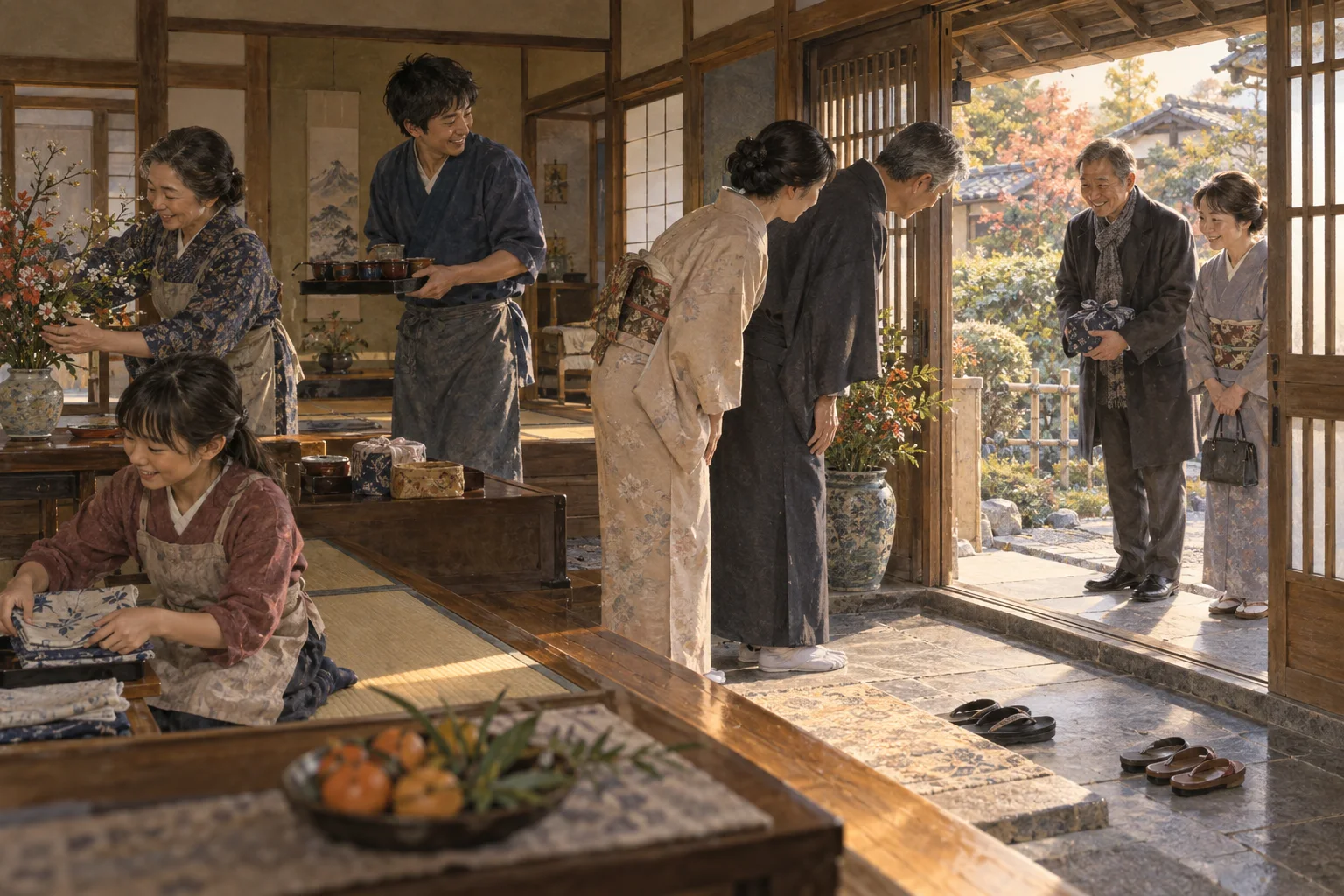
In one line
The shortest answer that works
Miuchi to yososama, or insiders and outsiders, is a divide that often sharply shifts how Japanese people behave.
身内とよそ様とは、日本人のふるまいをしばしば大きく変える、身内と外の人という区別です。
In 30 seconds
The standard explanation
Uchi, the inside, means family, one's own company, or one's close group, and it is treated with a relaxed honesty that would seem rude toward outsiders. Yoso, the outside, gets careful politeness, formal language and a more guarded version of the truth. A parent may scold their own child bluntly at home while apologizing profusely on that child's behalf to a neighbor, because the standard for how you speak about your own side shifts once someone outside is involved. This is a close cousin of the uchi-soto distinction found throughout Japanese language and manners.
身内とは、家族や自分の会社、親しい集団のことで、よそ様に対してなら失礼に見えるほど気楽で率直な扱いを受けます。よそ様には丁寧な言葉遣いと敬語、そして本音をやや隠した慎重な話し方が向けられます。親が家では自分の子どもをぶっきらぼうに叱りながら、近所の人に対してはその子の代わりにしきりに謝る、ということが起こるのは、身内について語る基準が、よそ様が関わったとたんに変わるからです。これは、日本語の言葉遣いや作法のあちこちに見られる、内と外の区別に近い考え方です。
As a short speech
A full paragraph you can read aloud
A pattern that confuses many visitors to Japan is how sharply behavior changes depending on who is being discussed. Uchi, meaning inside, covers your family, your company, your close circle, and within that circle people can be blunt, informal and even openly critical of each other.
The moment yoso, the outside, enters the picture, a different standard applies: a parent apologizes on behalf of a child to a neighbor using humble, careful language, even while scolding that same child harshly moments before in private. An employee will rarely criticize their own company to a client, no matter how they feel internally, because the company itself becomes uchi and the client becomes yoso.
The words people choose reflect this directly: Japanese has separate humble and respectful verb forms specifically for talking about your own side versus someone else's. It is not hypocrisy so much as a consistent rule about whose feelings and reputation you are protecting at any given moment, and once you notice it, it explains a great deal of Japanese etiquette that otherwise looks contradictory.
日本を訪れる多くの人を戸惑わせるのが、誰について話しているかによって、ふるまいがこれほど大きく変わることです。身内、つまり内側とは、家族や自分の会社、親しい仲間のことで、その内側では率直で、くだけていて、互いを公然と批判し合うことさえできます。よそ、つまり外側が話に関わったとたん、違う基準が働きます。
親は、少し前に子どもを厳しく叱っていたのに、近所の人に対しては、へりくだった丁寧な言葉でその子の代わりに謝ります。社員は、内心どう思っていても、取引先に自分の会社を悪く言うことはまずありません。会社そのものが身内になり、取引先がよそになるからです。人々が選ぶ言葉にも、これがそのまま表れています。
日本語には、自分の側について話すときと、相手について話すときとで、使い分けるための謙譲語と尊敬語が別々に用意されています。これは偽善というより、その時々で誰の感情と評判を守っているのかについての、一貫した決まりごとです。これに気づくと、そうでなければ矛盾しているように見える日本の作法の多くが説明できるようになります。
Questions people actually ask
And how to answer them.
Isn't it two-faced to talk about your own family that way?
It doesn't feel two-faced from the inside, because the shift follows a widely shared rule and is not personal. Everyone is expected to speak humbly about their own side to outsiders, so it functions as a shared code rather than individual dishonesty.
内側から見れば二枚舌には感じられません。この切り替えは個人的なものではなく、広く共有されたルールに沿ったものだからです。よそに対しては自分の側についてへりくだって話すことが誰にでも期待されているので、これは個人の不誠実さというより、共有された作法として働きます。
How do I know if I count as uchi or yoso?
Watch the language and formality used toward you. Casual speech, first-name terms and relaxed manners usually signal you have been accepted as uchi, while continued polite language and formal titles mean you are still being treated as yoso.
自分に向けられる言葉遣いや丁寧さを見れば分かります。くだけた話し方や下の名前での呼びかけ、気楽な態度が続くなら身内として受け入れられている合図で、丁寧な言葉遣いや役職での呼びかけが続くなら、まだよそとして扱われています。
Does this affect business apologies?
Heavily. When a Japanese company apologizes publicly for an employee's mistake, it apologizes as if the whole company were at fault, because the employee is uchi and the public is yoso, regardless of who personally erred.
大きく影響します。日本の企業が社員の過ちについて公に謝罪するとき、まるで会社全体に責任があるかのように謝ります。個人的に誰が間違えたかにかかわらず、その社員は身内であり、世間はよそだからです。
Phrases you can use
- Please excuse my colleague; he's still new.うちの者が失礼しました、まだ不慣れなもので。
- That's just how we talk within the family.うちうちではこういう話し方なんです。
- In front of guests, keep it formal.お客様の前では丁寧にお願いします。
- He speaks bluntly to us but never to clients.彼は私たちにはぶっきらぼうですが、取引先には決してそうしません。
- We don't air our disagreements outside the company.社内の意見の食い違いを社外には出しません。
Words you need
- the inside group身内
- outsidersよそ様
- insider-outsider distinction内と外
- humble language謙譲語
- respectful language尊敬語
Watch
From YouTubeBackground (Japanese)
内と外の区別は、日本語の敬語の仕組みに直接組み込まれています。自分の会社の上司について社外の人に話すときは、上司であっても敬語を使わず呼び捨てにするのが正しいとされ、これは上司を軽んじているのではなく、自社全体がよそに対しては身内としてへりくだる、という考え方によるものです。同じ論理は、家庭内のしつけの厳しさと、近所への謝罪の丁寧さの落差にも表れます。地域や家庭によって、身内とよそをどこで線引きするかには差があります。