nabe
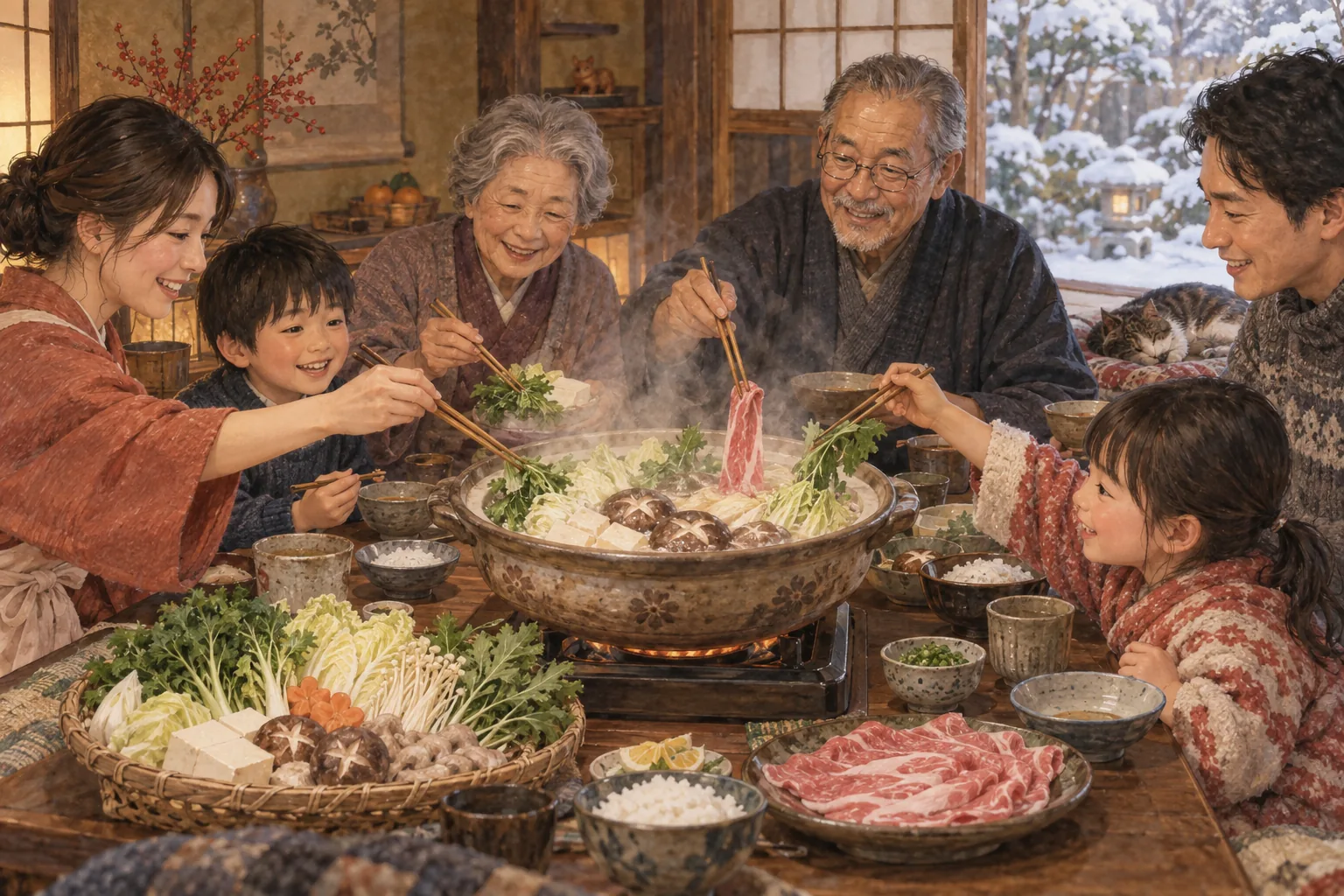
the shared hot pot at the center of the table
鍋(なべ)
In one line
The shortest answer that works
Nabe is a hot pot cooked at the table and shared, with everyone taking from the same pot.
鍋とは、食卓で煮ながら、全員が同じ鍋から取り分けて食べる料理です。
In 30 seconds
The standard explanation
A nabe is a pot of broth simmered on a portable burner in the middle of the table. Vegetables, tofu, mushrooms, meat or seafood are added as you go, and everyone serves themselves into a small bowl. It is winter food, it is communal by design, and at the end the remaining broth is used to cook rice or noodles.
鍋は、卓上のコンロにかけた出汁の鍋です。野菜、豆腐、きのこ、肉や魚介を入れながら煮て、各自が取り皿によそいます。冬の食べもので、共有することを前提に作られており、最後に残った汁で飯や麺を煮て締めます。
As a short speech
A full paragraph you can read aloud
Nabe is Japanese hot pot, and it is the food of winter. A pot of broth sits on a small burner in the middle of the table, and ingredients go in as the meal proceeds: cabbage, mushrooms, tofu, spring onion, and then thinly sliced pork, chicken or fish.
Everyone takes what they want into their own small bowl, often with a dipping sauce. There is no serving order and no courses; the pot keeps going for as long as people are eating. What matters about nabe is that it is communal by design.
Traditionally you do not have your own; the whole thing assumes a group around one pot, and Japanese even has a word, nabe-bugyo, the hot pot magistrate, for the person who takes charge of what goes in and when, often to everyone else's mild annoyance. At the end, the broth is full of flavor from everything cooked in it, so rice or noodles go in to finish. That last course has its own name: shime.
鍋は日本のホットポットで、冬の食べものです。卓上の小さなコンロに出汁の鍋がのり、食事の進行に合わせて材料を入れていきます。白菜、きのこ、豆腐、ねぎ、そして薄切りの豚、鶏、魚。各自が好きなものを取り皿によそい、たれをつけて食べます。
順番もコースもありません。人が食べているあいだ、鍋は続きます。鍋で大事なのは、共有を前提に作られていることです。本来は一人分の鍋というものはなく、一つの鍋を囲む集団が前提です。日本語には「鍋奉行」という言葉すらあります。
何をいつ入れるかを仕切る人のことで、周りから少し煙たがられることも多い人です。最後、汁には煮たものすべての味が出ているので、飯か麺を入れて締めます。この最後の一皿にも名前があります。「締め」です。
Questions people actually ask
And how to answer them.
Is it rude to take from the pot with my own chopsticks?
It is better to use the serving chopsticks provided. Some households do not bother among family, but with guests or colleagues the separate pair is the safer choice.
取り箸を使うほうがよいです。家族だけなら気にしない家庭もありますが、客や同僚とのときは取り箸を使うのが無難です。
What is a nabe-bugyo?
The self-appointed person who controls the pot: what goes in, in what order, when it is ready. The word is affectionately critical, and most groups have one.
自ら仕切り役を買って出る人のことです。何を、どの順で、いつ食べごろか。からかい半分の言葉で、たいていどの集まりにも一人います。
What is the last course?
Shime. Rice is added with egg to make a porridge, or udon or ramen noodles go in. The broth has absorbed everything by then, and many people consider it the best part.
締めです。飯と卵を入れて雑炊にするか、うどんやラーメンを入れます。そのころには汁にすべての味が出ており、そこが一番だという人も多いです。
Phrases you can use
- Help yourself from the pot.どうぞ、取ってください。
- Use the serving chopsticks, please.取り箸を使ってください。
- It's ready when the cabbage goes soft.白菜がしんなりしたら食べごろです。
- Let's finish with noodles in the broth.締めは麺にしましょう。
- Nabe is really meant for a group.鍋は、本来みんなで囲む料理です。
Words you need
- hot pot鍋
- simmer煮る、煮込む
- portable burner卓上コンロ
- serving chopsticks取り箸
- communal共有の、みんなで囲む
Watch
From YouTubeBackground (Japanese)
鍋料理には地域色が強く、秋田のきりたんぽ鍋、山形の芋煮、福岡のもつ鍋・水炊き、北海道の石狩鍋などが知られる。すき焼き・しゃぶしゃぶも鍋の一種だが、独立した料理として扱われることが多い。「鍋奉行」は江戸時代の町奉行になぞらえた俗語で、仕切りたがる人を指す。アクを取り続ける人を「アク代官」と呼ぶ言い方もある。卓上カセットコンロの普及は1969年の発売以降で、それ以前は七輪や火鉢が使われた。一人用の小鍋を出す店も増えており、コロナ禍以降は取り分け方の意識が変わった面もある。