kotatsu
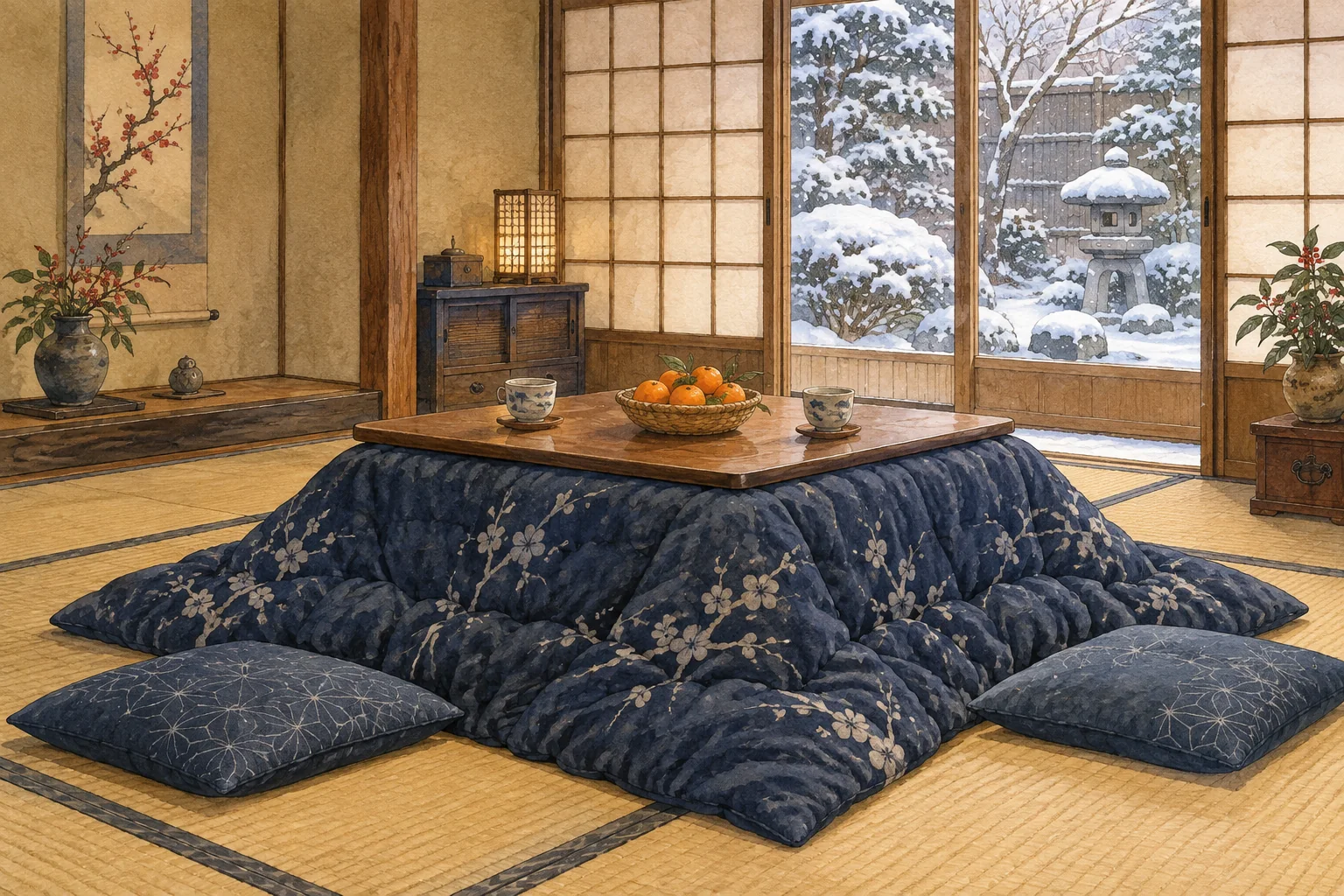
a low table with a heater and a quilt
こたつ(こたつ)
In one line
The shortest answer that works
A kotatsu is a low table with a heater underneath and a quilt over it, so you heat yourself rather than the room.
こたつとは、下にヒーターがあり布団をかけた低いテーブルで、部屋ではなく人を温める仕組みです。
In 30 seconds
The standard explanation
A kotatsu is a low table with an electric heater fixed under the tabletop. A thick quilt is laid between the frame and the tabletop, and you sit on the floor with your legs underneath. It heats the space under the quilt rather than the room, which is efficient, and it is famously difficult to leave once you are in.
こたつは、天板の下に電気ヒーターがついた低いテーブルです。枠と天板の間に厚い布団を挟み、床に座って脚を中に入れます。部屋ではなく布団の中だけを温めるので効率がよく、一度入ると出られないことで有名です。
As a short speech
A full paragraph you can read aloud
A kotatsu is a low table with a heater attached underneath the tabletop and a thick quilt spread between the frame and the top. You sit on the floor, put your legs under the quilt, and the enclosed space warms up.
The idea is that you heat the person rather than the room, which uses far less power than heating a whole house. That matters more than it sounds, because Japanese homes are generally not centrally heated and are often poorly insulated, so in winter the room around you can be genuinely cold while your legs are warm.
This is also why the kotatsu is a piece of furniture people have strong feelings about. Families gather around it, eat around it, and fall asleep under it, and there is a well-worn joke that once you are in, you are not getting out. Cats agree.
こたつは、天板の下にヒーターがつき、枠と天板のあいだに厚い布団を挟んだ低いテーブルです。床に座り、布団の中に脚を入れると、その閉じた空間が温まります。部屋ではなく人を温める、という考え方で、家全体を暖房するよりずっと電力を使いません。
これは聞こえる以上に重要です。日本の住宅はふつうセントラルヒーティングではなく、断熱も弱いことが多いため、冬は脚が温かいのに周りの部屋は本当に寒い、ということが起きます。
だからこそ、こたつは人が特別な感情を持つ家具でもあります。家族はこたつを囲んで集まり、食べ、そして中で寝てしまいます。一度入ったら出られない、という使い古された冗談があります。猫も同意見です。
Questions people actually ask
And how to answer them.
Why don't Japanese houses have central heating?
Historically, houses were built for humid summers, with ventilation and light construction rather than insulation. Heating one room at a time became the norm, and the building stock still reflects that.
歴史的に、日本の家は蒸し暑い夏に合わせて、断熱よりも風通しを重視した軽い造りで建てられてきました。一部屋ずつ暖める方式が標準になり、今ある住宅もその名残です。
Is it safe to sleep under one?
Plenty of people do it, but it is not recommended. You lose fluid without noticing and can wake up dehydrated with a sore throat, and there is a mild burn risk from prolonged heat.
やってしまう人は多いですが、すすめられません。気づかないうちに水分が失われ、脱水やのどの痛みで目覚めます。長時間の熱による低温やけどの心配もあります。
What is the mandarin orange thing?
A basket of mikan on the kotatsu in winter is a stock image of Japanese home life. The two go together in the same way as a fireplace and hot chocolate elsewhere.
冬のこたつにみかんの籠、というのは日本の家庭の定番の絵です。暖炉とホットチョコレートのような取り合わせです。
Phrases you can use
- Come and put your legs under.こたつに入りなよ。
- It heats you, not the room.部屋ではなく、人を温めるんです。
- Once you're in, you can't get out.一度入ると出られません。
- Don't fall asleep in there — you'll get a sore throat.こたつで寝ると、のどを痛めますよ。
- Japanese houses are colder inside than you'd expect.日本の家は、思っているより中が寒いです。
Words you need
- quilt布団、掛け布団
- insulation断熱
- central heatingセントラルヒーティング
- energy-efficient省エネの
- curl up丸くなる
Watch
From YouTubeBackground (Japanese)
こたつの原型は室町時代の「掘りごたつ」で、囲炉裏の上にやぐらを組み、布団をかけたもの。炭を使う「置きごたつ」を経て、電気こたつが普及したのは昭和30年代以降である。床を掘り下げて脚を下ろせる掘りごたつは、正座が苦手な人にも使われる。日本の住宅の断熱性能は長く諸外国に比べて低く、冬の室内温度が世界保健機関の推奨する18度を下回る家が多いことが調査で示されている。2022年から住宅の断熱等級が上位に拡張され、2025年度からは新築住宅に省エネ基準への適合が義務づけられるなど、制度は変わりつつある。