furo
the Japanese home bath
お風呂(おふろ)
In one line
The shortest answer that works
In a Japanese home you wash outside the tub, then soak in water the whole family shares.
日本の家では湯船の外で体を洗い、そのあと家族で同じ湯につかります。
In 30 seconds
The standard explanation
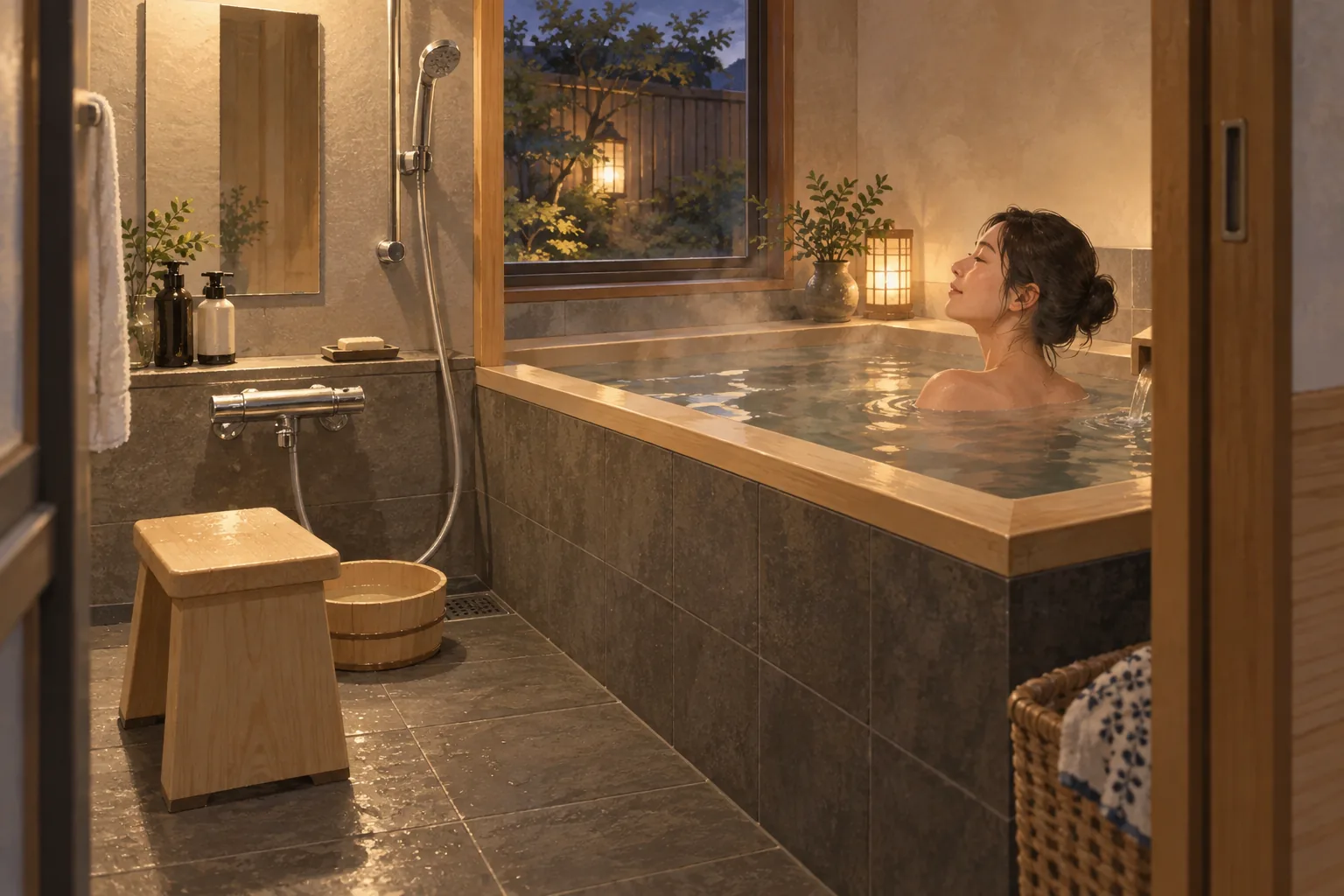
A Japanese bathroom has a washing area with a low shower and stool, and a deep tub beside it. You wash and rinse completely first, then get into the tub only to warm up. Because you enter clean, the same water is used by everyone in the household, one after another, and reheated as needed. The leftover water is often used for the laundry the next morning.
日本の浴室には、低いシャワーと椅子のある洗い場と、その横に深い湯船があります。まず体を洗って流しきり、それから温まるためだけに湯船に入ります。きれいな体で入るので、同じ湯を家族が順に使い、必要なら追い焚きします。残った湯は翌朝の洗濯に使われることも多いです。
As a short speech
A full paragraph you can read aloud
The Japanese bathroom is designed around one idea: the tub is not where you get clean. Next to the tub there is a washing area with a hand shower and a low stool. You sit there, wash, and rinse every bit of soap off. Only then do you get into the tub, and all you do there is sit in hot water and warm up.
Because everybody enters clean, the same bath water is used by the whole family, one after another. A button on the wall reheats it when it cools. This is the part visitors find hardest to accept, and the explanation is always the same: nobody is washing in that water.
In many homes the water is then pumped into the washing machine the next morning. It is a quietly efficient system, and a heated bath every night is something many Japanese people would not give up.
日本の浴室は、ひとつの考え方でできています。湯船は体を清める場所ではない、ということです。湯船の横には、手持ちのシャワーと低い椅子のある洗い場があります。そこに座って体を洗い、石けんを完全に流します。
そのあとで湯船に入り、そこですることは、湯につかって温まることだけです。全員がきれいな体で入るので、同じ湯を家族が順に使います。冷めたら壁のボタンで温め直します。ここが外国の方にいちばん受け入れにくい部分ですが、説明はいつも同じです。
誰もその湯で体を洗っていない、ということです。多くの家では、翌朝その湯を洗濯機に汲み上げます。静かによくできた仕組みで、毎晩湯につかることは、多くの日本人が手放したくないものです。
Questions people actually ask
And how to answer them.
So the guest goes first?
In many homes, yes, guests and older family members are offered the bath first. But plenty of families just go in the order they get home. There is no single national rule.
多くの家では客や年長者が先にすすめられます。ただ帰宅順という家もたくさんあります。全国共通の決まりはありません。
Should I drain the water when I'm done?
No, and this is the one mistake worth warning guests about. Leave it. Someone else is using it, and it may go into the washing machine tomorrow.
抜かないでください。客に前もって伝えておきたい、いちばんの注意点です。そのままにしておいてください。次の人が使いますし、翌日の洗濯に使うかもしれません。
Why is the whole bathroom waterproof?
Because you wash on the floor, the entire room is built as a wet space with a drain. That is also why the toilet is usually in a separate room.
床で体を洗うため、浴室全体が排水口のある濡れてよい空間として作られています。トイレが別室になっているのも、同じ理由です。
A common misunderstanding
MYTHSharing bath water means the family is bathing in dirty water.
FACTNobody washes in the tub. The tub is for soaking after you are already clean, so the water stays usable all evening.
Phrases you can use
- Wash yourself outside the tub first.先に湯船の外で体を洗ってください。
- Please don't drain the water when you're finished.終わってもお湯は抜かないでください。
- There's a button to reheat it.追い焚きのボタンがあります。
- We use the leftover water for laundry.残り湯は洗濯に使います。
- The toilet is in a separate room.トイレは別の部屋です。
Words you need
- bathtub湯船、浴槽
- washing area洗い場
- soakつかる
- reheat追い焚きする
- drain (verb)(水を)抜く
Watch
From YouTubeBackground (Japanese)
家庭に内風呂が広く普及したのは高度経済成長期で、それ以前は銭湯に通うのが当たり前だった。湯を温め直す「追い焚き」機能は給湯器の普及とともに一般化した。残り湯を洗濯に使う習慣は広く、洗濯機の多くに風呂水ポンプが付属している。ただし雑菌の繁殖を理由に、すすぎには水道水を使うよう推奨されている。日本の浴室が「ユニットバス」として一体成形になったのは1964年の東京オリンピックのホテル建設が契機とされ、工期短縮のために開発された。なお「ユニットバス」は和製英語で、英語ではそのままでは通じにくい。