kodomo no hi
Children's Day and the carp streamers
こどもの日(こどものひ)
In one line
The shortest answer that works
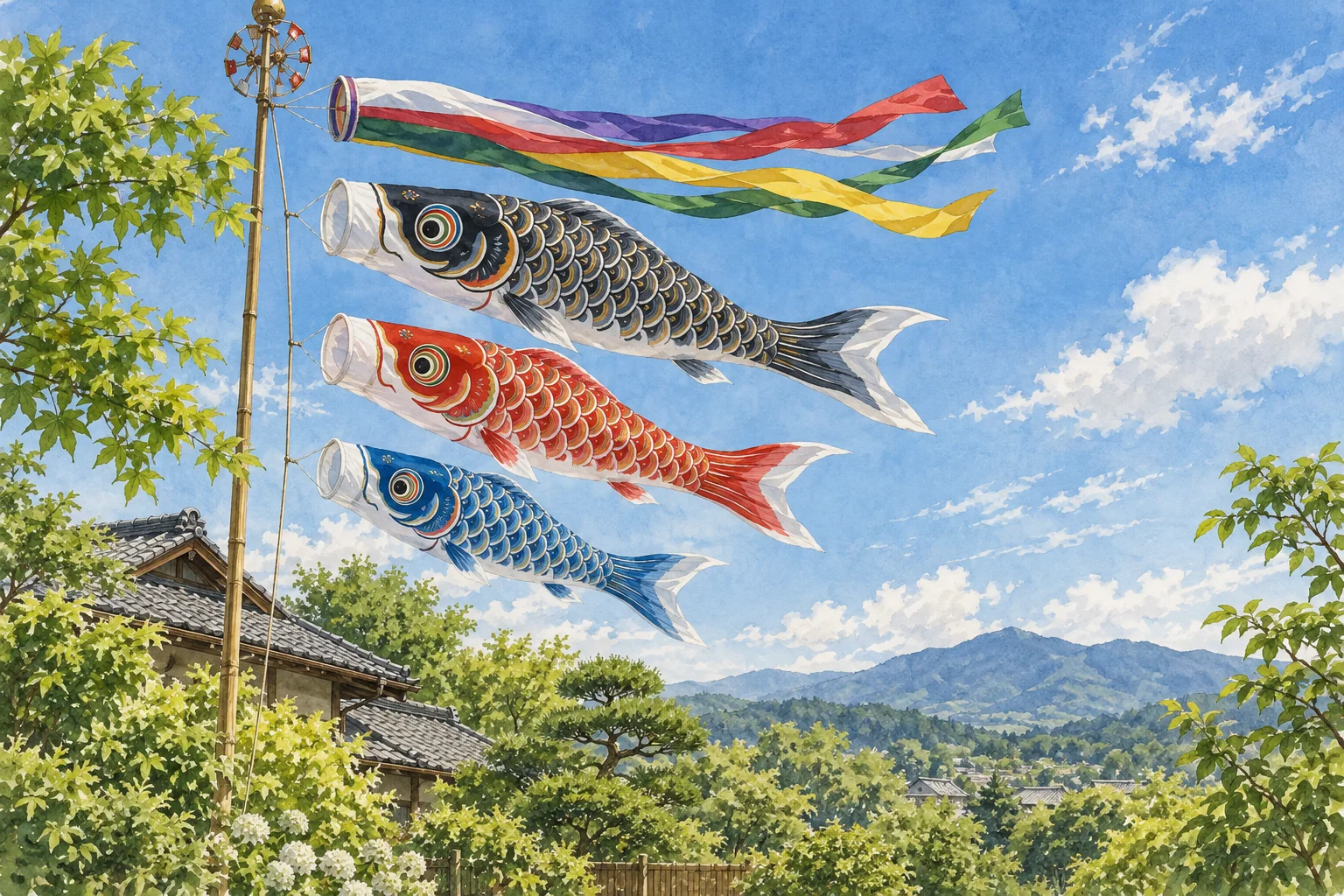
Kodomo no hi is Children's Day on May 5th, when families fly carp-shaped streamers outside the house.
こどもの日は5月5日で、家の外に鯉の形をした吹き流しを揚げます。
In 30 seconds
The standard explanation
May 5th is a national holiday for children, though it grew out of a boys' festival and much of the symbolism is still male. Families fly koinobori, carp streamers, on a pole outside, display samurai helmets indoors, and eat rice cakes wrapped in oak or bamboo leaves. Children also take a bath with iris leaves floating in it.
5月5日は子どもの祝日ですが、もとは男の子の節句で、象徴の多くは今も男性のものです。家は外に鯉のぼりを揚げ、室内に兜を飾り、柏餅やちまきを食べます。菖蒲の葉を浮かべた風呂にも入ります。
As a short speech
A full paragraph you can read aloud
May 5th is Children's Day, a national holiday, and the sight people remember is the koinobori: carp-shaped windsocks flown on a pole outside the house, a large black one, a red one and smaller ones, filling with wind and swimming in the air. The carp is there because of a Chinese legend in which a carp that swims up a waterfall becomes a dragon, so it stands for a child pushing through difficulty and succeeding.
Inside the house, families display a samurai helmet or a small suit of armor, which is about protection rather than war. People eat rice cakes wrapped in oak leaves, chosen because the oak does not drop its old leaves until the new ones appear, and so stands for a family line continuing. It is worth being accurate about one thing: this was the boys' festival, paired with the girls' festival in March, and it was renamed Children's Day when the holiday law was passed in 1948.
5月5日はこどもの日で、国民の祝日です。人が覚えているのは鯉のぼりでしょう。家の外の竿に揚げる鯉の形をした吹き流しで、大きな黒、赤、そして小さなものが並び、風をはらんで空を泳ぎます。
鯉なのは、滝を登った鯉が龍になるという中国の故事によります。困難を押し通って成し遂げる子の姿を表しているのです。家の中には兜や小さな鎧を飾ります。戦いではなく、身を守ることの象徴です。柏の葉で包んだ餅を食べます。
柏は新しい芽が出るまで古い葉を落とさないことから、家が絶えないことを表すとされます。一つ正確に言っておく価値があります。これはもともと男の子の節句で、3月の女の子の節句と対になっていました。1948年の祝日法で「こどもの日」と名づけられたのです。
Questions people actually ask
And how to answer them.
Why carp?
From a Chinese legend about a carp that climbs a waterfall at the Dragon Gate and becomes a dragon. It stands for persevering through difficulty and rising, which is what parents wish for a child.
中国の故事で、龍門という滝を登りきった鯉が龍になる、というものに由来します。困難を越えて立身することの象徴で、親が子に願うものです。
Is it only for boys?
Legally it is for all children, and the holiday law also mentions thanking mothers. In practice the symbolism remains male, and families with daughters usually make more of March 3rd.
法律上はすべての子どものための日で、祝日法には母に感謝するという文言もあります。実際には象徴は男の子のもののままで、娘のいる家はたいてい3月3日のほうを大きく祝います。
What is the bath with leaves?
Shobu-yu, a bath with iris leaves. The plant's name is a homophone for a word meaning martial spirit, and the sharp leaves were also thought to ward off illness at the start of the humid season.
菖蒲湯です。菖蒲の名が「尚武」に通じるとされ、また鋭い葉には、湿気の季節の始まりに病を退ける力があると考えられました。
Phrases you can use
- Those are carp streamers.あれは鯉のぼりです。
- The carp climbs the waterfall and becomes a dragon.鯉は滝を登って龍になります。
- The helmet is about protection, not war.兜は戦いではなく、守りの象徴です。
- It was the boys' festival originally.もとは男の子の節句でした。
- We eat rice cakes wrapped in oak leaves.柏餅を食べます。
Words you need
- streamer / windsock吹き流し
- carp鯉
- helmet / armor兜、鎧
- perseverance粘り強さ
- national holiday国民の祝日
Watch
From YouTubeBackground (Japanese)
5月5日は五節句のひとつ「端午の節句」。1948年の祝日法で「こどもの日」と定められ、その趣旨は「こどもの人格を重んじ、こどもの幸福をはかるとともに、母に感謝する」とされている。鯉のぼりは、江戸時代に武家が端午に幟を立てた風習にならい、町人が鯉の幟を揚げたのが始まりとされ、滝を登った鯉が龍になるという中国の「登龍門」の故事に基づく。柏餅は関東で、ちまきは関西で多く食べられるとされる。菖蒲湯の「菖蒲」は「尚武」「勝負」に音が通じることから、武家に好まれたといわれる。なお鯉のぼりの一番上の五色の吹き流しは、魔除けの意味を持つとされる。