hinamatsuri
the doll festival on March 3rd
雛祭り(ひなまつり)
In one line
The shortest answer that works
Hinamatsuri is the March 3rd festival for girls, when families display a set of ornamental dolls.
雛祭りは3月3日の女の子のための行事で、家では雛人形を飾ります。
In 30 seconds
The standard explanation
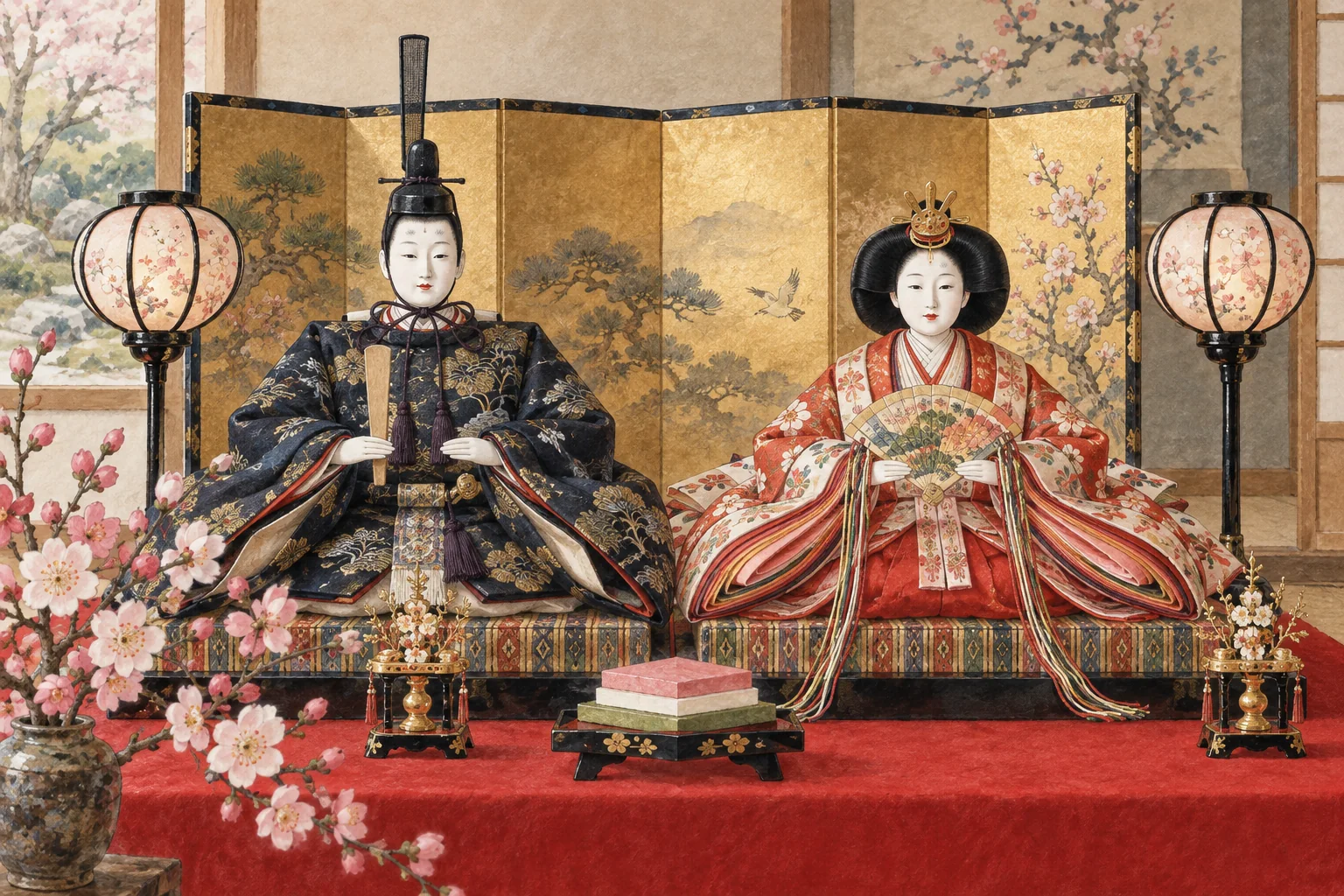
On March 3rd, families with daughters display hina dolls on a tiered stand covered in red cloth: an emperor and empress at the top, then court attendants and musicians below. The dolls are put out in February and taken down soon after the third. The custom grew out of a purification rite in which paper figures were floated away on a river.
3月3日、娘のいる家は赤い布を敷いた段に雛人形を飾ります。最上段に内裏雛、その下に三人官女や五人囃子が並びます。人形は2月に出し、3日を過ぎたら早めにしまいます。もとは紙の人形に穢れを移して川に流す祓いの行事から発展したものです。
As a short speech
A full paragraph you can read aloud
Hinamatsuri falls on March 3rd and is held for girls in the family. Households with daughters set up a tiered stand covered in red cloth and arrange a set of dolls on it: a male and female figure in Heian-period court dress at the top, then ladies of the court, then musicians, and so on down.
A full set is expensive and is often passed down or given by grandparents. The custom comes from an older purification rite in which paper figures were rubbed against a person to take on their misfortune and then floated down a river, and that version still survives in some places.
There is one piece of folklore attached that is worth correcting. People say that if you do not put the dolls away quickly after the third, the daughter will marry late. There is no basis for this. It appears to be a later invention, most plausibly a way of encouraging children to tidy up.
雛祭りは3月3日で、家の女の子のための行事です。娘のいる家では赤い布を敷いた段を組み、そこに人形を並べます。最上段には平安時代の装束をまとった男女の内裏雛、その下に三人官女、五人囃子と続きます。
一式は高価で、受け継がれたり祖父母から贈られたりすることが多いものです。この習わしは、紙の人形で体をなでて災いを移し、川に流す古い祓いの行事から来ています。その形は今も一部の地域に残っています。
これに付いてまわる言い伝えで、訂正しておきたいものがあります。3日を過ぎて早くしまわないと娘の婚期が遅れる、というものです。根拠はありません。後からできた話で、片づけをさせるための言い回しだったという見方がいちばん自然です。
Questions people actually ask
And how to answer them.
Is it true the daughter will marry late?
No. It is folklore with no historical basis, and it seems to be a relatively modern saying. The practical reason to put them away is humidity, since the dolls are silk and paper.
違います。歴史的な根拠のない言い伝えで、比較的新しいもののようです。早くしまう実際的な理由は湿気です。人形は絹と紙でできています。
Why is the emperor sometimes on the left and sometimes on the right?
Kyoto-style sets place the male figure on the viewer's right, following older court convention. Tokyo-style sets place him on the left, following the Western-influenced arrangement adopted in the modern era.
京風は向かって右に男雛を置き、古い宮中の作法に従います。関東風は向かって左で、近代に西洋式に合わせて改められた並べ方です。
What do people eat?
Chirashizushi, a scattered sushi bowl, clam soup, and diamond-shaped tricolor rice cakes. The clams are served in the shell because a pair of shells only fits its own partner, symbolizing a good match.
ちらし寿司、はまぐりのお吸い物、菱餅です。はまぐりは、貝殻が対になったものとしか合わないことから、よい縁組みの象徴とされます。
A common misunderstanding
MYTHLeaving the dolls out after March 3rd will delay the daughter's marriage.
FACTThis has no historical basis and appears to be a modern saying. The real reason to pack them away promptly is that silk and paper dolls are damaged by humidity.
Phrases you can use
- The dolls come out in February.人形は2月に出します。
- The top pair are the emperor and empress.最上段は内裏雛です。
- That saying about marrying late isn't true.婚期が遅れるというのは、本当ではありません。
- A full set is passed down through the family.一式は家で受け継がれます。
- It started as a purification rite with paper figures.もとは紙の人形を流す祓いの行事でした。
Words you need
- doll人形
- tiered stand雛壇
- court dress装束
- purification rite祓いの行事
- heirloom代々受け継ぐもの
Watch
From YouTubeBackground (Japanese)
雛祭りは五節句のひとつ「上巳(じょうし)の節句」にあたる。起源は、紙や草で作った人形(ひとがた)で体をなでて穢れを移し、川や海に流す「流し雛」の風習と、平安時代の貴族の子どもの人形遊び「ひいな遊び」が結びついたものとされる。流し雛は鳥取県用瀬町など各地に今も残る。内裏雛の左右の並びは、京都では向かって右が男雛(古来の「左上位」に従う)、関東では向かって左が男雛とされ、後者は近代に皇室の儀礼で西洋式の並びが取り入れられたことによるとする説が知られる。「早くしまわないと婚期が遅れる」は近代以降の俗説とされ、古い文献での確認はされていない。