otoshidama
New Year money given to children
お年玉(おとしだま)
In one line
The shortest answer that works
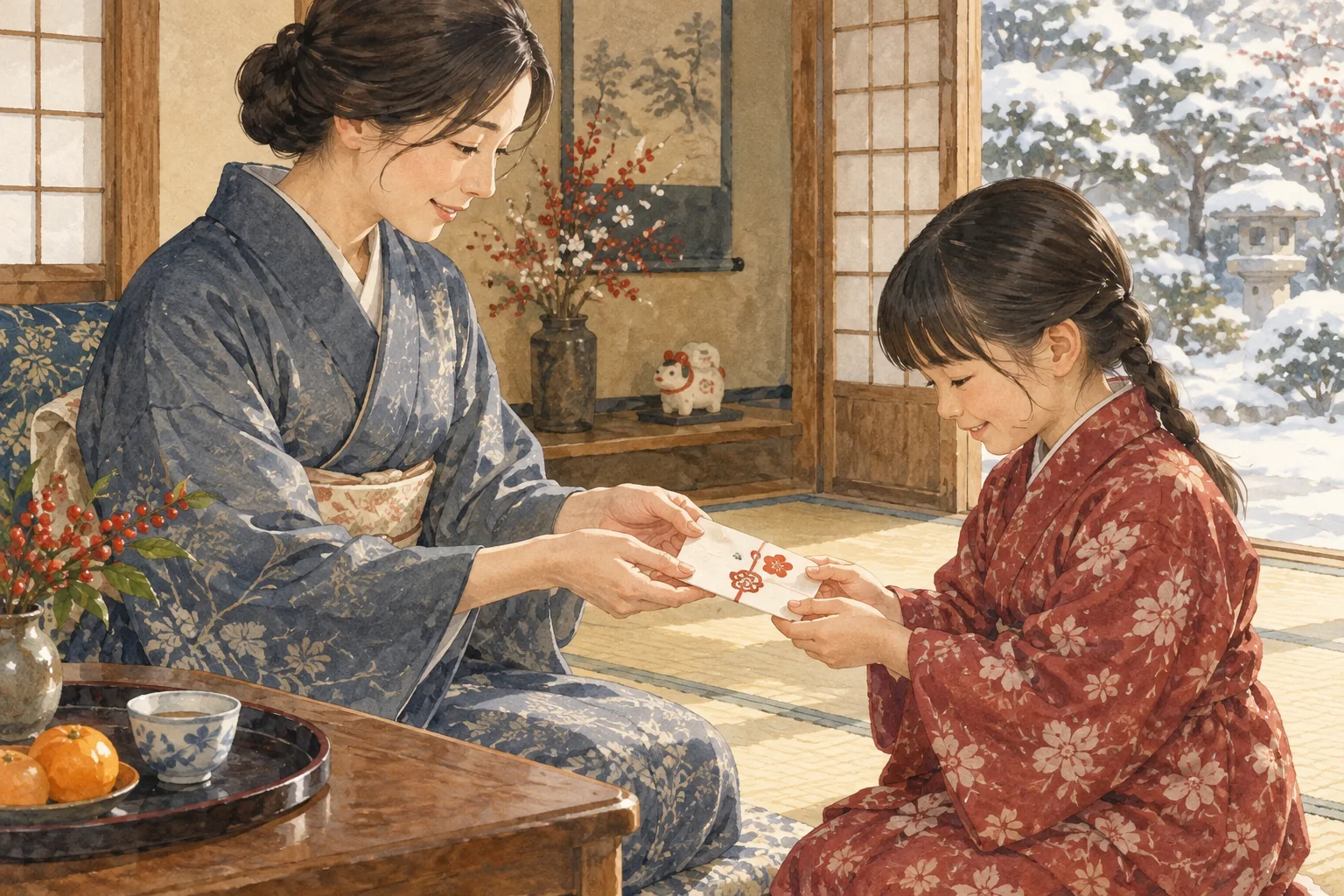
Otoshidama is money given to children at New Year in small decorated envelopes.
お年玉とは、正月に子どもへ、飾りのついた小さな袋で渡すお金です。
In 30 seconds
The standard explanation
At New Year, adults give children money in small envelopes called pochibukuro. Parents, grandparents, aunts and uncles all give, so a child with a large extended family can collect a significant amount over three days. Amounts follow rough conventions by age, and much of it often goes into a bank account rather than being spent.
正月には、大人が子どもにポチ袋と呼ばれる小さな袋でお金を渡します。両親、祖父母、おじ・おばがそれぞれ渡すので、親戚の多い子は三が日でまとまった額になります。金額には年齢によるおおまかな相場があり、使わずに口座へ入れる家庭も多くあります。
As a short speech
A full paragraph you can read aloud
Otoshidama is money given to children at New Year, handed over in a small decorated envelope called a pochibukuro. Every adult relative gives one: parents, grandparents, aunts, uncles. Because of that, a child from a large family can end up with a surprising amount over the first three days of January, and Japanese children treat New Year as the financial event of their year.
There are rough conventions on amounts, scaling with school age, and adults compare notes so that cousins do not receive wildly different sums. The money traditionally goes into a bank account rather than being spent, which is a lesson many Japanese adults remember with some bitterness.
The origin is usually explained through the word: toshidama is thought to have meant the round rice cake offered to the New Year deity, which was then shared out to the household, and the gift later turned from rice cake into money.
お年玉は正月に子どもへ渡すお金で、ポチ袋という飾りのついた小さな袋に入れて渡します。大人の親族がそれぞれ渡します。両親、祖父母、おじ、おば。そのため親戚の多い子は、一月の三が日で驚くほどの額になり、日本の子どもにとって正月は一年で最大の金銭的行事です。
金額には学年に応じたおおまかな相場があり、いとこ同士で大きく差が出ないよう、大人は互いに相談します。そのお金は伝統的に、使わずに口座へ入れられます。
苦い思いとともに覚えている日本の大人も多い教訓です。由来は言葉から説明されるのが一般的で、「年玉」は年神に供えた丸い餅を指し、それを家の者に分け与えたものが、のちに餅から金銭に変わったとされます。
Questions people actually ask
And how to answer them.
How much is usual?
It scales with age, from a small amount for a young child to a five-figure sum for a high school student. Relatives coordinate so cousins of the same age receive the same.
年齢で変わり、幼児には少額、高校生には1万円台ということもあります。同い年のいとこで差が出ないよう、親族間で額をそろえます。
Do adults give to each other?
Not as otoshidama, which goes from older to younger. If you give money to an adult at New Year, such as your parents, the envelope is usually labeled onenga, a New Year gift, instead. Writing otoshidama on an envelope for someone senior to you would seem rude.
お年玉としては渡しません。お年玉は目上から目下へ渡すものだからです。大人、たとえば親に正月にお金を渡すなら、表書きはふつう「お年賀」とします。目上の人に「お年玉」と書いて渡すのは失礼にあたります。
What does the child do with it?
Classically, hands most of it to a parent for the bank. In practice this varies enormously, and the negotiation over how much can be kept is a familiar January scene in Japanese households.
昔ながらには、ほとんどを親に渡して貯金します。実際には家庭差が大きく、いくら手元に残せるかの交渉は、日本の家庭の一月の見慣れた光景です。
Phrases you can use
- Here you go — happy New Year.はい、お年玉。あけましておめでとう。
- Say thank you properly.ちゃんとお礼を言いなさい。
- The envelope is called a pochibukuro.この袋をポチ袋といいます。
- Most of it goes into the bank.ほとんどは貯金します。
- The amount depends on their age.金額は年齢によります。
Words you need
- envelope袋、封筒
- relative親戚
- savings account貯金口座
- customary amount相場
- hand over手渡す
Watch
From YouTubeBackground (Japanese)
「年玉」の語源は、年神に供えた丸い餅を家長が家族に分け与えた「御歳魂(おとしだま)」にあるとする説が広く知られるが、諸説ある。金銭を渡す形が都市部で一般化したのは、高度経済成長期(昭和30年代)ごろとされる。「ポチ袋」の「ぽち」は関西で「これっぽっち」の意とされ、心付けを渡す小袋に由来する。目上の人の子どもに渡す場合は「お年玉」ではなく「文具料」「お年賀」などと表書きするのが丁寧とされる。近年はキャッシュレスでの受け渡しも現れているが、袋ごと手渡す形が依然として主流である。子どもの受取総額に関する各種の民間調査では、小学生で数万円規模になる例が多いと報告されている。