shogatsu no asobi
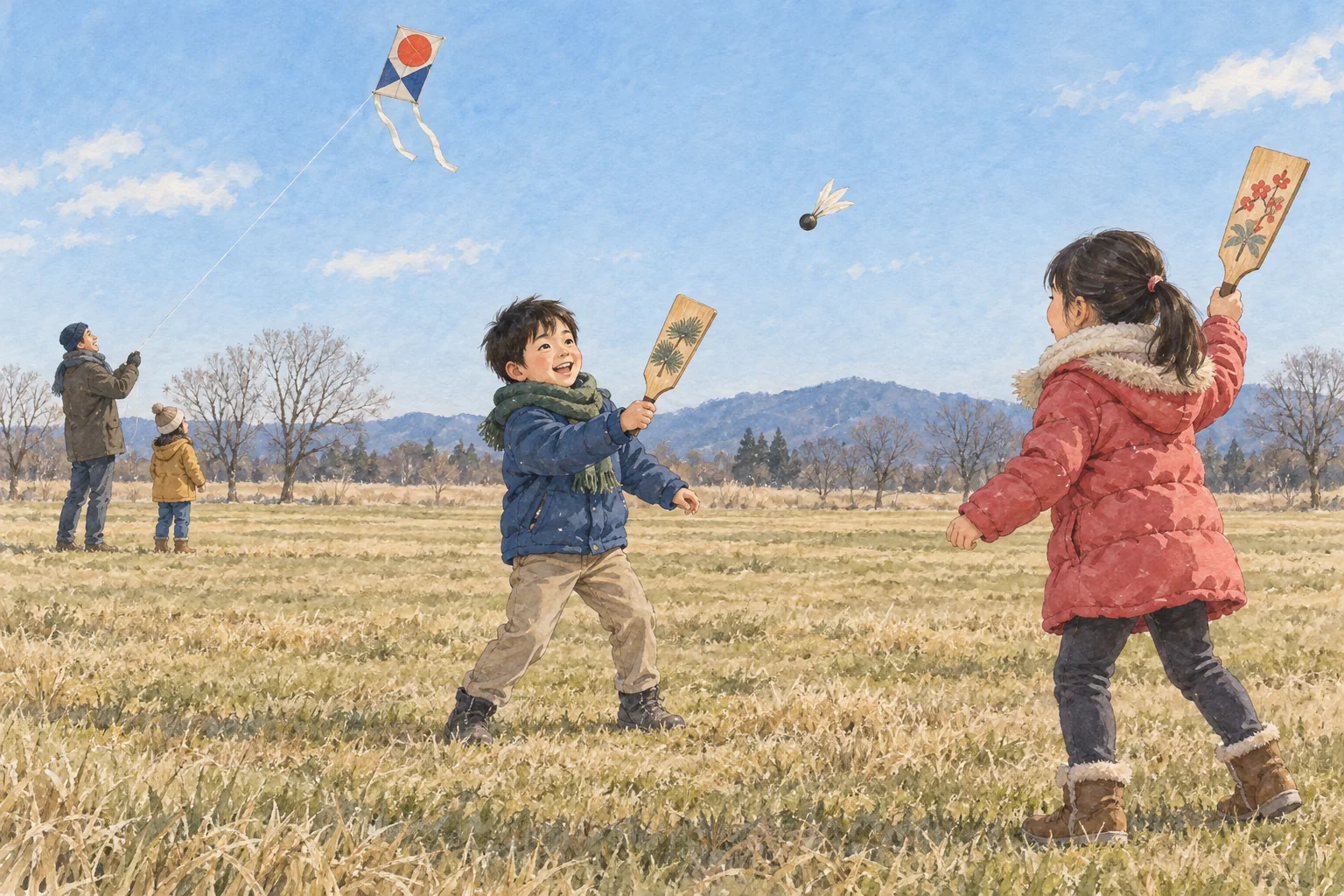
the traditional games played at New Year
正月の遊び(しょうがつのあそび)
In one line
The shortest answer that works
Shogatsu no asobi, New Year games, are pastimes like kites, tops and karuta cards that survive mainly at New Year.
正月の遊びとは、凧あげ、こま、かるたなど、いまでは主に正月にだけ遊ばれる昔の遊びです。
In 30 seconds
The standard explanation
New Year is the one time of year when Japanese children are shown games that nobody plays in ordinary months. Kite flying, hanetsuki with a wooden paddle and a shuttlecock, spinning tops, fukuwarai, a blindfolded face-building game, and karuta card games. Most became popular in the Edo period and later attached themselves to the holiday. Families with small children still play some of them; many households now play none.
正月は、ふだん誰もやらない遊びを子どもに見せる、年に一度の機会です。凧あげ、羽子板と羽根を使う羽根つき、こま回し、目隠しで顔を作る福笑い、そしてかるた。多くは江戸時代に広まった遊びが、のちに正月と結びついたものです。小さな子のいる家では今も遊びますが、まったくやらない家庭も多くなりました。
As a short speech
A full paragraph you can read aloud
If you spend New Year with a Japanese family, you may be handed a wooden paddle or a set of cards and asked to play something you have never seen. These are the New Year games. Hanetsuki looks like badminton without a net: two wooden paddles and a shuttlecock made from a hard seed with feathers in it, and the player who misses traditionally gets ink drawn on the face.
Fukuwarai is a blindfolded game of placing eyes, nose and mouth on a blank face, and the point is that the result is funny. Karuta is a card game where a reader reads a proverb or a poem and the players race to slap the matching card; the version with the hundred classical poems is played competitively, at speed, by serious clubs.
None of these are exclusive to January by nature — they are mostly Edo-period favorites that the holiday preserved, the way a museum preserves things that ordinary life stopped using. Honestly, many families today skip all of it and play video games, and the games survive most reliably in kindergartens and community centers.
日本の家庭で正月を過ごすと、見たこともない板や札を渡されて、遊ぼうと言われるかもしれません。それが正月の遊びです。羽根つきは、ネットのないバドミントンのようなもの。木の羽子板と、硬い種に羽根をさした玉を打ち合い、失敗した人は顔に墨を塗られる、という決まりがありました。
福笑いは、目隠しをして顔の輪郭の上に目や鼻や口を置く遊びで、おかしな顔になることそのものが目的です。かるたは、読み手が読んだ句に合う札を取り合う遊び。百人一首を使うものは競技として行われ、部活動では驚くような速さで札が飛びます。
どれも本来は正月に限られた遊びではなく、多くは江戸時代に親しまれた遊びが正月に残っただけです。ふだんの暮らしが使わなくなったものを、博物館のように正月が保存している、と言ってもいいでしょう。正直に言えば、今はまったくやらずにゲーム機で遊ぶ家庭も多く、確実に残っているのは幼稚園や公民館のほうです。
Questions people actually ask
And how to answer them.
Why only at New Year?
Nothing in the games requires January. They were ordinary pastimes in the Edo period, and as newer toys replaced them in daily life, the holiday became the one occasion that kept them.
遊びの中身に一月である必然はありません。江戸時代のふつうの遊びが、日常では新しい玩具に置きかえられ、正月だけが残す機会になったということです。
Is the ink on the face real?
It is the traditional forfeit in hanetsuki, and it still happens when families play for fun. It is not compulsory and nobody does it at a competitive level.
羽根つきの昔からの罰で、家庭で遊ぶときには今もやります。決まりではありませんし、競技としてやる場面では行いません。
What is the decorated paddle in shop windows?
An ornamental hagoita, made to be displayed rather than played with, often with a padded portrait of a kabuki actor. They are given as a first-New-Year gift for a baby girl in some families.
飾り羽子板です。遊ぶためではなく飾るためのもので、歌舞伎役者などの押絵が付いています。女の子の初正月に贈る家もあります。
A common misunderstanding
MYTHThese are ancient religious rituals.
FACTThey are mostly pastimes that were popular in the Edo period. Some, like the battledore, have acquired talismanic meanings, but the games themselves were played for fun.
Phrases you can use
- These are games we now play only at New Year.いまは正月にだけ遊ぶ遊びです。
- Hanetsuki is like badminton with wooden paddles.羽根つきは、木の板でやるバドミントンのようなものです。
- If you miss, you get ink on your face.打ち損なうと、顔に墨を塗られます。
- In karuta you race to grab the matching card.かるたは、合う札を取り合う遊びです。
- Fukuwarai — you build a face blindfolded.福笑いは、目隠しで顔を作る遊びです。
Words you need
- kite flying凧あげ
- battledore and shuttlecock羽根つき
- spinning topこま
- build-a-face game福笑い
- card-matching gameかるた
Watch
From YouTubeBackground (Japanese)
羽根つきの羽根に付いている黒い玉はムクロジの種で、「無患子」と書くことから子が患わないという願いを込めたとされる。かるたはポルトガル語の carta に由来する語で、十六世紀に伝わったカード遊びが日本化したものとされる。百人一首を用いた競技かるたには全日本かるた協会の定める規則があり、名人位・クイーン位を争う大会が毎年開かれている。福笑いの顔はおかめ(お多福)であることが多い。