hatsuyume
the first dream of the year, and what it is said to foretell
初夢(はつゆめ)
In one line
The shortest answer that works
Hatsuyume is the first dream of the new year, traditionally the one on the night of January 2nd.
初夢とは新年に最初に見る夢のことで、ふつうは1月2日の夜に見た夢を指します。
In 30 seconds
The standard explanation
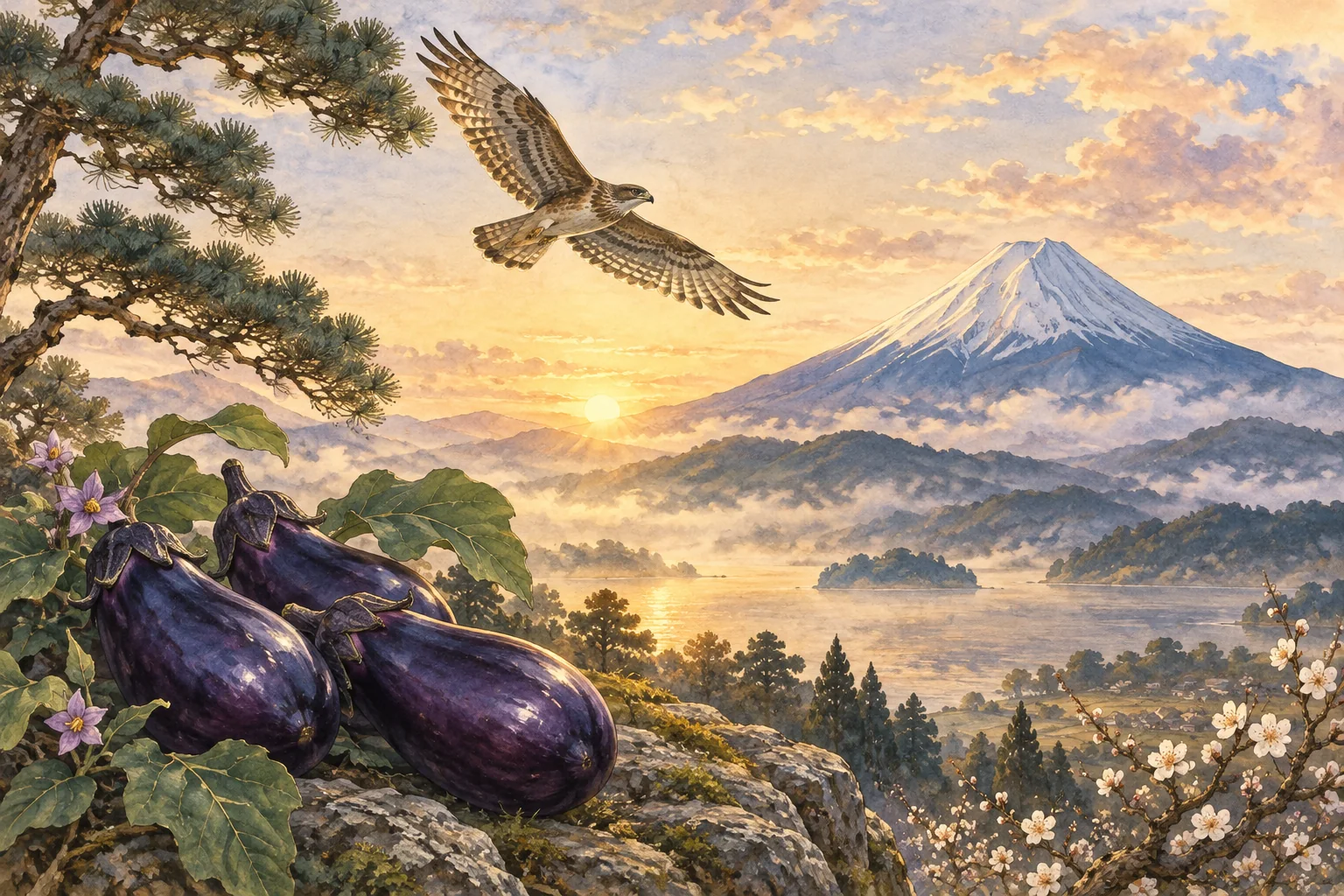
The first dream of the year is said to show what the year will bring. Which night counts has varied, but the common answer is the night of the second of January. The luckiest things to dream of are Mount Fuji first, a hawk second and an eggplant third, a ranking known since the Edo period.
新年に最初に見る夢は、その年を映すと言われます。どの夜を指すかは時代で揺れましたが、いちばんよく言われるのは1月2日の夜です。見ると縁起がよいものは、一に富士山、二に鷹、三に茄子。江戸時代から知られる順です。
As a short speech
A full paragraph you can read aloud
Hatsuyume is the first dream you have in the new year, and it is supposed to tell you how the year will go. Which night counts has never been fully settled: it has meant the night of New Year's Eve, the night of the first, and the night of the second, and the second is the usual answer now.
One explanation is that the second was traditionally the day for doing things for the first time in the year, such as the first calligraphy. There is a famous ranking of lucky things to dream about: Mount Fuji, a hawk, and an eggplant, in that order. The explanations offered for the eggplant are various and none is certain, which is worth admitting rather than repeating one as fact.
There is also a practical custom: people put a picture of a treasure ship under the pillow, sometimes with a palindrome poem written on it, to encourage a good dream. If you get a bad one, the remedy is to float the picture away on water, or simply to tell someone, since a dream spoken aloud was thought not to come true.
初夢は新年に最初に見る夢で、その年の行方を告げるとされます。どの夜を指すかは決着していません。大晦日の夜、元日の夜、2日の夜と言われてきて、いまは2日の夜とするのがふつうです。2日は書き初めなど、その年に初めて何かをする「事始め」の日だったから、という説明があります。
縁起のよいものには有名な順があります。一に富士、二に鷹、三に茄子。茄子の理由にはいくつもの説があり、どれも確かではありません。一つを事実のように繰り返すより、そう認めるほうがよいと思います。
実際的な習わしもあります。良い夢を見るために、宝船の絵を枕の下に敷く。回文の歌を書き添えることもあります。悪い夢を見たら、その絵を水に流すか、人に話してしまう。声に出した夢は正夢にならないと考えられていたからです。
Questions people actually ask
And how to answer them.
Which night is it exactly?
Most commonly the night of January 2nd into the 3rd. New Year's Eve and the night of the 1st have both been used historically, and no single definition has ever been binding.
いちばん多いのは1月2日の夜から3日にかけてです。大晦日の夜や元日の夜とする言い方も歴史的にあり、一つに決まったことはありません。
Why Fuji, a hawk and an eggplant?
Several explanations circulate: the three being famous things of Suruga where Ieyasu retired, or wordplay on words for safety, rising high and achieving. None is confirmed, and the ranking is older than most of the explanations given for it.
いくつも説があります。家康が隠居した駿河の名物だという説、「無事」「高い」「成す」の語呂だという説など。確かめられたものはなく、順番のほうが、それを説明する話より古いのです。
Does anyone still do this?
The ranking is common knowledge and people joke about it every January, but almost nobody puts a treasure ship picture under the pillow. The phrase survives more strongly than the practice.
順番は誰でも知っていて、毎年1月に話題にはなりますが、宝船の絵を枕の下に敷く人はほとんどいません。習慣より言葉のほうが残っています。
Phrases you can use
- Hatsuyume is the first dream of the year.初夢は、その年に最初に見る夢です。
- It's usually the night of January 2nd.ふつうは1月2日の夜です。
- Fuji, a hawk and an eggplant are the lucky three.一富士、二鷹、三茄子が縁起のよい順です。
- People used to put a treasure ship picture under the pillow.昔は宝船の絵を枕の下に敷きました。
- Telling a bad dream was said to stop it coming true.悪い夢は、人に話せば正夢にならないとされました。
Words you need
- dream夢
- omen, sign兆し
- treasure ship宝船
- palindrome回文
- to come true (of a dream)正夢になる
Watch
From YouTubeBackground (Japanese)
初夢をどの夜とするかは時代によって揺れ、大晦日、元日、1月2日の夜の三通りが行われた。現在は2日の夜とするのが一般的で、2日が書き初めなどの「事始め」の日にあたるためという説明がある。「一富士二鷹三茄子」は江戸時代の書物に見え、続きとして「四扇五煙草六座頭」を挙げる言い方もある。宝船の絵には「なかきよの とおのねふりの みなめざめ なみのりふねの おとのよきかな」という回文の歌を書き添えた。悪い夢を見た場合は、その絵を川に流した。