oshogatsu
the Japanese New Year
お正月(おしょうがつ)
In one line
The shortest answer that works
Oshogatsu is the New Year period, and it is the biggest and most important holiday in Japan.
お正月は新年の期間で、日本で最も大きく、最も重要な行事です。
In 30 seconds
The standard explanation
New Year is to Japan what Christmas is to much of the West: the time everyone goes home, shops close, and families eat together. Preparations start in late December with cleaning and decorations. The first three days of January are spent visiting a shrine, eating special food, and doing as little as possible.
日本にとっての正月は、欧米の多くにとってのクリスマスにあたります。誰もが帰省し、店が閉まり、家族で食事をする時期です。準備は12月下旬の大掃除と飾りつけから始まります。1月の三が日は、神社に参り、特別な料理を食べ、できるだけ何もせずに過ごします。
As a short speech
A full paragraph you can read aloud
If you want to understand the Japanese year, start with New Year. It is the equivalent of Christmas elsewhere: the holiday everyone travels home for, the one shops and offices close for, and the one people spend with family rather than friends. Preparation begins in late December.
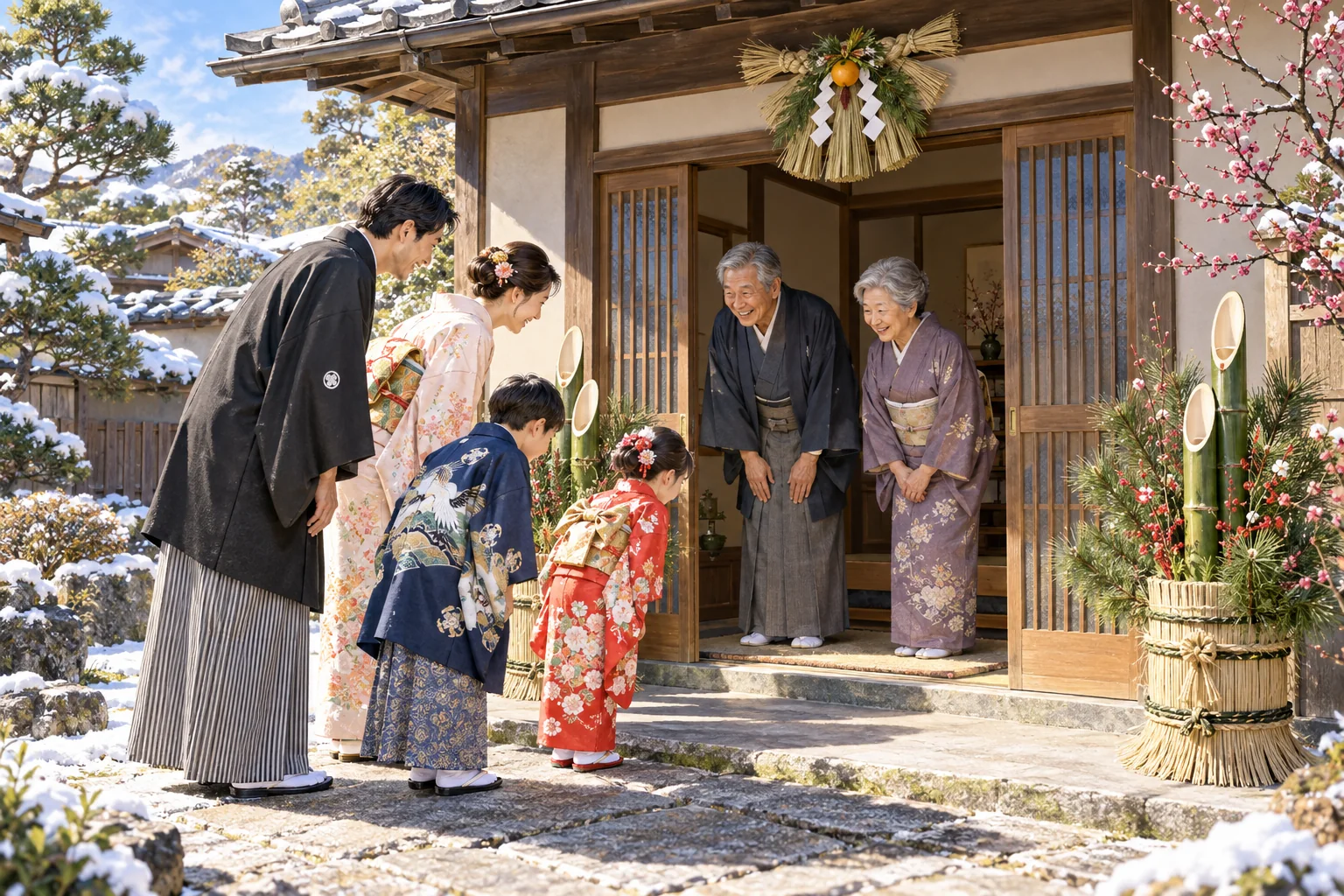
The whole house is cleaned, so the year does not begin with last year's dust. Decorations go up at the entrance: a pine and bamboo arrangement, and a rope with folded paper. Then on the first day the family eats osechi, a set of small dishes prepared in advance so that nobody has to cook, and visits a shrine.
Children receive money in small envelopes. Cards arrive in a stack on the first morning. What strikes me about it is how deliberately slow it is. The whole point is that nothing happens, and that everyone is in the same place doing nothing together.
日本の一年を理解したいなら、正月から始めてください。よその国のクリスマスにあたる行事です。誰もが帰省し、店も会社も閉まり、友人ではなく家族と過ごす。準備は12月下旬に始まります。家じゅうを大掃除し、去年のほこりを残したまま年を始めないようにします。
玄関には飾りが出ます。松と竹を組んだものと、紙を折って垂らした縄。そして元日、家族はおせちを食べます。誰も台所に立たなくて済むよう、前もって作っておいた小皿の集まりです。それから神社へ参ります。
子どもは小さな袋に入ったお金をもらいます。年賀状は元日の朝に束で届きます。私がこの行事について思うのは、その遅さが意図されていることです。何も起きないことが眼目で、全員が同じ場所にいて、一緒に何もしない。
Questions people actually ask
And how to answer them.
Is anything open?
Less than you would hope. Convenience stores and some chains stay open, but many small restaurants and shops close for three days or more. Tourist sites and shrines are busy; ordinary commerce stops.
期待するほどは開いていません。コンビニと一部のチェーンは開いていますが、個人経営の飲食店や商店は三が日以上休みます。観光地と神社は混みますが、普通の商いは止まります。
How do people greet each other?
Akemashite omedeto gozaimasu, said only after midnight on the first. Before the year turns you say yoi otoshi o, meaning have a good new year, which is the farewell used in late December.
「あけましておめでとうございます」で、年が明けてからだけ使います。年内は「よいお年を」と言って別れます。これが12月の終わりの挨拶です。
What is the decoration at the entrance?
Kadomatsu, an arrangement of pine and cut bamboo that marks where the new year's deity can come in, and shimekazari, a rope with folded paper marking the space as purified.
門松です。松と斜めに切った竹を組み、年神様が来る目印にします。もう一つは注連飾りで、紙を垂らした縄が、そこが清められた場であることを示します。
Phrases you can use
- Happy New Year — said only after midnight.あけましておめでとうございます。(年が明けてから)
- Have a good new year.よいお年を。(年内の別れ際に)
- Most shops close for the first three days.多くの店は三が日休みます。
- Everyone travels home for it.みんな帰省します。
- It's the family holiday here, not Christmas.日本で家族の行事といえば、クリスマスではなく正月です。
Words you need
- New Year正月、新年
- go home for the holidays帰省する
- decoration飾り
- the first three days三が日
- purify清める
Watch
From YouTubeBackground (Japanese)
正月は、その年の実りをもたらす「年神(としがみ)」を家に迎える行事とされる。門松は年神が降りてくる目印、注連飾りは神を迎える清浄な場を示すもの、鏡餅は年神への供え物と説明される。飾りを出すのは12月28日までがよく、29日は「二重苦」、31日は「一夜飾り」として避けられる。松の内(飾りを飾っておく期間)は関東で1月7日まで、関西で1月15日までと差がある。1月11日ごろの「鏡開き」で鏡餅を割って食べる。なお正月に家事を休むのは、年神を迎えている間は騒がしくしない、台所の神を休ませる、といった説明がされる。