hanami
cherry blossom viewing
花見(はなみ)
In one line
The shortest answer that works
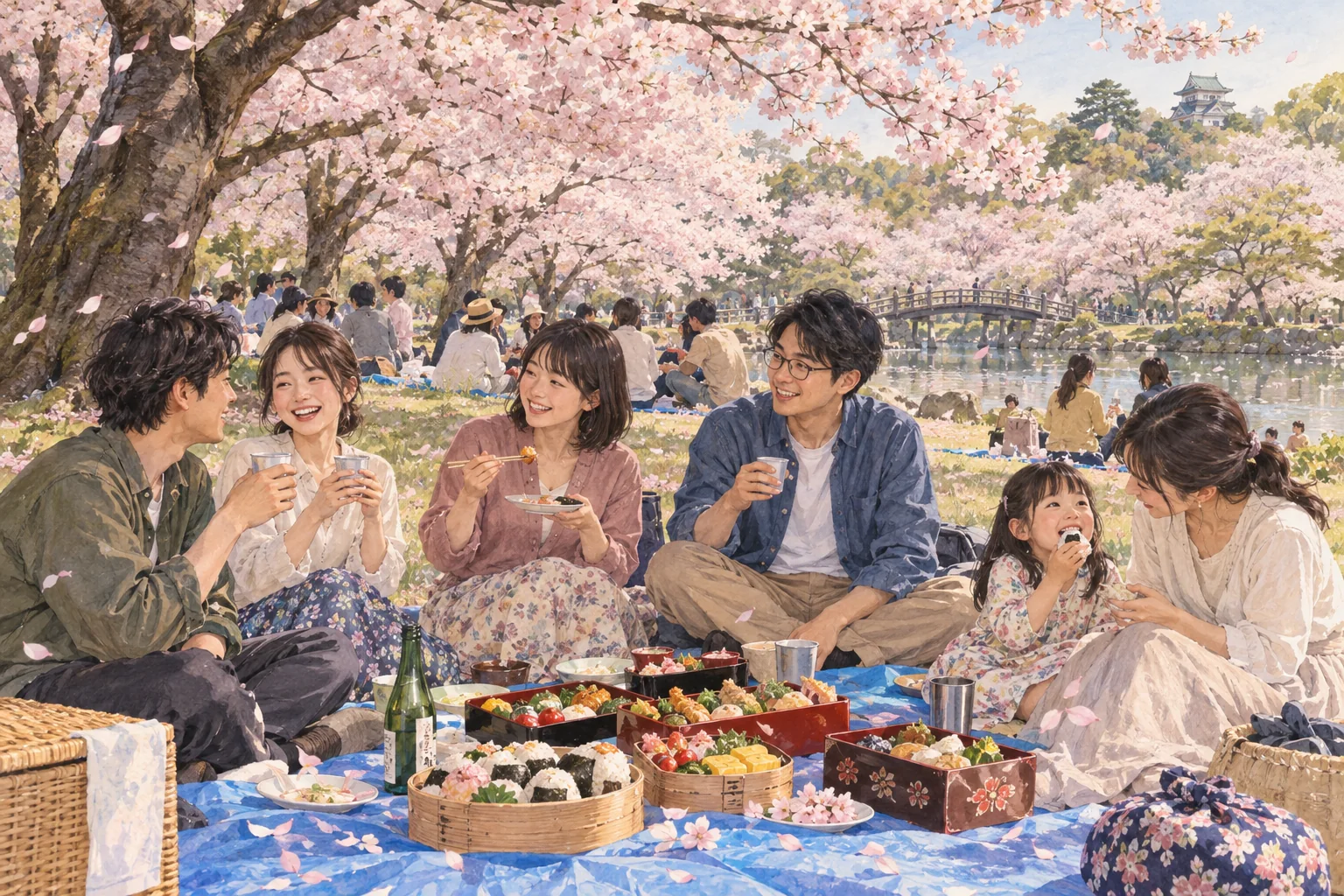
Hanami is a picnic party held under the cherry blossoms in spring.
花見とは、春に桜の下で開くピクニックのような宴会のことです。
In 30 seconds
The standard explanation
Hanami literally means "flower viewing," and in practice it means eating and drinking with friends under the cherry trees. The blossoms only last about a week, so people check the forecast and time their visit for the peak. Companies, families and students all spread out blue sheets in parks and stay from lunch until after dark.
hanami は文字どおり「花を見ること」ですが、実際には桜の下で友人と食べたり飲んだりすることを指します。桜は一週間ほどしかもたないので、人々は開花予想を確認し、見ごろに合わせて出かけます。会社も家族も学生も、公園にブルーシートを広げ、昼から日が暮れたあとまで過ごします。
As a short speech
A full paragraph you can read aloud
One Japanese custom I would like to introduce is hanami, or cherry blossom viewing. Every spring, cherry trees bloom for only about a week, and during that week people gather under them to eat, drink and talk.
Parks are full of groups sitting on plastic sheets from noon until late at night. What I find interesting is that hanami is not really a quiet appreciation of nature. It is a party, and a noisy one. But there is a quieter meaning underneath.
Because the blossoms fall so quickly, they have long been a symbol of how short and precious life is. So when we look up at the petals falling, we are also reminded that this exact moment will not come again.
紹介したい日本の習慣のひとつが花見です。毎年春、桜はほんの一週間ほどしか咲きません。その一週間、人々は桜の下に集まって食べ、飲み、語り合います。
公園はシートに座る集団で埋まり、昼から夜遅くまで続きます。おもしろいのは、花見が静かな自然鑑賞ではないことです。むしろ賑やかな宴会です。しかしその下には静かな意味もあります。
桜はすぐ散るため、古くから人生の短さと尊さの象徴とされてきました。散る花びらを見上げるとき、私たちはこの瞬間が二度と来ないことも思い出しているのです。
Questions people actually ask
And how to answer them.
Why cherry blossoms? Japan has plenty of other flowers.
Partly because they bloom all at once and fall within a week. That shortness is the point. Plum blossoms were actually the favorite flower in the eighth century, and cherry took over later.
一つには、一斉に咲いて一週間ほどで散るからです。その短さこそが要点です。八世紀の奈良時代には梅の花のほうが主役で、桜が主役になったのは後の時代です。
Do people really just sit and drink all day?
Honestly, yes, a lot of them do. In big city parks the atmosphere is closer to an outdoor party than a nature walk. But a quiet walk under the trees is also a completely normal way to do hanami.
正直なところ、多くの人はそうです。都会の大きな公園では、自然散策というより野外パーティーに近い雰囲気です。ただ、桜の下を静かに歩くのも立派な花見です。
Is it true that junior employees have to save the spot?
It used to be common at companies for the newest employee to go early in the morning and hold the spot all day. It still happens, but many companies have stopped doing it because people see it as unfair.
以前は会社で、新入社員が朝から場所取りをして一日中待つのが普通でした。今もありますが、不公平だという意識から取りやめる会社も増えています。
A common misunderstanding
MYTHHanami is a quiet, meditative appreciation of nature.
FACTFor many Japanese people it is a loud, cheerful party with food and alcohol. The quiet, poetic side is real, but it lives mostly in literature rather than in the park on a Saturday afternoon.
Phrases you can use
- The blossoms are at their best right now.今がちょうど見ごろです。
- They say they'll be in full bloom this weekend.今週末が満開だそうです。
- Shall we grab a spot under that tree?あの木の下に場所を取りましょうか。
- The petals fall like snow at the end.終わりごろは、花びらが雪のように散ります。
- Cherry blossoms only last about a week, so the timing is everything.桜は一週間ほどしかもたないので、タイミングがすべてです。
Words you need
- in full bloom満開の
- blossom forecast開花予想
- petal花びら
- short-livedはかない、長続きしない
- save a spot場所を取る
Watch
From YouTubeBackground (Japanese)
花見の主役はもともと桜ではなく梅だった。奈良時代の『万葉集』では梅を詠んだ歌が桜の三倍近くあり、平安時代になって「花」といえば桜を指すようになった。今の花見の直接の原型は、江戸時代に八代将軍・徳川吉宗が隅田川や飛鳥山に桜を植えさせ、庶民が自由に集まれる場所を作ったことにあるとされる。ちなみに全国のソメイヨシノはすべて接ぎ木で増やされたクローンで、遺伝的に同一である。同じ地域で一斉に咲き、一斉に散るのはそのためで、開花予想という仕組みが成り立つのもこの性質による。