koto
the thirteen-stringed Japanese zither
琴(こと)
In one line
The shortest answer that works
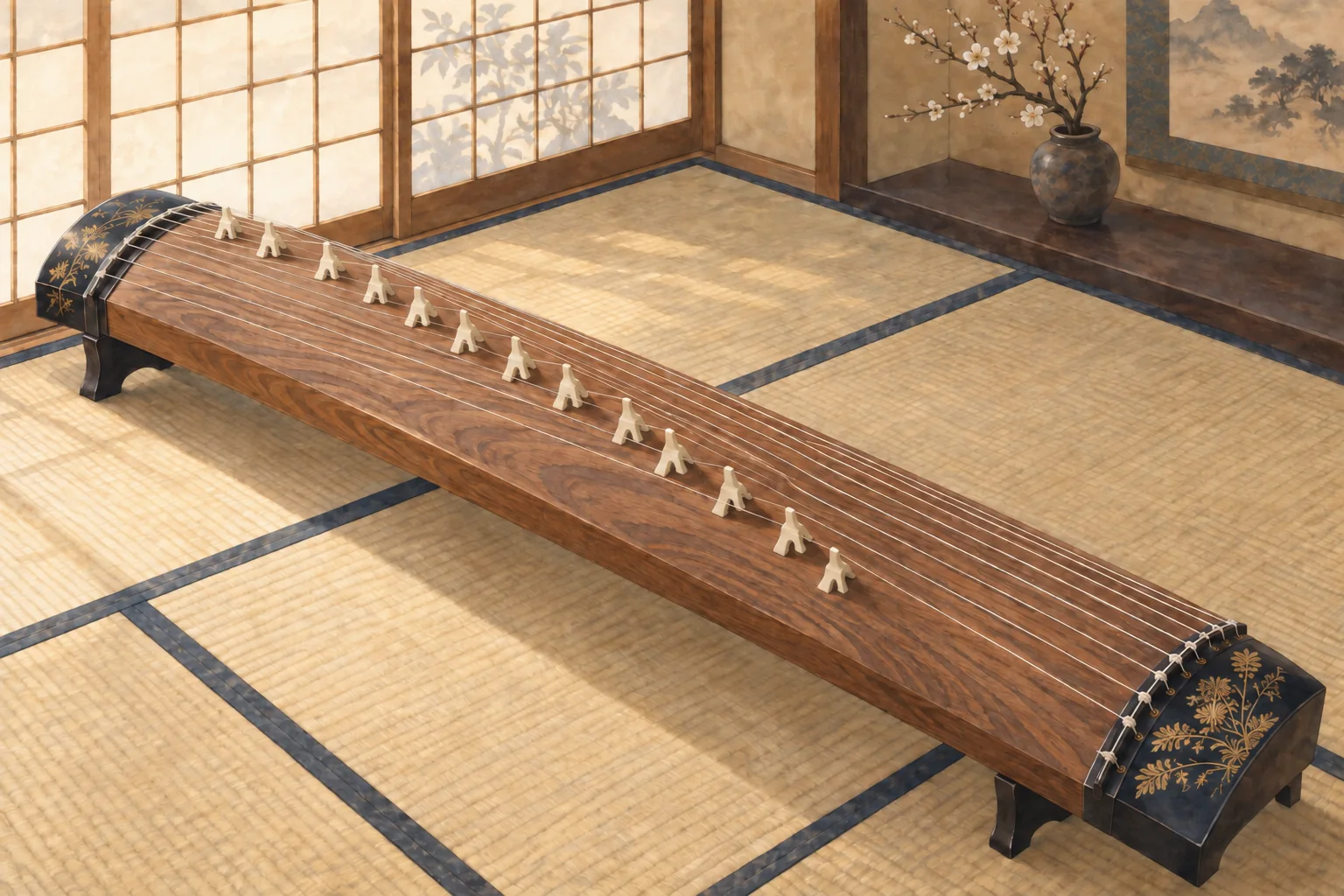
The koto is a long wooden instrument with thirteen strings, laid on the floor and plucked with picks on the fingers.
琴とは十三本の弦を張った長い木の楽器で、床に置き、指にはめた爪で弾きます。
In 30 seconds
The standard explanation
The koto is a zither nearly two meters long, made of paulownia wood, with thirteen silk or nylon strings raised on movable bridges. The player kneels beside it and plucks with three ivory or plastic picks worn on the thumb and first two fingers. It came from China in the Nara period and was a court instrument before spreading to townspeople. Its bright, flowing tone is the sound Japanese people associate with New Year, because one piece is played so widely in January.
琴は長さ二メートル近い桐の箏で、動かせる柱の上に絹かナイロンの十三本の弦を張ります。奏者はそばに正座し、親指と人差し指、中指にはめた象牙かプラスチックの爪で弾きます。奈良時代に中国から伝わり、宮廷の楽器だったものが町人に広まりました。明るく流れるような音色は、一月にある曲があちこちで流れるため、日本人が正月と結びつける音です。
As a short speech
A full paragraph you can read aloud
The koto is the instrument most Japanese people would name if you asked for the sound of traditional Japan. It is a long, hollow box of paulownia wood, about a hundred and eighty centimeters, with thirteen strings stretched over movable bridges that the player slides to tune.
You kneel at one end, wear small picks on three fingers of the right hand, and pluck; the left hand presses the strings behind the bridges to bend the pitch. The instrument came from China more than a thousand years ago and was played in the imperial court and by aristocratic women, which is why it appears in classical literature as a mark of refinement.
In the Edo period blind musicians developed it into a solo and ensemble art with songs, and in the twentieth century composers wrote new music for it, including a New Year piece that you hear in shops all over Japan in January. Many girls from well-off families once learned it. I find its sound clear and a little melancholy, like water over stones.
琴は、伝統的な日本の音といえば何かと尋ねたときに、ほとんどの日本人が挙げる楽器です。桐の長い中空の箱で、長さはおよそ百八十センチ、動かせる柱の上に十三本の弦を張り、奏者は柱をずらして調弦します。
片方の端に正座し、右手の三本の指に小さな爪をはめて弾き、左手で柱の向こう側の弦を押して音の高さを変えます。この楽器は千年以上前に中国から伝わり、宮廷や貴族の女性が弾いたため、古典文学には教養の印として登場します。
江戸時代には盲目の音楽家が唄を伴う独奏と合奏の芸術に発展させ、二十世紀には作曲家が新しい曲を書き、その中には一月に全国の店で耳にする正月の曲があります。かつては裕福な家の娘の多くが習うものでした。私にはその音が澄んでいて少し物悲しく、石の上を流れる水のように聞こえます。
Questions people actually ask
And how to answer them.
What is the New Year piece everyone plays?
It is called Haru no Umi, The Sea in Spring, written in 1929 by Michio Miyagi, a blind koto master, for koto and shakuhachi flute. It was composed for a New Year ceremony, became a hit through radio and records, and is now played so widely in early January that it works as the season's soundtrack.
「春の海」で、1929年に盲目の箏曲家、宮城道雄が箏と尺八のために書きました。新年の儀式のために作曲され、ラジオとレコードで広まり、今では一月初めにあまりに広く流れるので季節の音楽そのものになっています。
Is the koto related to the guzheng or the gayageum?
Yes, they are cousins. All descend from Chinese zithers, and the koto arrived in Japan in the Nara period. Over centuries each country changed the number of strings, the tuning and the playing style, so they now sound distinct. The koto's picks and its pentatonic tunings give it its particular flavor.
はい、親戚です。どれも中国の箏の子孫で、琴は奈良時代に日本に伝わりました。何世紀もの間に各国が弦の数、調弦、奏法を変えたので、今では音が異なります。琴は爪と五音音階の調弦が独特の味を出しています。
Why does the player keep moving those little bridges?
Each bridge sets the pitch of one string, and koto music uses several different tunings. Between pieces, or even during one, the player slides bridges to change the scale. It is faster than it looks, and it means the same thirteen strings can serve very different music.
柱はそれぞれ一本の弦の音の高さを決め、箏曲にはいくつもの調弦があります。曲と曲の間、ときには曲の途中でも、奏者は柱をずらして音階を変えます。見た目より速く、同じ十三本の弦で大きく違う音楽を弾けるということです。
Phrases you can use
- That's a koto; it has thirteen strings.あれは琴で、弦が十三本あります。
- You play it with picks on your fingers.指に爪をはめて弾きます。
- This piece is played everywhere at New Year.この曲は正月にどこでも流れます。
- The bridges are moved to change the tuning.調弦を変えるために柱を動かします。
- My grandmother used to teach koto.祖母は琴を教えていました。
Words you need
- zither箏・琴
- string弦
- bridge柱
- finger pick爪
- pluck弾く・つま弾く
- tuning調弦
Watch
From YouTubeBackground (Japanese)
現在ふつうに「こと」と呼ばれる楽器の正式な表記は「箏」で、柱を立てて調弦するのが特徴です。「琴」はもともと柱のない別の楽器を指しましたが、漢字の使い分けは今では緩やかです。奈良時代に唐から雅楽の楽器として伝わり、平安時代には貴族の教養でした。江戸初期の八橋検校が近世箏曲の基礎を作ったとされ、「六段の調」は今も広く演奏されます。大正から昭和にかけては宮城道雄が十七弦の低音の箏を考案し、「春の海」などで箏曲を近代化しました。桐の胴の内側の彫り方や装飾で価格が大きく異なり、演奏用の楽器は高価です。学校の音楽の授業で和楽器を扱うようになってから、箏に触れる子どもが増えています。爪の形は流派で異なり、生田流は角爪、山田流は丸爪を使います。