gagaku
the court music of Japan
雅楽(ががく)
In one line
The shortest answer that works
Gagaku is the court music of Japan, played with the same instruments for well over a thousand years.
雅楽とは日本の宮廷の音楽で、千年以上にわたって同じ楽器で演奏されてきました。
In 30 seconds
The standard explanation
Gagaku is the music of the imperial court, brought together from music that came from China and Korea and from older Japanese forms. The ensemble combines wind, string and percussion instruments, and the sound is slow, layered and without a strong beat. It is still performed at the palace and at some shrines and temples, and was inscribed by UNESCO in 2009.
雅楽は宮廷の音楽で、中国や朝鮮半島から伝わった音楽と、日本に古くからあった音楽が合わさってできました。管楽器・弦楽器・打楽器を組み合わせ、音はゆっくりと重なり合い、強い拍子がありません。今も宮中や一部の神社や寺で演奏され、2009年にユネスコの一覧に記載されました。
As a short speech
A full paragraph you can read aloud
Gagaku is the court music of Japan and one of the oldest ensemble traditions still performed anywhere. It took shape more than a thousand years ago from music that arrived from the Asian continent together with older native forms, and the repertoire has been handed down through families of court musicians ever since.
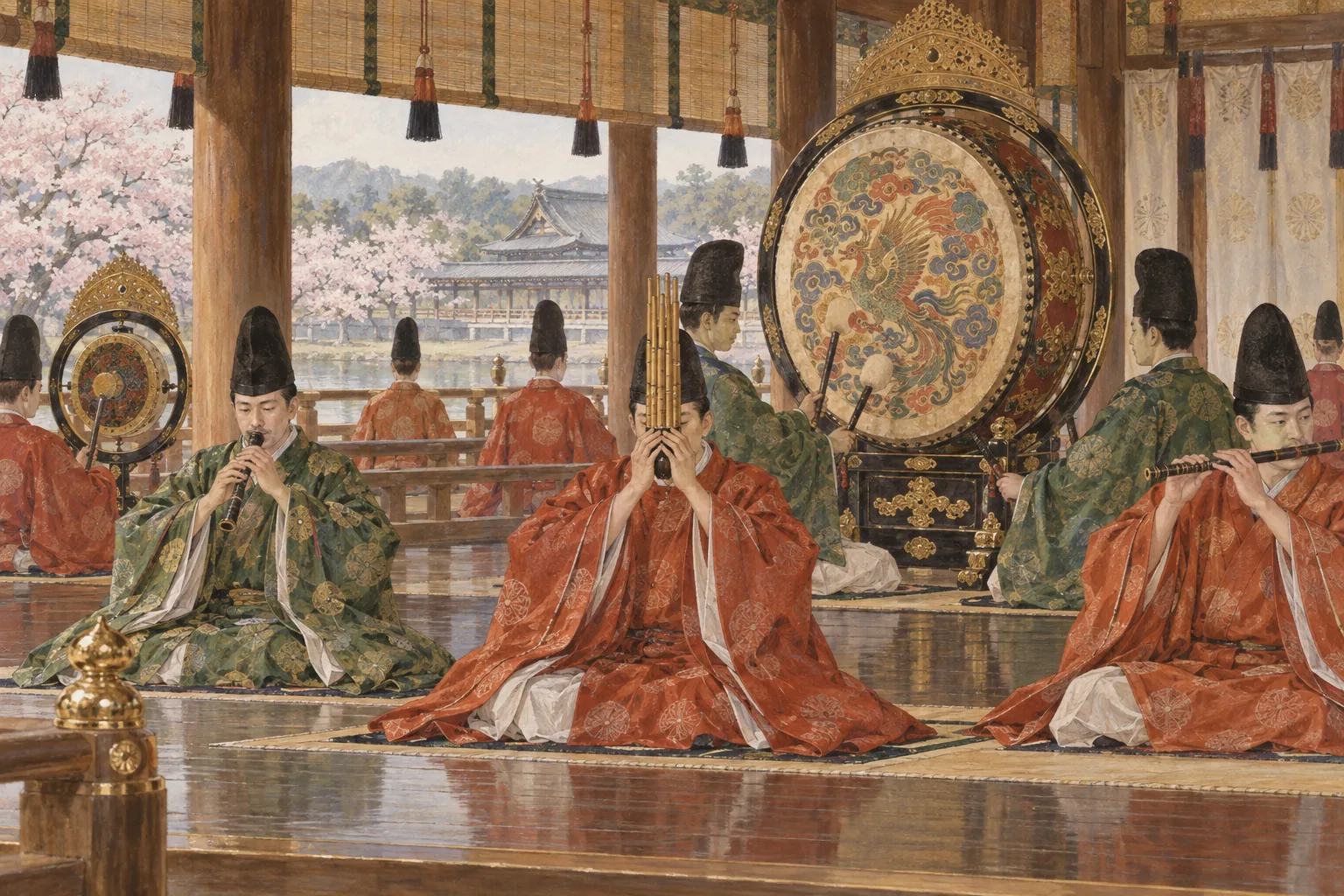
The ensemble is small but distinctive. The sho, a mouth organ of seventeen bamboo pipes, produces a sustained chord that some listeners describe as the sound of light. Over it the hichiriki, a short double-reed pipe, carries a piercing melody, and the ryuteki flute moves between them, with drums marking long, slow cycles.
There is no strong beat and no harmony in the Western sense, and a first hearing can feel like music without a pulse. It is still performed at the imperial palace by the court musicians, and at some shrines and temples, and was inscribed on the UNESCO Representative List in 2009. If you can hear it live rather than recorded, do.
雅楽は日本の宮廷の音楽で、今も演奏されている合奏の伝統としては世界でも古いものの一つです。千年以上前、大陸から伝わった音楽と、日本に古くからあった形が合わさって今の姿になり、曲はそれ以来、宮廷の楽人の家によって受け継がれてきました。
合奏は小さな編成ですが、音の作りが独特です。笙は十七本の竹を束ねた楽器で、和音を長く伸ばし続けます。その響きを、光の音のようだと言う人もいます。その上を篳篥という短い両舌の笛が、鋭い旋律で進みます。龍笛がそのあいだを行き来し、太鼓が長くゆるやかな区切りを打ちます。
強い拍子はなく、西洋の意味での和音もありません。初めて聴くと、脈のない音楽のように感じられることがあります。今も宮中の楽師によって演奏され、一部の神社や寺でも奏でられ、2009年にユネスコの代表一覧表に記載されました。録音ではなく、その場で聴ける機会があれば、ぜひ。
Questions people actually ask
And how to answer them.
Where can I actually hear it?
The Imperial Household Agency's musicians give public performances, the National Theatre stages it from time to time, and some large shrines perform it at festivals and at Shinto weddings. Checking a shrine's annual calendar is the easiest route.
宮内庁の楽部が一般向けの演奏会を行い、国立劇場でも折々に上演されます。大きな神社では祭りや神前式で奏でられます。神社の年間の行事を調べるのがいちばん近道です。
Is it religious music?
Not in itself. It is court music that is also used in Shinto and Buddhist ceremonies, and the same pieces are performed in concert. The context changes, the music does not.
それ自体は宗教の音楽ではありません。宮廷の音楽であり、神道や仏教の儀式でも用いられ、同じ曲が演奏会でも奏でられます。変わるのは場であって、音楽ではありません。
Why does it sound so unfamiliar?
There is no regular beat to follow, the tuning is not the Western scale, and the sho holds chords that do not resolve. Listening for the layers rather than for a tune is the usual advice for a first time.
追いかけられる規則正しい拍子が無く、音律も西洋の音階ではなく、笙は解決しない和音を保ち続けます。初めてなら、旋律を追うのではなく、重なりを聴くとよいと言われます。
Phrases you can use
- This is the court music of Japan.これは日本の宮廷の音楽です。
- The repertoire is over a thousand years old.曲は千年以上前から伝わっています。
- There is no strong beat.はっきりした拍子はありません。
- That instrument is a mouth organ made of bamboo.あの楽器は竹でできた笙です。
- It is performed at the palace and at some shrines.宮中と一部の神社で演奏されます。
Words you need
- court music宮廷の音楽
- an ensemble合奏
- a reed pipe篳篥のような両舌の笛
- to hand down受け継ぐ
- a sustained chord伸ばした和音
Watch
From YouTubeBackground (Japanese)
主な楽器は、笙・篳篥・龍笛の三つの管楽器に、琵琶と箏、太鼓・鉦鼓・鞨鼓の打楽器を加えた編成です。舞をともなうものを舞楽、楽器だけのものを管絃と呼びます。よく知られた曲に越天楽があり、旋律は民謡にも取り入れられました。宮内庁式部職楽部が伝承を担い、楽人の家系が代々受け継いできました。2009年にユネスコの無形文化遺産の代表一覧表に記載されています。音律や楽譜にも独自の仕組みがあり、西洋音楽の用語では説明しにくいところがあります。