no
classical masked drama
能(のう)
In one line
The shortest answer that works
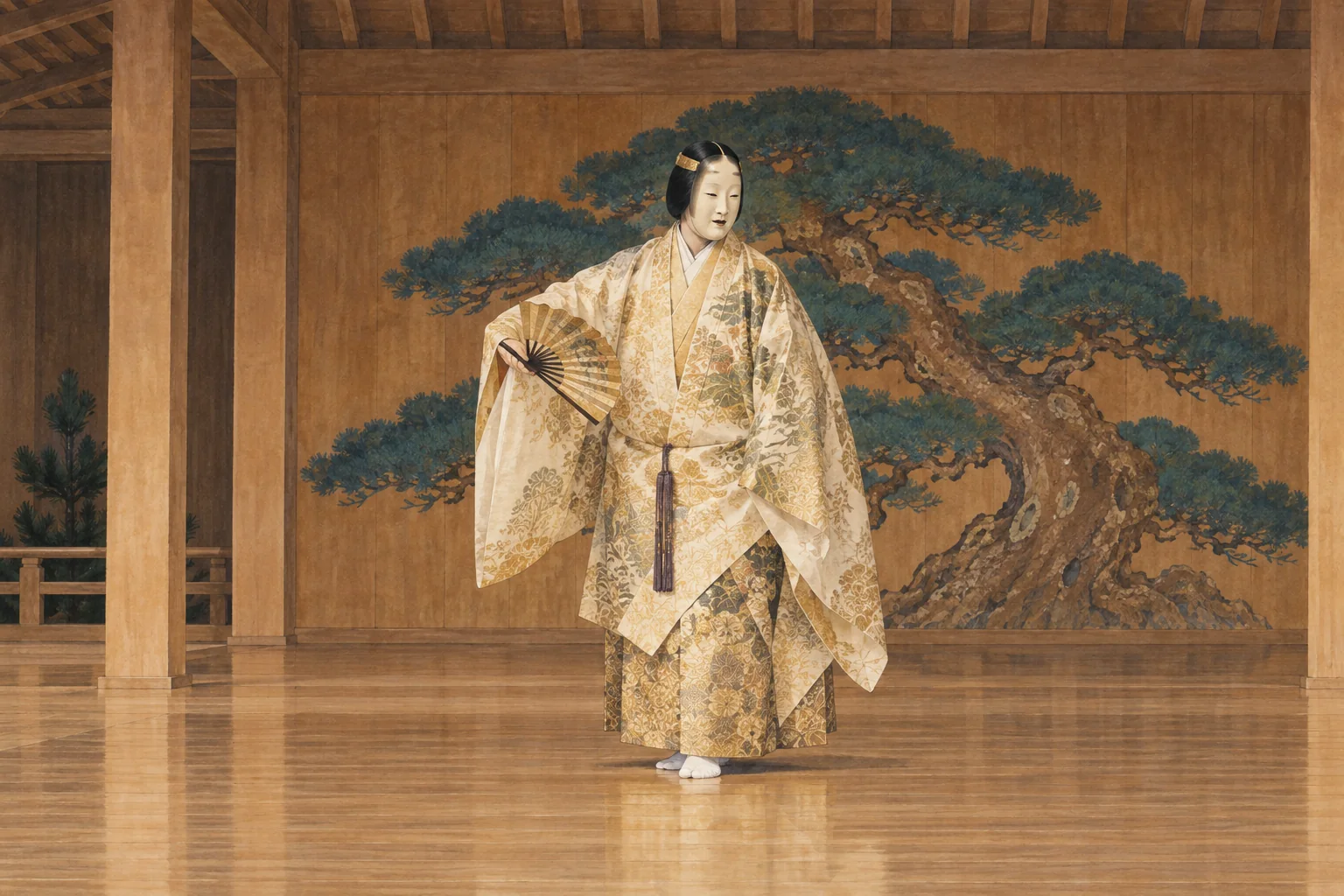
No, or noh, is a slow, masked classical drama performed in much the same form for over six hundred years.
能とは、六百年以上ほぼ同じ形で演じられてきた、面をつけた緩やかな古典劇です。
In 30 seconds
The standard explanation
Noh took its present form in the fourteenth century and has changed remarkably little since. A masked main actor moves extremely slowly on a bare cypress stage, accompanied by a chorus, flute and drums. The stories are often about a ghost returning to tell what happened. It is one of the oldest theatrical traditions still performed anywhere in the world.
能は14世紀に今の形になり、それ以来ほとんど変わっていません。面をつけた主役が、何もない檜の舞台をきわめてゆっくり動き、地謡と笛と鼓がそれに添います。物語は、幽霊が現れて何があったかを語る形が多くあります。現在も上演されている演劇の伝統としては、世界でも最も古いもののひとつです。
As a short speech
A full paragraph you can read aloud
Noh is one of the oldest forms of theater still performed today, in Japan or anywhere else. It took its present shape in the fourteenth century under Kan'ami and his son Zeami, and it has changed very little since.
The stage is bare cypress wood with a painted pine tree at the back and a bridge leading on from the side. The main actor wears a carved wooden mask, and moves with extraordinary slowness. A chorus sits at the side and narrates, accompanied by a flute and drums.
Many plays follow the same shape: a traveling monk meets a stranger, who turns out to be the ghost of someone who died there, and who returns in the second half in their true form to tell the story. To be honest, people do fall asleep at noh, including Japanese people, and nobody is very embarrassed about it. The masks alone are worth the ticket.
能は、日本でも世界でも、今も演じられている演劇としては最も古いもののひとつです。14世紀に観阿弥・世阿弥の親子のもとで今の形になり、それ以来ほとんど変わっていません。
舞台は何もない檜張りで、後ろに松が描かれ、脇から橋がかりが伸びています。主役は木を彫った面をつけ、驚くほどゆっくり動きます。地謡が脇に並んで語り、笛と鼓が添います。多くの曲は同じ形をたどります。
旅の僧が見知らぬ人に出会い、その人はそこで死んだ者の幽霊で、後半に本当の姿で現れて物語を語る。正直に言えば、能では人が眠ります。日本人も眠ります。そして誰もそれをあまり恥じません。面を見るだけでも、切符の価値はあります。
Questions people actually ask
And how to answer them.
What's the difference from kabuki?
Almost everything. Noh is slow, minimal, masked and aristocratic; kabuki is fast, spectacular, unmasked and popular. Noh is more than two hundred years older.
ほぼすべてが違います。能は緩やかで簡素、面をつけ、武家や貴族のもの。歌舞伎は速く派手で、面をつけず、町人のものです。能のほうが200年以上古いです。
Why do the masks look different from different angles?
They are carved so that tilting the head changes the expression: down reads as sorrow, up as joy. Actors use tiny head movements to shift the emotion, which is the core technique.
首の角度で表情が変わるよう彫られています。下げれば曇り、上げれば照る。役者はわずかな首の動きで感情を変えます。これが技の核心です。
What is kyogen?
The comic form performed between noh plays. It is spoken rather than chanted, uses no masks for most roles, and is about ordinary people getting into trouble. Together they are called nogaku.
能の合間に演じられる喜劇です。謡ではなく台詞で、多くの役は面をつけず、庶民が失敗する話が中心です。両方あわせて能楽と呼びます。
Phrases you can use
- Noh took its present form in the 1300s.能は1300年代に今の形になりました。
- The mask changes expression with the angle of the head.面は首の角度で表情が変わります。
- The comic pieces between plays are called kyogen.合間の喜劇を狂言といいます。
- It's much slower than kabuki.歌舞伎よりずっとゆっくりです。
- Honestly, people do fall asleep, and that's fine.正直、眠る人はいます。それで構いません。
Words you need
- mask面
- chorus地謡
- minimal / spare簡素な
- ghost幽霊、亡霊
- patron後援者、庇護者
Watch
From YouTubeBackground (Japanese)
能は観阿弥・世阿弥の親子が室町将軍足利義満の庇護を受けて大成した。世阿弥の『風姿花伝』は能の理論書であり、「秘すれば花」などの言葉で知られる。能面は角度によって表情が変わり、うつむける動きを「クモラス」、上向ける動きを「テラス」と呼ぶ。舞台後方の羽目板「鏡板」に描かれた松(老松)は、奈良・春日大社の影向の松に由来するとされる。能楽は2001年にユネスコの「人類の口承及び無形遺産の傑作」に宣言され、2008年に無形文化遺産の代表一覧表へ記載された。主役を務めるシテ方には観世・宝生・金春・金剛・喜多の五流があり、国立能楽堂などで定期公演が行われている。