kyogen
the comic theater performed alongside noh
狂言(きょうげん)
In one line
The shortest answer that works
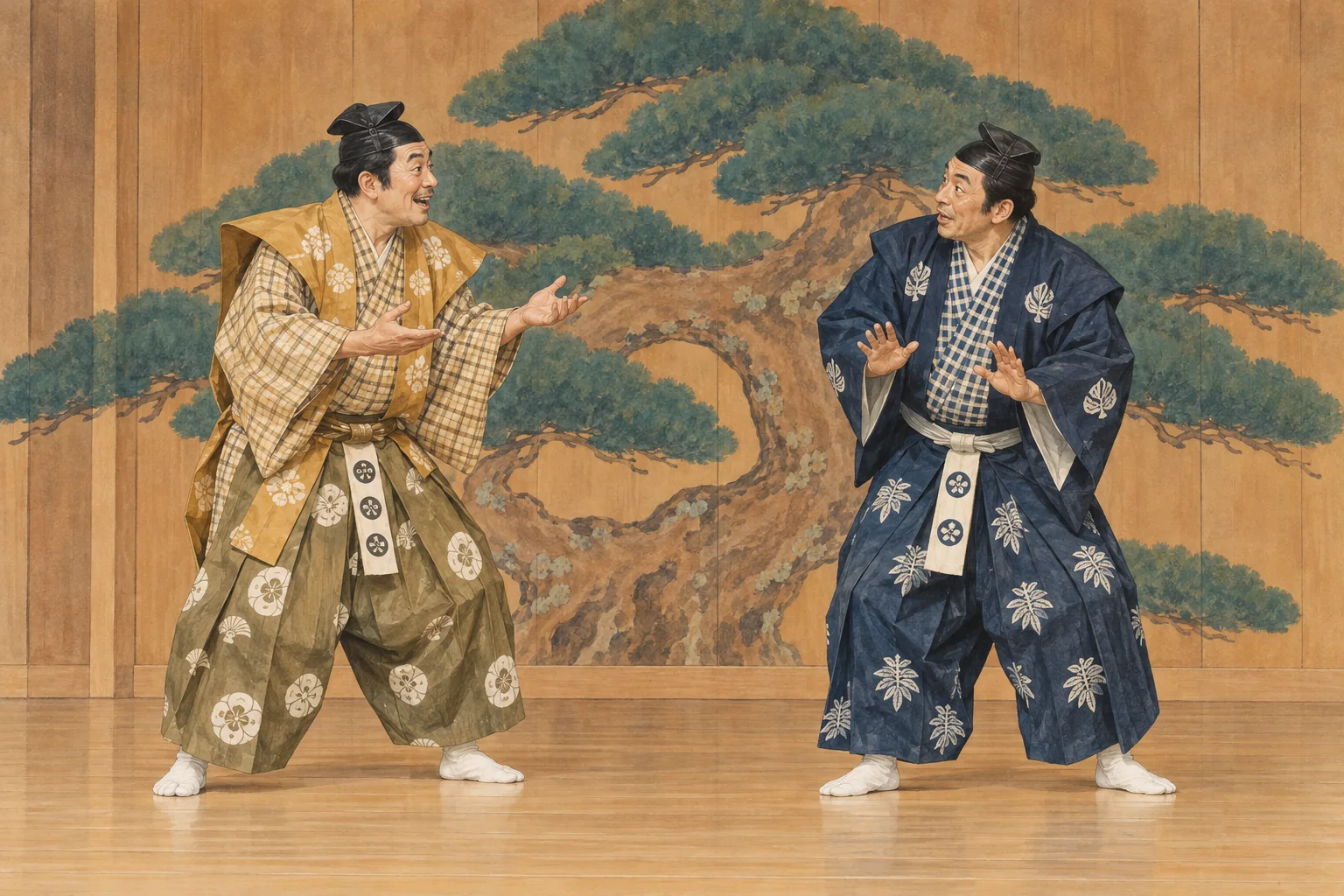
Kyogen is the comic theater performed on the same stage as noh, with spoken dialogue and no masks in most roles.
狂言は能と同じ舞台で演じる喜劇で、多くの役は面をつけず、せりふで進みます。
In 30 seconds
The standard explanation
Kyogen developed alongside noh and is performed between noh plays on the same stage. Where noh is slow, masked and often about spirits and grief, kyogen is spoken, quick and about ordinary people getting things wrong: a servant outwitting his master, a man pretending to be brave. Together the two are called nogaku.
狂言は能とともに育ち、同じ舞台で能の演目のあいだに演じられます。能がゆっくりと面をつけ、霊や悲しみを扱うことが多いのに対し、狂言はせりふで進み、速く、ふつうの人の失敗を描きます。主人を出し抜く召使い、強がる男といった話です。二つを合わせて能楽と呼びます。
As a short speech
A full paragraph you can read aloud
Kyogen is the comic half of a tradition that most people outside Japan know only by its serious half. It grew up with noh from the same medieval roots and is performed on the same bare stage, usually between noh plays, and together the two are called nogaku. The difference is immediate.
Noh is slow, masked and often concerned with ghosts, longing and grief. Kyogen is spoken in a clear declamatory style, moves quickly, uses few or no masks, and is about people: a servant who drinks his master's sake and talks his way out of it, a would-be son-in-law who cannot remember his lines, two cowards each pretending not to be.
The humor is physical and situational rather than verbal, which is why it survives translation better than you would expect, and audiences laugh out loud, which surprises visitors who came expecting reverence. Noh, which includes kyogen, was proclaimed a UNESCO masterpiece in 2001 and inscribed on the Representative List in 2008. For a first visit, a program with one noh play and one kyogen is the kindest introduction.
狂言は、日本の外ではその真面目なほうしか知られていない伝統の、笑いの側です。能と同じ中世の根から一緒に育ち、同じ何も無い舞台で、たいていは能の演目のあいだに演じられます。二つを合わせて能楽と呼びます。違いはすぐ分かります。能はゆっくりで、面をつけ、亡霊や思慕や悲しみを扱うことが多い。
狂言ははっきりした調子のせりふで進み、動きは速く、面はほとんど使わず、人を描きます。主人の酒を飲んでしまい、言い抜ける召使い。せりふを覚えられない婿。臆病者どうしが、互いに強がってみせる話。笑いは言葉の遊びより、体の動きとその場の可笑しさから生まれます。
だから訳しても思いのほか通じます。客席は声を出して笑い、厳粛なものを予想して来た方は驚きます。狂言を含む能楽は、2001年にユネスコの傑作として宣言され、2008年に代表一覧表へ記載されました。初めてなら、能一番と狂言一番を組んだ番組がいちばん入りやすいです。
Questions people actually ask
And how to answer them.
Can I understand it without Japanese?
More than you would expect. The language is archaic even for Japanese audiences, so people follow the situation and the movement. Reading a plot summary beforehand covers most of what you need.
思っているより分かります。言葉は日本人にとっても古いので、みな場面と動きで追っています。前もってあらすじを読んでおけば、必要なところはだいたい足ります。
Is laughing allowed?
It is the point. Kyogen audiences laugh out loud, and the performers time their pauses for it. The quiet, formal atmosphere people associate with noh does not apply here.
それが目的です。狂言の客席は声を出して笑い、演者はそのために間を取ります。能に結びつけられる静かであらたまった空気は、ここでは当てはまりません。
Do the performers wear masks?
Usually not. Masks appear for particular roles such as animals, gods or demons, but the ordinary human characters who make up most of the repertoire are played with the bare face.
ふつうはつけません。動物、神、鬼といった特定の役には面を用いますが、演目の多くを占めるふつうの人の役は、素顔で演じます。
A common misunderstanding
MYTHTraditional Japanese theater is uniformly slow, solemn and hard to follow.
FACTKyogen is fast, spoken and openly comic, and it has been performed on the same programs as noh for centuries. The solemn image comes from seeing only one half of the pair.
Phrases you can use
- This one is a comedy.これは喜劇です。
- It is performed between the noh plays.能の演目のあいだに演じられます。
- The actors do not wear masks in this piece.この曲では面をつけません。
- Please feel free to laugh.どうぞ、遠慮なくお笑いください。
- I read the summary before coming.来る前にあらすじを読んできました。
Words you need
- comic theater喜劇
- spoken dialogueせりふ
- a servant character召使いの役
- slapstick体を張った笑い
- a program番組・上演の組み合わせ
Watch
From YouTubeBackground (Japanese)
能と狂言を合わせて能楽と呼び、同じ舞台で交互に演じられてきました。流派には和泉流と大蔵流があります。舞台には大きな松が描かれた鏡板があり、道具はほとんど置かず、扇が刀にも徳利にもなります。決まったせりふ回しがあり、始まりに名乗りを述べる形が多く見られます。能の中で狂言方が演じる役もあり、間狂言と呼ばれて、前後の場面をつなぐ語りを担います。2001年に傑作として宣言され、2008年に代表一覧表へ記載されました。