nomen
the masks worn in noh theater
能面(のうめん)
In one line
The shortest answer that works
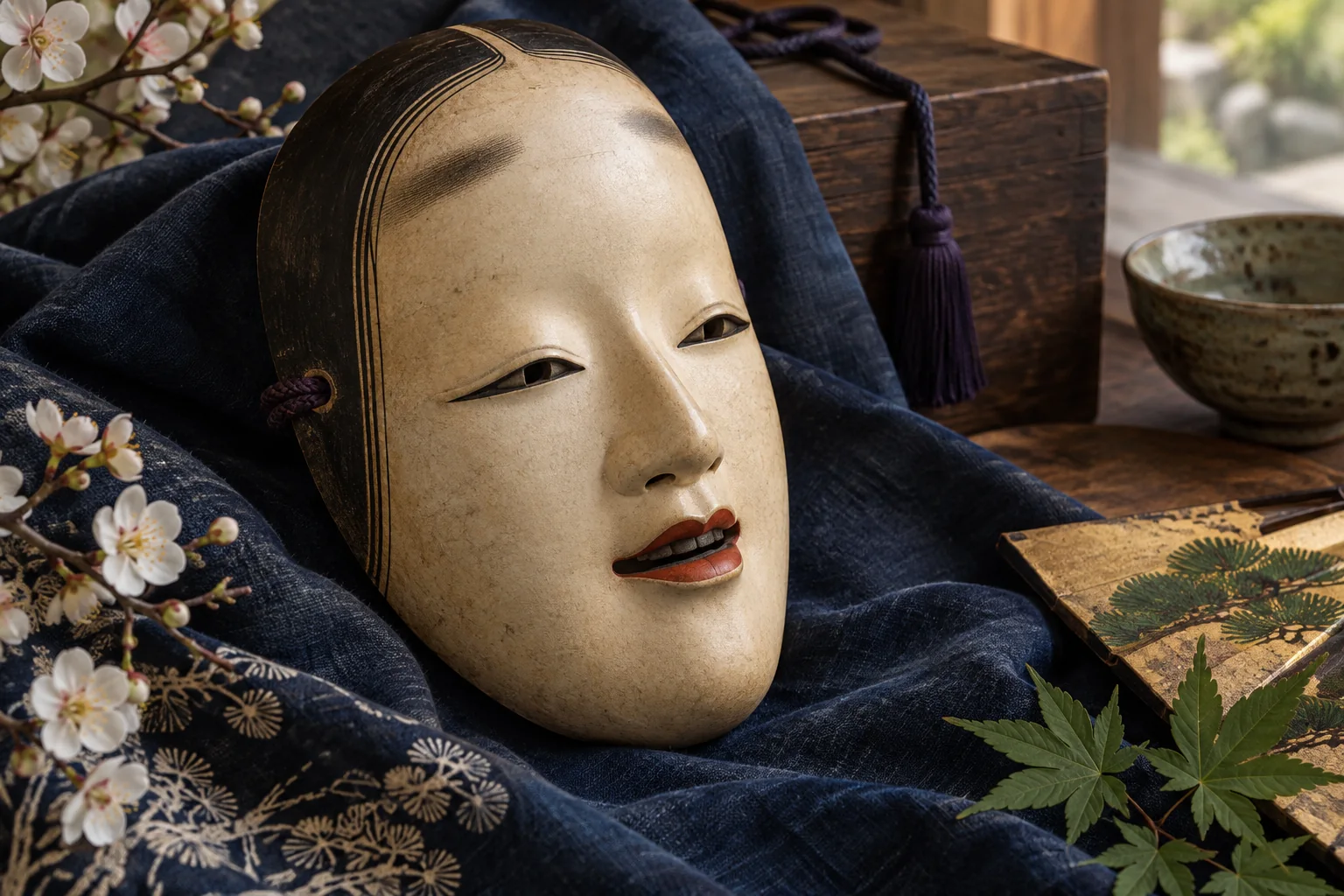
Nomen, the masks of noh theater, are carved so that tilting the head makes one face look happy or grieving.
能面とは、首の角度を変えるだけで、同じ顔が喜びにも悲しみにも見えるように彫られた面です。
In 30 seconds
The standard explanation
Noh masks are carved from a single block of cypress and painted. Usually only the main actor, and sometimes his companion, wears one; the supporting role plays barefaced. The carving is deliberately ambiguous, so that lowering the head reads as sorrow and raising it reads as joy. Actors call these movements clouding and brightening.
能面は檜の一木から彫り出し、彩色したものです。面をつけるのは、ふつうシテと、その連れ役だけで、ワキは素顔で演じます。彫りはわざと曖昧に作られ、面を下げれば悲しみに、上げれば喜びに見えます。演者はこれを曇らす、照らすと呼びます。
As a short speech
A full paragraph you can read aloud
People often say noh masks are expressionless, and that is exactly backwards. A mask is carved with an ambiguous mouth and shadowed eyes so that it changes with the angle of the head. Tip it down a few degrees and the shadows deepen and the face grieves; lift it and the light catches the cheeks and it brightens.
Actors have names for these two movements, clouding and brightening, and a whole scene of emotion can be played with nothing else. Masks fall into types rather than characters: a young woman, an old man, a vengeful spirit, a demon.
The most famous is the horned one, which represents a woman consumed by jealousy, not a demon as such; the upper face is often described as grieving and the mouth as furious, so tilting it shifts between the two. Masks are worn by the main actor and sometimes his companion. The supporting role, who is usually a living man in the present, does not.
能面は無表情だとよく言われますが、まったく逆です。口元は曖昧に、目のまわりは影になるように彫られていて、首の角度で表情が変わります。数度うつむければ影が深くなって悲しみの顔になり、上げれば頬に光が当たって明るくなります。
演者はこの二つの動きを曇らす、照らすと呼び、ほかに何もしなくても感情の場面を演じ切れます。面は役ではなく類型で分かれます。若い女、老人、怨霊、鬼。もっとも知られる角のある面は、鬼というより嫉妬に身を焼かれた女を表します。
目元は悲しみ、口元は怒りを表すとよく言われ、傾け方で二つの間を行き来します。面をつけるのはシテと、ときにその連れ役です。今この世に生きる人物であることが多いワキは、素顔のまま演じます。
Questions people actually ask
And how to answer them.
Can the actor see through it?
Barely. The eye holes are small and the view is a narrow slit, so actors learn the stage by the position of the pillars and by counting steps. That is one reason noh movement is so slow and measured.
ほとんど見えていません。目の穴は小さく、視野は細い隙間です。だから演者は柱の位置と歩数で舞台を覚えます。能の動きが遅く、きっちりしているのは、それも理由の一つです。
Are they old?
The finest date from the Muromachi and Momoyama periods and are still used in performance, not kept in cases. Modern carvers copy those originals closely rather than inventing new designs.
優れたものは室町から桃山のもので、今も舞台で使われています。ケースに納めておくものではありません。今の面打ちは新しい意匠を考えるより、古い名品を忠実に写します。
Does kyogen use masks too?
Much less. Kyogen is mostly played barefaced, and its masks are used for animals, gods and comic old people. They are rounder and broader than noh masks, and designed to read as funny.
ずっと少ないです。狂言は素顔で演じるのが基本で、面は動物や神、滑稽な老人などに使います。能面より丸く広く、可笑しみが伝わるように作られています。
A common misunderstanding
MYTHNoh masks have no expression.
FACTThey are carved to be read differently at different angles. Tilting the head down darkens the face into grief and lifting it brightens it, and actors use those two movements as their main expressive tool.
Phrases you can use
- The mask changes with the angle.面は角度で表情が変わります。
- Usually only the main actor wears one.面をつけるのは、ふつうシテだけです。
- It is carved from a single block of cypress.檜の一木から彫り出します。
- He can hardly see out of it.面からはほとんど見えていません。
- That one represents jealousy.あの面は嫉妬を表しています。
Words you need
- noh mask能面
- main actorシテ
- supporting actorワキ
- mask carver面打ち
- Japanese cypress檜
Watch
From YouTubeBackground (Japanese)
能面は檜の一木から彫り、胡粉などで彩色します。面を下にわずかに傾けることを曇らす、上に向けることを照らすと呼び、光と影の当たり方で表情が変わります。面をつけるのはシテとツレで、ワキは素顔で演じるのが原則です。類型は若い女を表す小面、老人の尉、怨霊の般若など多くあり、般若は鬼ではなく嫉妬に苦しむ女を表すとされます。室町から桃山にかけての名品が今も舞台で使われ、現代の面打ちはそれらを写すことを基本としています。