wadaiko
Japanese drums and the ensembles that play them
和太鼓(わだいこ)
In one line
The shortest answer that works
Wadaiko means Japanese drums, and the ensemble style performed on stage is more recent than it looks.
和太鼓とは日本の太鼓のことで、舞台で組んで打つ形は、見た目ほど古くはありません。
In 30 seconds
The standard explanation
Drums have been used in Japan for centuries in festivals, shrines, temples and theater, where a drum usually plays a supporting part. The ensemble performance in which a group of drummers is the whole show developed in the twentieth century and spread worldwide from there. Both exist today, and they are different things.
日本では何百年も前から、祭り、神社、寺、芝居で太鼓が使われてきました。そこでの太鼓は、たいてい脇を支える役です。何人もの奏者が舞台に並び、太鼓だけで聴かせる形は二十世紀に生まれ、そこから世界へ広がりました。今はどちらもあり、二つは別のものです。
As a short speech
A full paragraph you can read aloud
Wadaiko simply means Japanese drum, and there are two quite different things under the name. The older one is the drum in its traditional settings: marking time at a festival, calling people at a shrine or temple, punctuating the action in noh and kabuki. There the drum is part of something larger and rarely takes the lead.
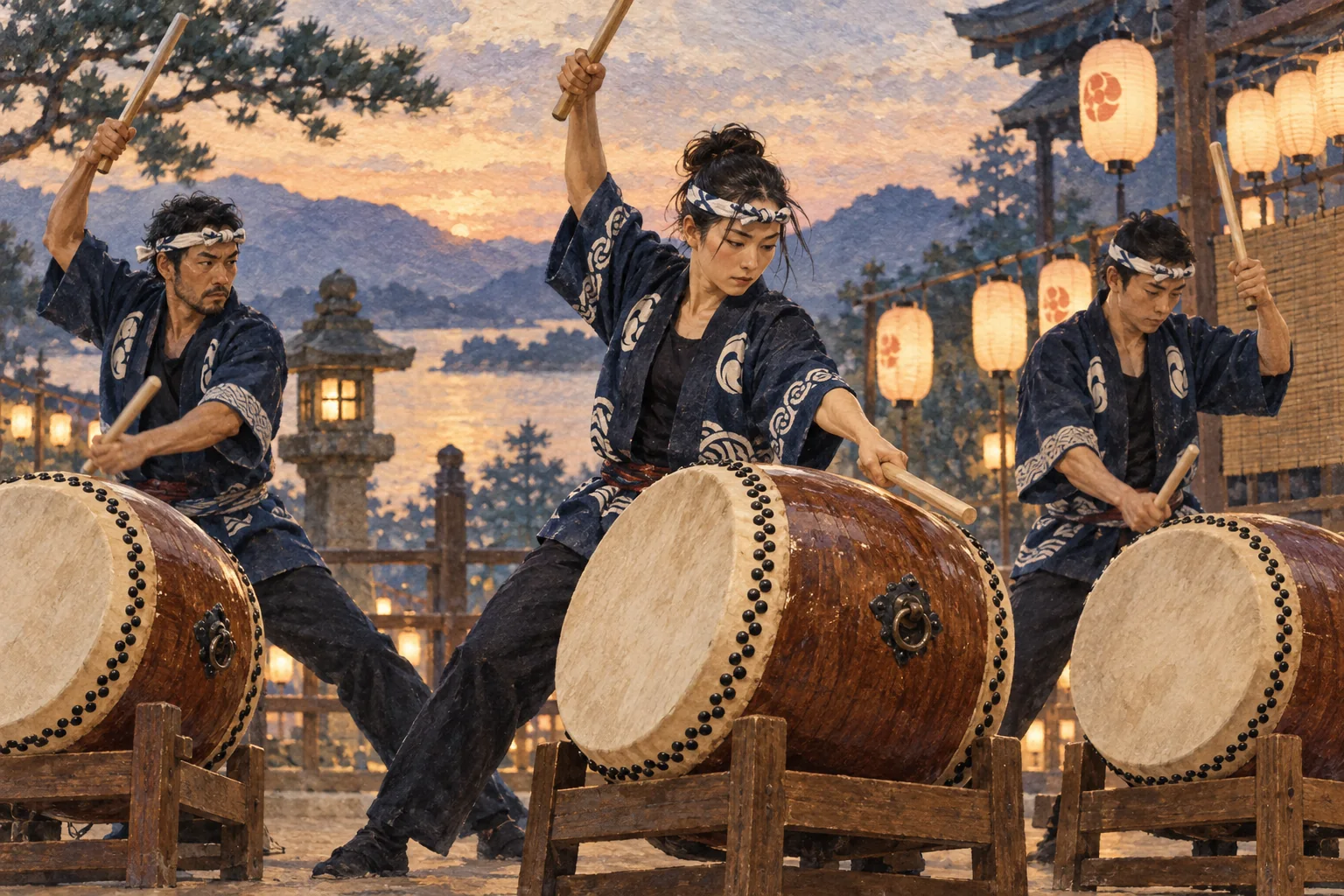
The other is the ensemble performance that visitors usually picture, with a line of drummers, large drums on stands, choreographed movement and a piece that lasts several minutes. That form took shape in the twentieth century, drawing on festival drumming and shaping it for the stage, and it traveled abroad quickly, which is why many people meet Japanese drumming first in a concert hall in their own country.
Neither version is fake. It is worth knowing the difference, because a festival drum in a village and a touring ensemble are answering different questions. If you want to try it, community groups exist in many towns and welcome beginners, since the first thing taught is posture rather than rhythm.
和太鼓とは、そのまま日本の太鼓という意味で、この名前のもとに、かなり違う二つのものがあります。古いほうは、昔からの場での太鼓です。祭りで拍子を取り、神社や寺で人を呼び、能や歌舞伎で場面を区切ります。そこでの太鼓はより大きなものの一部で、主役に立つことはあまりありません。
もう一つが、旅行者が思い浮かべる舞台の演奏です。奏者が並び、台に据えた大きな太鼓を打ち、動きも組み立てられ、一曲が何分も続きます。この形は二十世紀に生まれました。祭りの太鼓をもとに、舞台向けに組み直したものです。海外へ渡るのも早く、だから多くの人は、自分の国の演奏会で日本の太鼓に初めて出会います。
どちらが偽物ということはありません。違いを知っておく値打ちはあります。村の祭りの太鼓と、世界を回る楽団とは、答えている問いが別だからです。やってみたいなら、多くの町に地域の団体があり、初心者を歓迎します。最初に教わるのは拍子ではなく、姿勢だからです。
Questions people actually ask
And how to answer them.
Are the big drums hollowed from one log?
The traditional way of making the largest ones is to hollow a single trunk, usually zelkova, and that is why they are expensive and why large trees suitable for it are scarce. Smaller and modern drums are also made from staves.
いちばん大きなものは、欅などの丸太をくり抜いて作るのが伝統の作り方です。だから値段も高く、それに適した大木も少なくなっています。小さいものや現代のものは、板を組んで作ることもあります。
Can I see drumming at a festival rather than a concert?
Yes, and it is worth doing. Summer festivals usually include drumming, often from a tower in the middle of the dancing, and the players are local people rather than professionals.
見られますし、その値打ちがあります。夏祭りにはたいてい太鼓があり、踊りの輪の中心の櫓から打つ形が多いです。打っているのは専業の奏者ではなく、地元の人たちです。
Is it hard to start?
The basic strike is simple and the endurance is not. Community groups teach adults from scratch, and the usual first lesson is stance, grip and how to strike without tightening your shoulders.
基本の一打は単純ですが、続ける体力のほうが大変です。地域の団体は大人を一から教えており、最初に習うのは立ち方、ばちの持ち方、肩に力を入れずに打つことです。
A common misunderstanding
MYTHThe drum ensembles touring the world are an ancient Japanese art form.
FACTDrums are ancient; the ensemble concert form is a twentieth-century development built from festival and folk drumming. Saying so takes nothing away from it, and it is simply what happened.
Phrases you can use
- The drums lead the festival.祭りは太鼓が引っ張ります。
- That drum is made from a single trunk.あの太鼓は一本の木をくり抜いたものです。
- The players are all local residents.打ち手はみな地元の方です。
- You can feel it in your chest.胸に響いてきます。
- Beginners are welcome at the group.その団体は初心者も歓迎しています。
Words you need
- a drum太鼓
- a drumstickばち
- to strike打つ
- an ensemble合奏・組太鼓
- a hollowed trunkくり抜いた丸太
Watch
From YouTubeBackground (Japanese)
太鼓には種類があり、胴をくり抜いて作る宮太鼓、紐や金具で皮を締める締太鼓などがあります。締太鼓は皮の張り具合で音の高さを変えられます。祭りでは櫓の上から打ち、盆踊りの拍子を取ります。神社や寺では、時を知らせたり儀式の合図にしたりします。舞台で組んで演奏する形は二十世紀に広まり、海外公演を通じて世界各地に愛好者と団体が生まれました。地域の保存会や愛好会は各地にあり、学校の部活動として取り組むところもあります。