shishimai
the lion dance that bites your head for luck
獅子舞(ししまい)
In one line
The shortest answer that works
Shishimai, a masked lion dance, is performed at New Year and festivals, and having your head bitten is considered lucky.
獅子舞とは、正月や祭りで舞われる獅子の舞で、頭を噛んでもらうと縁起がよいとされるものです。
In 30 seconds
The standard explanation
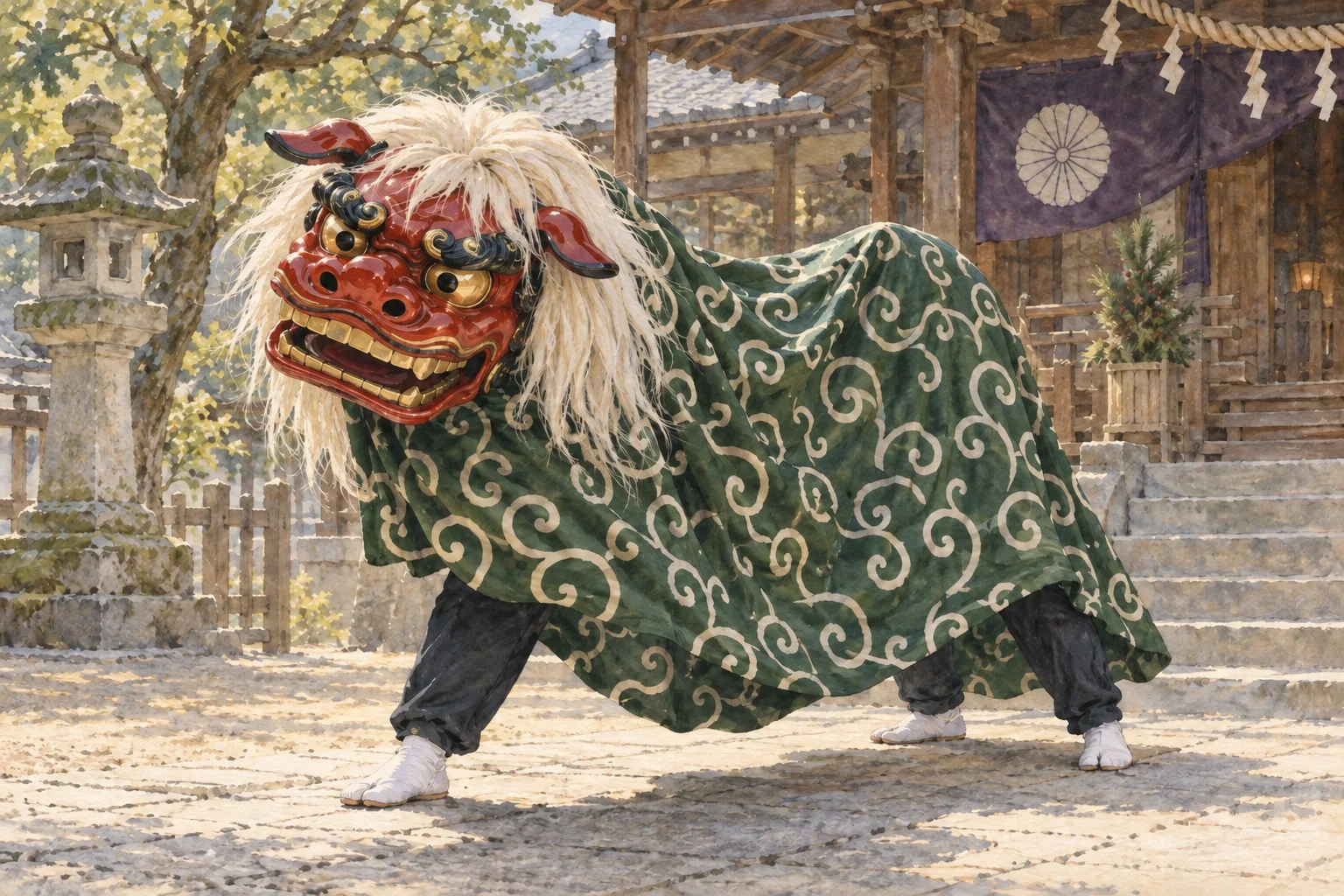
A performer wears a carved wooden lion head with a cloth body, often with a second person forming the back. The lion dances to flute and drum, and bites the heads of children and onlookers, which is meant to eat their misfortune rather than harm them. It arrived from the continent and spread across Japan in many regional forms, some with one dancer per lion and three lions together.
彫った木の獅子頭をかぶり、布の胴をつけて舞います。後ろにもう一人が入る形が多い。笛と太鼓に合わせて舞い、子どもや見物人の頭を噛みますが、これは害ではなく厄を食べてもらうことです。大陸から伝わり、日本各地で形を変えて広がりました。一人が一頭を演じ、三頭で舞う形もあります。
As a short speech
A full paragraph you can read aloud
At New Year, and at festivals through the year, you may meet a lion with a red lacquered wooden head and a patterned cloth body, dancing to a flute and a drum. This is shishimai. The thing visitors need to be warned about is that the lion will try to bite your head, and that this is a gift.
The belief is that the lion eats misfortune, so parents hold small children out to be bitten, and the children usually scream, which everyone finds funny and nobody stops. The form came to Japan from the continent, probably with the court music and masked dance imported in the seventh and eighth centuries, and then scattered into local versions.
In much of western and central Japan two people work inside one lion, head and body. In parts of the northeast and Kanto, each dancer wears a smaller lion head on the head and beats a drum at the waist, and three lions dance together. Traveling troupes used to go house to house at New Year in exchange for a small payment, and a few still do.
正月や、一年を通じた祭りで、朱塗りの木の頭と模様のある布の胴をつけた獅子が、笛と太鼓に合わせて舞っているのを見ることがあります。獅子舞です。外国の人に先に言っておくべきなのは、獅子は頭を噛みに来ること、そしてそれは贈り物だということです。
獅子は厄を食べてくれるとされるので、親は小さな子を差し出して噛んでもらいます。子どもはたいてい泣き叫びますが、周りは笑い、誰も止めません。この形は大陸から伝わりました。七、八世紀に入った舞楽や伎楽とともに来たと考えられ、その後、各地の形に分かれました。
西日本や中部の多くでは、一頭に二人が入り、頭と胴を務めます。東北や関東の一部では、小さな獅子頭を頭にのせ、腰の太鼓を打ちながら、三頭で舞います。正月に家々を回り、いくらかの金を受け取る一座もかつては多く、今も残っている地域があります。
Questions people actually ask
And how to answer them.
Does it hurt when the lion bites?
No. The jaw is wooden and it clacks over your head without closing on you. It is startling and loud rather than painful.
痛くありません。顎は木で、頭の上でカチカチと鳴らすだけです。痛いというより、驚く音です。
Is this the same as the Chinese lion dance?
They share an origin but not a look or a style. The Chinese lion is larger and more acrobatic; the Japanese one is smaller, danced to flute and drum, and tied to shrine ritual and New Year visits.
起源は共通していますが、姿も芸風も違います。中国の獅子は大きく、曲芸的です。日本の獅子は小さく、笛と太鼓で舞い、神事や正月の門付けと結びついています。
Should I let it bite my head?
Yes, if you want the good luck. Bow your head slightly and stay still. Some troupes expect a small offering; a coin in the box is normal.
縁起を担ぐなら、噛んでもらってください。少し頭を下げて動かないこと。心づけの箱があることもあり、小銭を入れるのがふつうです。
A common misunderstanding
MYTHBeing bitten by the lion is bad luck or a punishment.
FACTIt is the point of the performance. The lion is believed to eat misfortune, so being bitten is a blessing.
Phrases you can use
- The lion will bite your head — that's the lucky part.獅子が頭を噛みます。それが縁起のよいところです。
- It's said to eat your bad luck.厄を食べてくれると言われます。
- The jaw is wooden; it just makes a clacking sound.顎は木で、カチカチと鳴るだけです。
- It's danced to a flute and a drum.笛と太鼓で舞います。
- Every region has its own version.地域ごとに形が違います。
Words you need
- lion head獅子頭
- to ward off misfortune厄払い
- flute笛
- festival musicお囃子
- door-to-door performance門付け
Watch
From YouTubeBackground (Japanese)
獅子舞は日本各地に分布し、二人立ちの伎楽系と、一人立ちで三頭が舞う風流系に大きく分けられるとされる。三重の伊勢大神楽のように、各地を回って舞う一座が今も残っている。2022年には全国の「風流踊」がユネスコ無形文化遺産の代表一覧表に記載されたが、これは獅子舞そのものではなく、各地の踊りをまとめた案件である。獅子頭には桐などの木が使われ、地域によって色や形が大きく異なる。