yakubarai
the shrine rite performed in an unlucky year of life
厄払い(やくばらい)
In one line
The shortest answer that works
Yakubarai is a shrine purification rite people receive in an age traditionally considered unlucky.
厄払いとは、災いが多いとされる年齢に、神社で受けるお祓いのことです。
In 30 seconds
The standard explanation
Certain ages are traditionally considered unlucky: most famously forty-two for men and thirty-three for women, counted in the old way. People in those years often visit a shrine early in the year for a purification rite performed by a priest. Many say they do not believe in it and go anyway, usually because a parent suggested it.
災いが多いとされる年齢があり、よく知られているのは男の42歳、女の33歳です。数え年で数えます。その年にあたる人は、年の初めに神社へ行き、神職のお祓いを受けることが多いです。信じていないと言いながら行く人は多く、たいていは親に勧められてです。
As a short speech
A full paragraph you can read aloud
Yakudoshi are the ages traditionally held to bring misfortune, and yakubarai is the rite you have done about it. The best known are forty-two for men and thirty-three for women, with the year before and after also counted as part of it. The numbers are usually explained as word play: forty-two can be read as shi-ni, which sounds like to die, and thirty-three as san-zan, which sounds like disastrous.
What I find more convincing is the practical reading. Those ages are when people take on responsibility at work, when parents start to need care, and when the body quietly changes, so a custom that tells you to slow down and be careful is doing something sensible whatever the mechanism.
The rite itself takes about twenty minutes at a shrine, usually in January or February. Plenty of people describe themselves as non-religious and go anyway, which is fairly typical of how this works in Japan.
厄年とは、災いが多いとされる年齢のことで、厄払いはそれに対して受けるお祓いです。よく知られているのは男の42歳、女の33歳で、その前後の年も前厄・後厄として数えます。この数字はふつう語呂で説明されます。
42は「死に」、33は「散々」と読める、というものです。私にはもう少し実際的な読み方のほうが腑に落ちます。その年ごろは、仕事で責任が重くなり、親に介護が要り始め、体が静かに変わる時期です。
だから「無理をするな、気をつけろ」と告げる習わしは、理屈がどうあれ、働きとしてはまっとうです。儀式そのものは神社で20分ほど、たいてい1月か2月に受けます。自分は無宗教だと言いながら行く人はたくさんいます。日本ではこれがごく普通のあり方です。
Questions people actually ask
And how to answer them.
How is the age counted?
In the old kazoedoshi way, where you are one at birth and gain a year at New Year, so the yakudoshi age is usually one more than your ordinary age. Shrines post a chart of birth years so nobody has to work it out.
数え年で数えます。生まれた時が一歳で、正月に一つ加わる数え方なので、ふつうの年齢より一つ多くなります。神社には生まれ年の表が出ているので、自分で計算する必要はありません。
What actually happens at the rite?
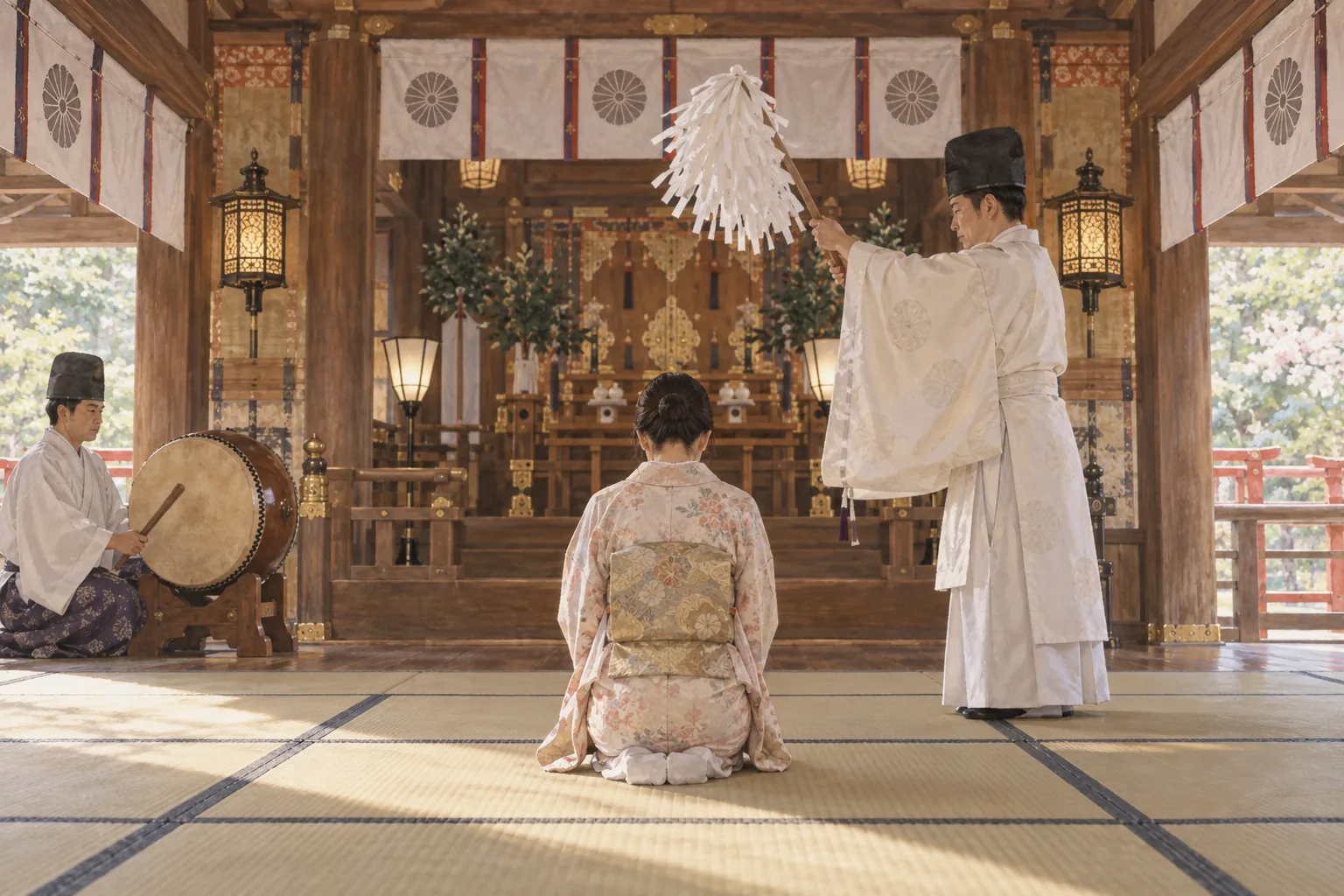
You register at the shrine office, wait with others, then a priest reads a formal address including your name and address, waves a purification wand over you, and you offer a sacred branch called tamagushi. It takes about twenty minutes.
社務所で受付をし、ほかの人と待ち、神職が名前と住所を含む祝詞を読み、大幣でお祓いをします。玉串を捧げて終わりです。20分ほどです。
Can a foreigner have it done?
Yes, at any shrine that offers it. You fill in a form with your name and address and pay a fee, usually five to ten thousand yen. Nobody will ask about your beliefs.
受けられます。受け付けている神社ならどこでも。用紙に名前と住所を書き、初穂料を納めます。たいてい五千円から一万円です。信仰について尋ねられることはありません。
Phrases you can use
- Forty-two for men, thirty-three for women, counted the old way.男は42歳、女は33歳。数え年です。
- The year before and after count too.前後の年も前厄・後厄として数えます。
- The rite takes about twenty minutes.お祓いは20分ほどです。
- A lot of people go without believing in it.信じていなくても行く人は多いです。
- The shrine has a chart of birth years posted.神社には生まれ年の表が出ています。
Words you need
- unlucky year of life厄年
- purification riteお祓い
- traditional age counting数え年
- shrine priest神職
- offering of money at a rite初穂料
Watch
From YouTubeBackground (Japanese)
厄年の年齢は数え年で、男は25・42・61歳、女は19・33・37歳が本厄とされることが多い。中でも男の42歳と女の33歳を大厄と呼ぶ。42は「死に」、33は「散々」に通じるという語呂の説明が知られるが、起源は明確ではなく、平安時代の文献にすでに年齢による忌みの記述がある。厄払いは正月から節分までに受けるのが一般的で、寺で受ける場合は厄除けと呼ぶことが多い。厄年の人が祭りの担ぎ手や当番を務めて災いを祓う、という地域もある。