Meiji Jingu
the Tokyo shrine set in a forest that was planted from nothing
明治神宮(めいじじんぐう)
In one line
The shortest answer that works
Meiji Jingu is a Tokyo shrine standing in a forest that was entirely planted by hand in the 1910s.
明治神宮とは、1910年代にすべて人の手で植えられた森の中にある、東京の神社です。
In 30 seconds
The standard explanation
Meiji Jingu sits between Harajuku and Shinjuku, in about seventy hectares of dense woodland. It was established in 1920 to enshrine Emperor Meiji and Empress Shoken. The forest looks ancient and is not: the land was largely bare, and around one hundred thousand trees donated from across Japan were planted there, chosen so the woodland would sustain itself for centuries.
明治神宮は原宿と新宿のあいだ、約70ヘクタールの深い森の中にあります。1920年に明治天皇と昭憲皇太后を祀って創建されました。森は古くからあるように見えますが違います。土地はほとんど裸地で、全国から寄せられたおよそ10万本の木が植えられました。何百年も自力で続く森になるよう選ばれたものです。
As a short speech
A full paragraph you can read aloud
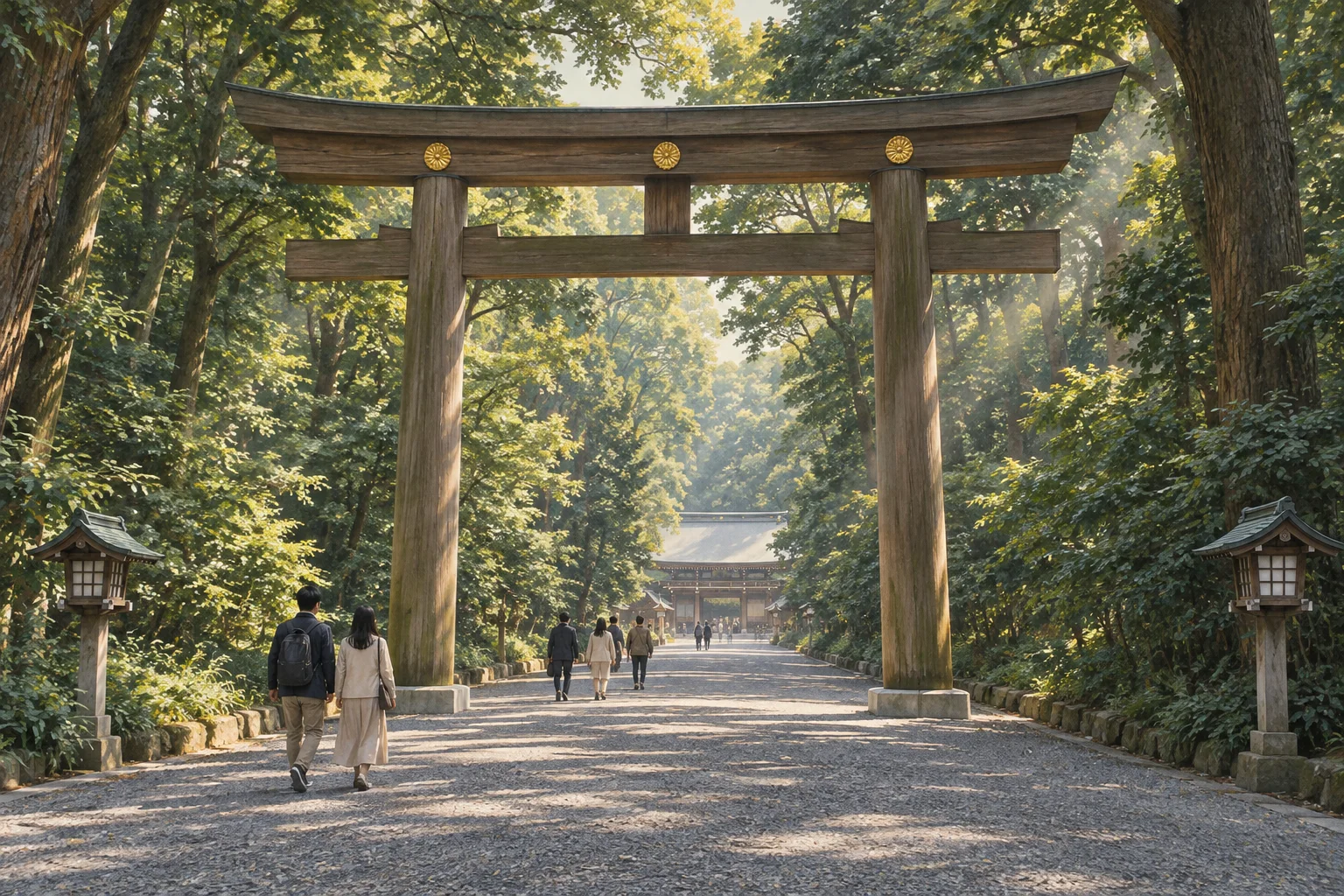
Meiji Jingu is a few minutes from Harajuku, one of the busiest shopping districts in Tokyo, and as soon as you pass under the torii the noise stops. You walk a gravel path through deep forest to the shrine buildings. Almost everyone assumes this is remnant old-growth woodland that the city grew around. It is the opposite. The shrine was founded in 1920, and the site was mostly open, poor ground.
Around one hundred thousand trees were donated from every part of Japan and planted by volunteers. The planners deliberately chose species that would replace themselves, and drew a plan running about a hundred and fifty years into the future, accepting that the forest they designed would only be finished long after they were dead.
It is now dense enough to support owls and hawks in central Tokyo. Two practical notes: it is usually said to draw more New Year visitors than any other shrine in Japan, millions in the first three days, and weddings are held here, so if you see a procession under red umbrellas, stand back and let them pass.
明治神宮は、東京でもっとも混む商業地のひとつである原宿から数分のところにあります。鳥居をくぐると音が止みます。砂利の参道を、深い森の中を通って社殿へ歩きます。ほとんどの方が、これは昔からの森で、街のほうが後からできたのだと思います。逆です。
神宮の創建は1920年で、土地はほとんど開けたやせ地でした。全国から寄せられたおよそ10万本の木が、人の手で植えられました。設計した人たちは、自分で世代交代していく樹種をあえて選び、百五十年ほど先までの計画を描きました。自分たちの死後にようやく完成する森だと承知のうえです。
いまでは都心にフクロウやタカが棲むほどの密度になりました。実用の話を二つ。ここは正月の参拝者が日本一多い神社とされ、三が日に数百万人が来ます。そして結婚式が行われるので、赤い傘の下を進む列を見かけたら、下がって通してください。
Questions people actually ask
And how to answer them.
So it's not an ancient shrine?
No. It was founded in 1920, which makes it new by Japanese standards. Ise Jingu and Izumo Taisha go back far further. What is remarkable here is the forest, not the age.
違います。創建は1920年で、日本の神社としては新しいです。伊勢神宮や出雲大社はずっと古いです。ここで驚くべきなのは、古さではなく森のほうです。
Why is it the busiest shrine at New Year?
Size and access. It can absorb enormous crowds, and it sits on major train lines in the middle of Tokyo. The figure for the first three days runs into the millions, and the approach is controlled in one direction.
広さと行きやすさです。大人数を受け止められますし、東京の中心で主要な路線に接しています。三が日の人数は数百万にのぼり、参道は一方通行に規制されます。
What are those barrels of sake and wine?
They are offerings. Sake brewers across Japan donate barrels, and there is a matching wall of French wine barrels, donated because Emperor Meiji was known for adopting Western things, including wine.
奉納されたものです。全国の酒蔵が酒樽を納めており、その向かいにはフランスのワイン樽が並びます。明治天皇が西洋のものを取り入れたことで知られ、ワインもそのひとつだったことにちなみます。
A common misunderstanding
MYTHMeiji Jingu stands in an old forest that the city was built around.
FACTThe forest was planted from around 1915 on mostly open ground, using about one hundred thousand donated trees, and designed to become self-sustaining over roughly a century and a half.
Phrases you can use
- The whole forest was planted — it isn't old-growth.この森はすべて植えたものです。昔からの森ではありません。
- About a hundred thousand trees were donated from all over Japan.全国から約10万本の木が寄せられました。
- The shrine itself only dates from 1920.神宮そのものは1920年の創建です。
- It's said to be the busiest shrine in Japan at New Year.正月の参拝者は日本でいちばん多い神社だと言われています。
- If you see a wedding procession, step aside and let it pass.結婚式の列を見かけたら、脇に寄って通してください。
Words you need
- enshrine祀る
- planted forest人工林
- donated tree献木
- self-sustaining自力で続く
- gravel path砂利の参道
Watch
From YouTubeBackground (Japanese)
明治神宮は1920年(大正9年)に鎮座した。境内の森はおよそ70ヘクタールで、全国から寄せられた約10万本の献木を、全国の青年団などが勤労奉仕で植えたものである。設計にあたった本多静六らは、手を入れ続けなければならない松林ではなく、常緑広葉樹を中心とした、放っておいても世代交代する森を目指した。百五十年後に完成する林相を想定した計画だったとされる。正月三が日の初詣参拝者数は全国最多とされ、例年数百万人にのぼる。境内には全国の酒蔵から奉納された菰樽と、フランスから奉納されたワイン樽が並ぶ。