sugi
the Japanese cedar
杉(すぎ)
In one line
The shortest answer that works
Sugi, the Japanese cedar, is the country's most planted tree, prized for timber and blamed for hay fever.
杉は日本で最も多く植えられた木で、建材として重んじられ、花粉症の原因として恨まれてもいます。
In 30 seconds
The standard explanation
Sugi is a tall straight conifer, not a true cedar, that grows fast and gives light, workable, fragrant timber. It has been planted deliberately for centuries and on a huge scale after the Second World War, when cleared hillsides were replanted to supply construction. Ancient specimens stand at shrines and on Yakushima. The same plantations now release the pollen that causes Japan's most common seasonal allergy.
杉は背が高くまっすぐな針葉樹で、本来のシダーとは別種です。成長が速く、軽くて加工しやすい香りのよい材が取れます。何世紀も意図的に植えられ、第二次世界大戦のあとには建築用の材を供給するため、伐られた山の斜面に大規模に植え直されました。古い巨木は神社や屋久島に立っています。その同じ人工林が今、日本で最もありふれた季節性のアレルギーの花粉を飛ばしています。
As a short speech
A full paragraph you can read aloud
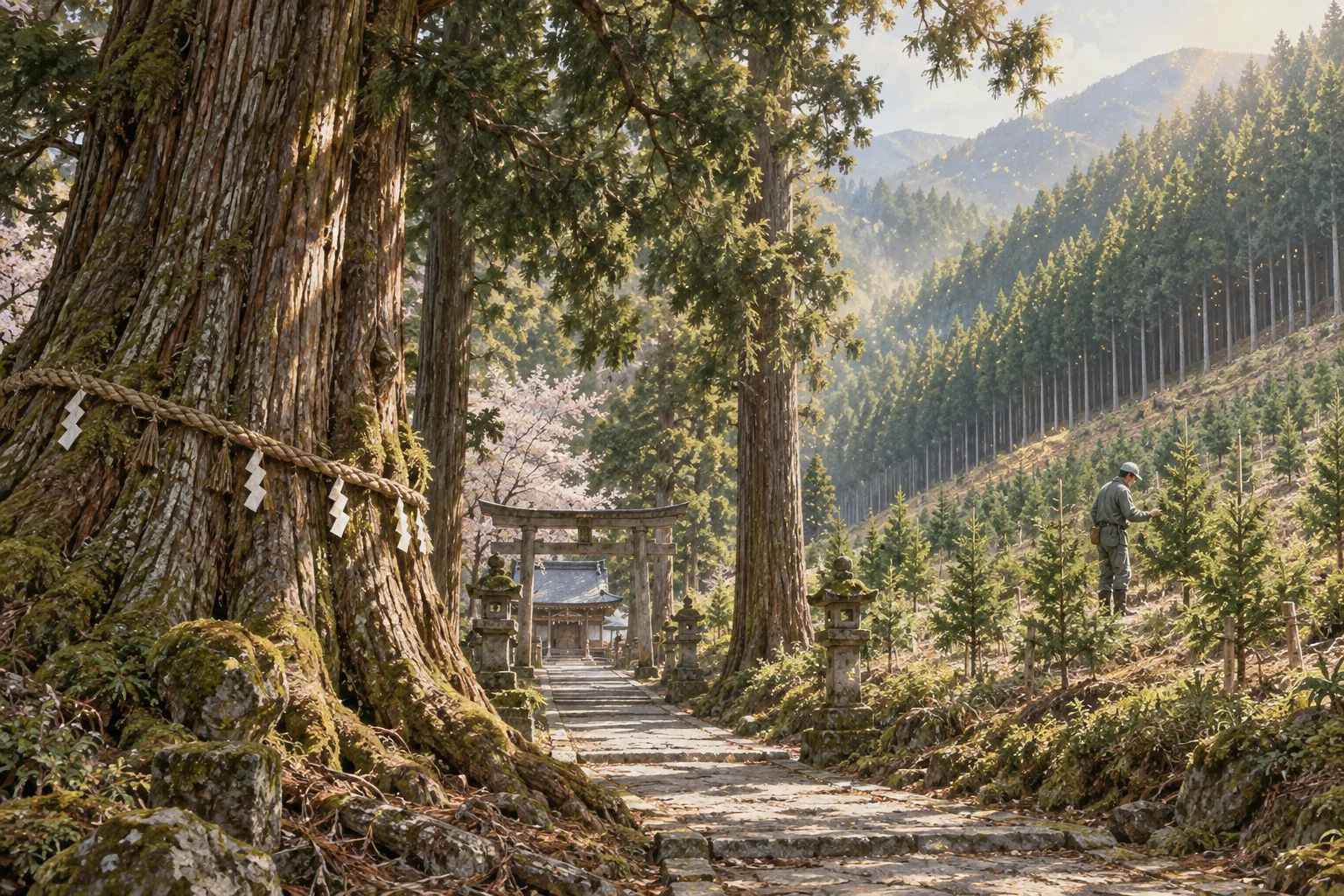
If you look at a Japanese mountainside and see dark green rows running up the slope, you are looking at sugi, usually translated as Japanese cedar though it belongs to a different family. It grows fast and straight, and its timber is light, easy to work, fragrant and good for posts, paneling, barrels and boxes, which made it the backbone of Japanese building.
Individual ancient trees are treated as sacred, lining the approach to shrines and standing in the forests of Yakushima. Then comes the complicated part. After the Second World War the country replanted cleared hillsides on a huge scale with sugi and cypress, expecting a timber industry that would mature decades later.
By the time the trees matured, imported timber was cheaper, so many plantations were left unthinned and unharvested. Those trees are now mature and shedding pollen, and sugi pollen allergy has become the most common seasonal allergy in Japan, affecting a large share of the population every spring. Policies now aim at felling and replanting with low-pollen varieties.
日本の山の斜面を見て、濃い緑の列が斜面を駆け上がっているのが見えたら、それが杉です。ふつう Japanese cedar と訳されますが、本来のシダーとは別の科に属します。速くまっすぐに育ち、材は軽く、加工しやすく、香りがよく、柱、板、樽、箱に向くので、日本の建築の背骨になりました。
古い一本一本の木は神聖なものとして扱われ、神社の参道に並び、屋久島の森に立っています。そこから話が込み入ります。第二次世界大戦のあと、この国は伐られた山の斜面に杉と檜を大規模に植え直しました。何十年か先に育つ木材産業を見込んでのことです。
木が育つころには輸入材のほうが安く、多くの人工林は間伐も伐採もされずに残されました。その木々が今は成熟して花粉を飛ばし、スギ花粉症は日本で最もありふれた季節性のアレルギーになり、毎春、人口のかなりの割合が苦しみます。今の政策は、伐って花粉の少ない品種に植え替えることを目指しています。
Questions people actually ask
And how to answer them.
Is sugi really a cedar?
No. The English name is a convention rather than a botanical fact; sugi is a species in its own genus, related to redwoods rather than to true cedars. When precision matters, people write Cryptomeria japonica. In casual English, Japanese cedar is understood and fine.
違います。英語名は慣習であって植物学上の事実ではありません。杉は独自の属の一種で、本来のシダーよりセコイアの仲間に近いものです。正確さが要るときは学名を書きます。ふだんの英語では Japanese cedar で通じますし、それで構いません。
When is the pollen season?
Sugi pollen usually flies from around February into April, earliest in the southwest and later in the north, and cypress pollen follows and overlaps it. Forecasts are broadcast daily alongside the weather, and masks, glasses and medication are everywhere from late winter.
スギ花粉はおおむね2月から4月にかけて飛び、南西ほど早く、北ほど遅くなります。続いて檜の花粉が重なります。飛散の予報は天気予報と一緒に毎日流れ、冬の終わりからマスクや眼鏡や薬が店頭に並びます。
Why not just cut them all down?
Because felling is expensive, much of the land is steep and privately owned in small parcels, and bare slopes erode and slide. Policy focuses on gradually harvesting mature stands, using the timber domestically, and replanting with varieties that produce little pollen, which takes decades.
伐採には費用がかかり、土地の多くは急斜面で、小さな区画に分かれた私有地だからです。裸の斜面は侵食し崩れます。政策は、育った林を少しずつ伐り、その材を国内で使い、花粉の少ない品種に植え替えることに重点を置いていて、これには何十年もかかります。
Phrases you can use
- Those dark rows on the mountain are cedar plantations.山の濃い緑の列は杉の人工林です。
- The pollen season starts in February.花粉の季節は二月に始まります。
- The old trees along the shrine path are sacred.参道の古い木は神木とされています。
- The wood is light and smells wonderful.木は軽くて、とてもよい香りがします。
- They're replanting with low-pollen varieties.花粉の少ない品種に植え替えています。
Words you need
- conifer針葉樹
- plantation forest人工林
- timber材木
- pollen花粉
- thinning間伐
- hay fever花粉症
Watch
From YouTubeBackground (Japanese)
杉は日本に広く分布する針葉樹で、英語では Japanese cedar と呼ばれますが、本来のシダーとは別の系統です。まっすぐで軽く加工しやすい材が取れるため、柱や板材、樽、桶などに広く使われてきました。第二次世界大戦後には、戦中戦後に伐採された山林を回復し建築用材を確保する目的で、杉と檜を中心に大規模な造林が行われました。その後、輸入材の価格競争により国産材の需要が落ち込み、手入れの行き届かない人工林が各地に残りました。成熟した杉が大量の花粉を飛ばすようになったことは、スギ花粉症が国民的な問題になった背景として説明されます。現在は伐採と利用を進めつつ、花粉の少ない品種への植え替えが政策として取り組まれています。屋久島の杉や、神社の参道の巨木は天然記念物や神木として保護されているものがあります。