kafunsho
hay fever, mostly from cedar pollen
花粉症(かふんしょう)
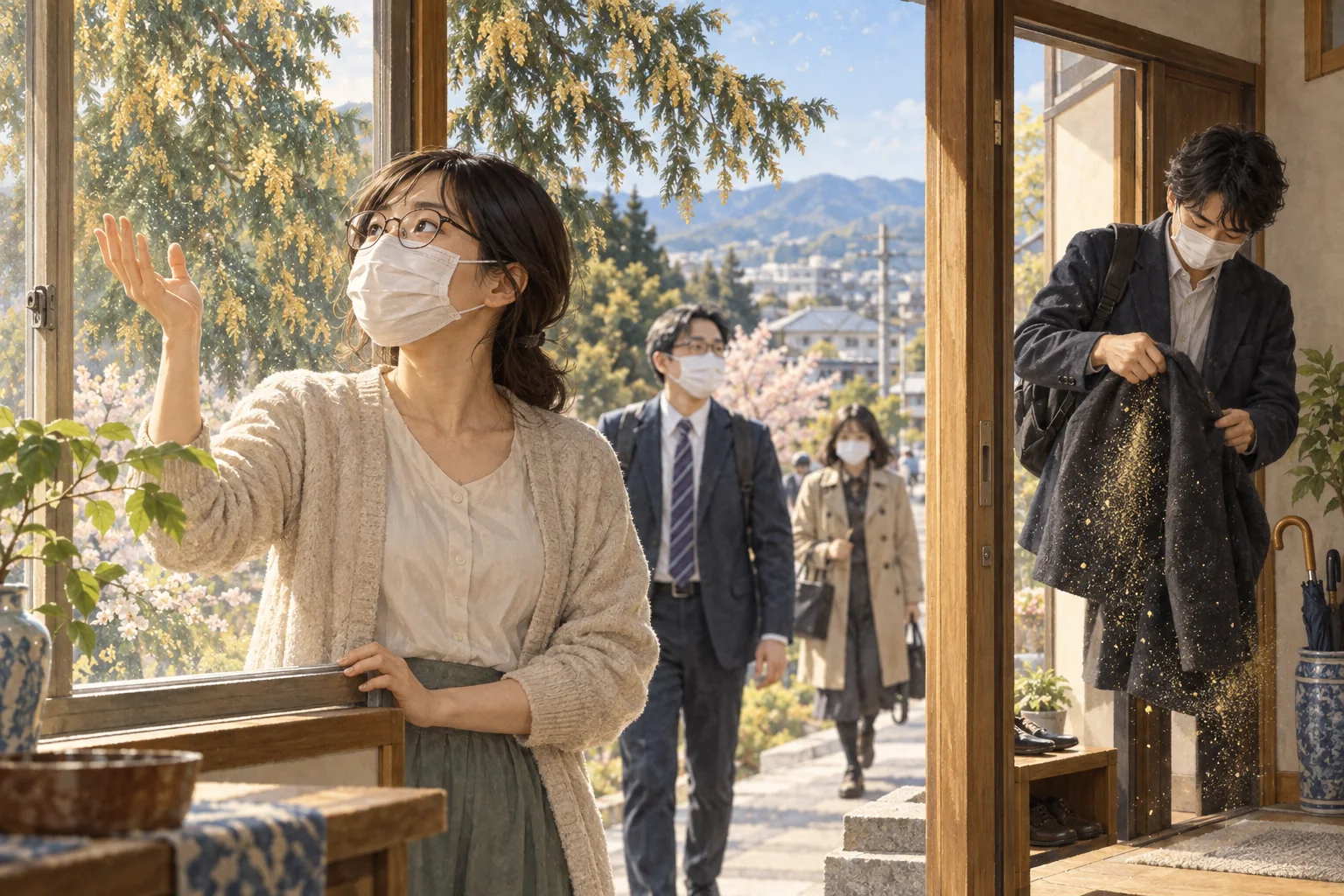
In one line
The shortest answer that works
Kafunsho is hay fever from cedar pollen, and it affects a large share of the Japanese population every spring.
花粉症とは、杉の花粉によるアレルギーで、毎年春になると日本の多くの人が悩まされます。
In 30 seconds
The standard explanation
From February to April, cedar and then cypress pollen blows across Japan and a large part of the population suffers. A national survey published in 2019 found that 38.8 percent had cedar pollen allergy. Forecasts appear alongside the weather, pharmacies fill with remedies, and many of the masks you see in spring are for this rather than for illness.
二月から四月にかけて、杉、続いて檜の花粉が日本各地に飛び、多くの人が苦しみます。2019年に公表された全国の調査では、38.8%がスギ花粉症でした。花粉の予報が天気予報と並んで流れ、薬局には対策の品が並びます。春に見かけるマスクの多くは、病気ではなくこのためのものです。
As a short speech
A full paragraph you can read aloud
Kafunsho is hay fever, and in Japan it is mostly caused by one tree. After the war, huge areas of hillside were planted with sugi cedar for timber, and imported wood later became cheaper, so the plantations were left standing and the trees matured into decades of heavy pollen production. A national epidemiological survey published in 2019 found that 38.8 percent of people had cedar pollen allergy, a large increase on earlier surveys.
The season runs from around February through April for cedar, with cypress following and extending it. During those months, pollen forecasts are broadcast with the weather, pharmacies build displays of eye drops and antihistamines, and clinics are busy with people who have never had symptoms before, because the condition can begin at any age.
This is worth knowing for a visitor in spring: if your eyes stream and you sneeze in Japan for the first time in your life, it is probably not a cold. It also explains the masks. Long before the pandemic, Japanese springs were full of them, and the reason was pollen.
花粉症は日本では、ほとんど一種類の木によって起きています。戦後、山の斜面の広い範囲に材木用の杉が植えられました。その後、輸入した木材のほうが安くなり、植えた林は手を入れられないまま残り、木は育って、何十年にもわたって大量の花粉を出すようになりました。
2019年に公表された全国の疫学調査では、38.8%の人がスギ花粉症でした。以前の調査から大きく増えています。季節は、杉がおよそ二月から四月、続いて檜が飛んで長引きます。その数か月のあいだ、花粉の予報が天気予報と一緒に流れ、薬局には目薬や飲み薬の売り場ができ、診療所は、これまで症状の無かった人で混みます。
この病気は何歳からでも始まるからです。春に日本へ来る方は、知っておく値打ちがあります。生まれて初めて目が涙でいっぱいになり、くしゃみが止まらないなら、それはたぶん風邪ではありません。マスクの説明にもなります。感染症が広がるずっと前から、日本の春はマスクだらけでした。理由は花粉です。
Questions people actually ask
And how to answer them.
Can I get medicine without a prescription?
Yes. Pharmacies sell antihistamines, eye drops and nasal sprays over the counter, and staff can help you choose. For severe symptoms a clinic can prescribe stronger treatment, and allergy shots and tablets are available for longer-term treatment.
買えます。薬局で飲み薬、目薬、点鼻薬が処方箋なしで手に入り、店の人が選ぶのを手伝ってくれます。症状が重ければ診療所でより強い薬を出してもらえますし、長く続ける治療として舌下や注射による方法もあります。
Where can I escape it?
Okinawa and Hokkaido have little or no sugi pollen, and Hokkaido has a birch season instead in spring. Coastal areas and rainy days are easier, and the worst days are warm, dry and windy, especially the day after rain.
沖縄と北海道は杉の花粉がほとんど、あるいはまったくありません。北海道には春に白樺の花粉があります。海沿いや雨の日は楽で、いちばんつらいのは、暖かく乾いて風の強い日、特に雨の翌日です。
Why not cut the trees down?
Replacing forests takes decades and money, and felling is under way but slowly. Varieties producing little pollen have been developed and are being planted, so any improvement will be gradual rather than sudden.
森を植え替えるには何十年も費用もかかります。伐採は進んでいますが、速くはありません。花粉の少ない品種が開発されて植えられており、改善は急にではなく、ゆっくり進むことになります。
A common misunderstanding
MYTHThe masks worn in Japan in spring mean there is an illness going around.
FACTMost spring masks are for pollen. Wearing one has been ordinary here since long before the pandemic, for hay fever, for a cold you do not want to pass on, and sometimes simply for warmth.
Phrases you can use
- I have hay fever.花粉症です。
- The pollen count is high today.今日は花粉が多いです。
- Do you have anything for hay fever?花粉症の薬はありますか。
- It is not a cold.風邪ではありません。
- The season starts in February.季節は二月から始まります。
Words you need
- hay fever花粉症
- pollen花粉
- a cedar杉
- to sneezeくしゃみをする
- an antihistamineアレルギーの薬
Watch
From YouTubeBackground (Japanese)
2019年に公表された鼻アレルギーの全国疫学調査では、スギ花粉症の有病率は38.8%で、1998年、2008年の調査から大きく増えていました。原因となる杉の人工林は戦後に広く植えられたもので、木が育つにつれて花粉の量が増えました。花粉の予報は天気予報と並んで放送され、飛散開始の日が地域ごとに発表されます。沖縄には杉の人工林がほとんど無く、北海道は杉が少ない代わりに春に白樺の花粉があります。花粉の少ない品種への植え替えや伐採が進められていますが、効果が出るまでには長い時間がかかります。