sentakumono no sotoboshi
drying clothes on the balcony
洗濯物の外干し(せんたくもののそとぼし)
In one line
The shortest answer that works
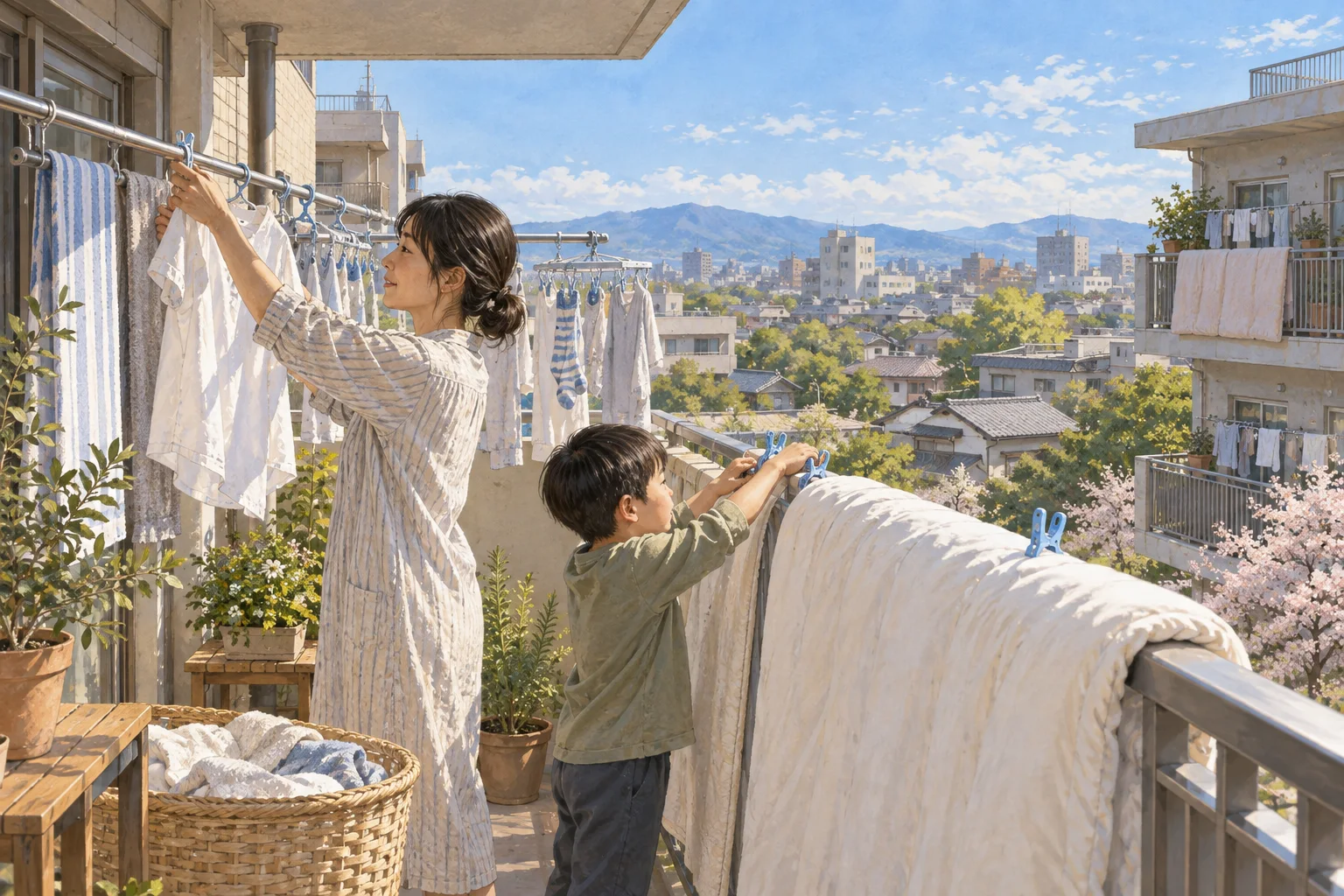
Many Japanese households dry laundry outdoors on poles on the balcony, and the weather forecast even rates drying conditions.
日本の多くの家庭は洗濯物をベランダの竿に干して乾かし、天気予報には洗濯指数まであります。
In 30 seconds
The standard explanation
In Japan, washing is hung outside to dry: on long poles across the balcony, on hangers clipped to a rack, or on a frame that swings out from a window. Sun and wind are considered better for clothes than a machine, and electricity is expensive. On rainy days the same racks go indoors. A hot, sunny morning is a laundry morning.
日本では洗濯物は外に干して乾かします。ベランダに渡した長い竿に、ピンチ付きのハンガーに、あるいは窓から張り出す物干しに掛けます。日光と風のほうが機械より衣類によいとされ、電気代も高いからです。雨の日は同じ物干しを室内に入れます。よく晴れた朝は洗濯日和です。
As a short speech
A full paragraph you can read aloud
Walk through any Japanese neighborhood on a sunny morning and you will see the same thing on every balcony: rows of shirts and towels on long poles, and clusters of socks on a plastic hanger covered in clips. Drying laundry outdoors is the norm here, even in many high-rise apartments, which are built with a laundry pole holder on the balcony.
Many families own a dryer or a washer-dryer, but plenty use it only as a backup, because sun-dried clothes are believed to smell fresher and last longer, and because running a dryer is costly. The weather forecast includes a laundry index that tells you how quickly things will dry today.
Futon bedding is also aired over the railing on fine days. Rain, pollen season and yellow dust from the continent push everything indoors onto racks, and washing on a rainy day is a familiar small misery. Rules vary: some buildings forbid hanging anything over the railing where it can be seen from the street.
晴れた朝に日本の住宅街を歩けば、どのベランダにも同じ光景があります。長い竿に並ぶシャツとタオル、ピンチだらけのプラスチックのハンガーに固まった靴下です。ここでは洗濯物を外で乾かすのがふつうで、高層マンションでも多くはそうです。ベランダには物干し竿の受けが備え付けられています。
乾燥機や乾燥機付き洗濯機を持つ家庭も多いのですが、予備としてしか使わない家庭も少なくありません。天日で乾かした服のほうが匂いがよく長持ちすると信じられ、乾燥機を回すと電気代がかかるからです。天気予報には、今日はどれくらい速く乾くかを示す洗濯指数があります。
布団も天気のよい日には手すりに掛けて干します。雨や花粉の季節、大陸からの黄砂はすべてを室内の物干しへ押しやり、雨の日の洗濯は誰もが知る小さな苦労です。決まりは建物によって違い、通りから見える手すりの外側に物を掛けることを禁じているところもあります。
Questions people actually ask
And how to answer them.
Is it embarrassing to have your laundry visible from the street?
Not really; most people do it. But underwear is usually hung on the inside of the balcony or behind other clothes, and some buildings ask residents to keep everything below railing height. Hanging clothes over the railing is often prohibited for safety.
特に恥ずかしくはなく、たいていの人がしています。ただ下着はベランダの内側や他の服の陰に干すのがふつうで、手すりより低い位置に干すよう求める建物もあります。手すりの外に掛けることは安全上禁じられていることが多いです。
Why is there a bar hanging from the balcony ceiling?
That is the laundry pole holder. You rest a long pole across two of them and hang hangers from the pole. If the apartment has one over the bath, it is for drying indoors on rainy days, often with a fan heater in the bathroom ceiling.
物干し竿の受けです。二つの受けに長い竿を渡し、竿にハンガーを掛けます。浴室に同じような棒があれば、雨の日に室内で乾かすためのもので、浴室の天井に乾燥機がついていることも多いです。
Why do people beat their futon with a paddle?
It was believed to shake out dust and mites, and the sound of futon being beaten on a sunny afternoon was once typical of a neighborhood. Experts now say beating damages the filling, so many people just air it and lightly brush the surface. Airing the futon itself is still common.
ほこりやダニを叩き出せると信じられていて、晴れた午後に布団を叩く音はかつて住宅街の風物詩でした。今では叩くと中身を傷めると専門家が言うので、多くの人は干して表面を軽くはらうだけです。布団を干すこと自体は今もよく行われます。
A common misunderstanding
MYTHJapanese people hang laundry outside because they can't afford dryers.
FACTMany own one but prefer sun and wind for freshness and fabric care, and the habit is reinforced by high electricity costs, small homes and apartment design that assumes outdoor drying.
Phrases you can use
- It's sunny, so let's get the laundry out.晴れているから洗濯物を干そう。
- Bring the washing in; it looks like rain.雨が降りそうだから洗濯物を取り込んで。
- We dry things indoors on rainy days.雨の日は部屋干しします。
- Don't hang anything over the railing.手すりの外には干さないでください。
- The forecast says it's a good drying day.予報では洗濯日和だそうです。
- I air the futon whenever the weather's good.天気がいい日は布団を干します。
Words you need
- laundry pole物干し竿
- clothespin / peg洗濯ばさみ
- drying rack物干し
- dry indoors部屋干しする
- air the bedding布団を干す
- take in the washing洗濯物を取り込む
Watch
From YouTubeBackground (Japanese)
日本の集合住宅では、ベランダの天井や壁に物干し竿の受け金具が標準で付いていて、外干しを前提に設計されています。天気予報の「洗濯指数」は、気温・湿度・風から乾きやすさを示す生活指数の一つで、花粉指数や紫外線指数とともに春には特に注目されます。梅雨時の「部屋干し」の生乾きの匂いは季節の悩みで、部屋干し用の洗剤や浴室乾燥機、除湿機はその対策として定着した商品です。マンションの管理規約で手すりの外側への干し物や布団掛けを禁じる例は多く、景観と落下防止が理由です。乾燥機の普及率は上がっていますが、晴れた日に外に干す習慣は世代を問わず根強く残っています。