nihon no ie no samusa
why homes are cold in winter
日本の家の寒さ(にほんのいえのさむさ)
In one line
The shortest answer that works
Japanese homes are often poorly insulated, so hallways and bathrooms get dangerously cold in winter.
日本の家は断熱が弱いことが多く、冬は廊下や浴室が危険なほど冷えます。
In 30 seconds
The standard explanation
Many Japanese houses, especially older ones, are built for summer humidity rather than winter cold, with thin insulation and single glazing. Heating is usually per room, so the living room is warm and the corridor, bathroom and toilet are not. The sharp temperature change is a recognized health risk for older people, especially around bathing.
日本の家の多く、とくに古い家は、冬の寒さより夏の湿気に合わせて建てられていて、断熱は薄く、窓は一枚ガラスのことが多くあります。暖房は部屋ごとなので、居間は暖かくても、廊下や浴室、便所は暖まりません。この急な温度差は、とくに入浴のまわりで、高齢の方の健康上の危険として知られています。
As a short speech
A full paragraph you can read aloud
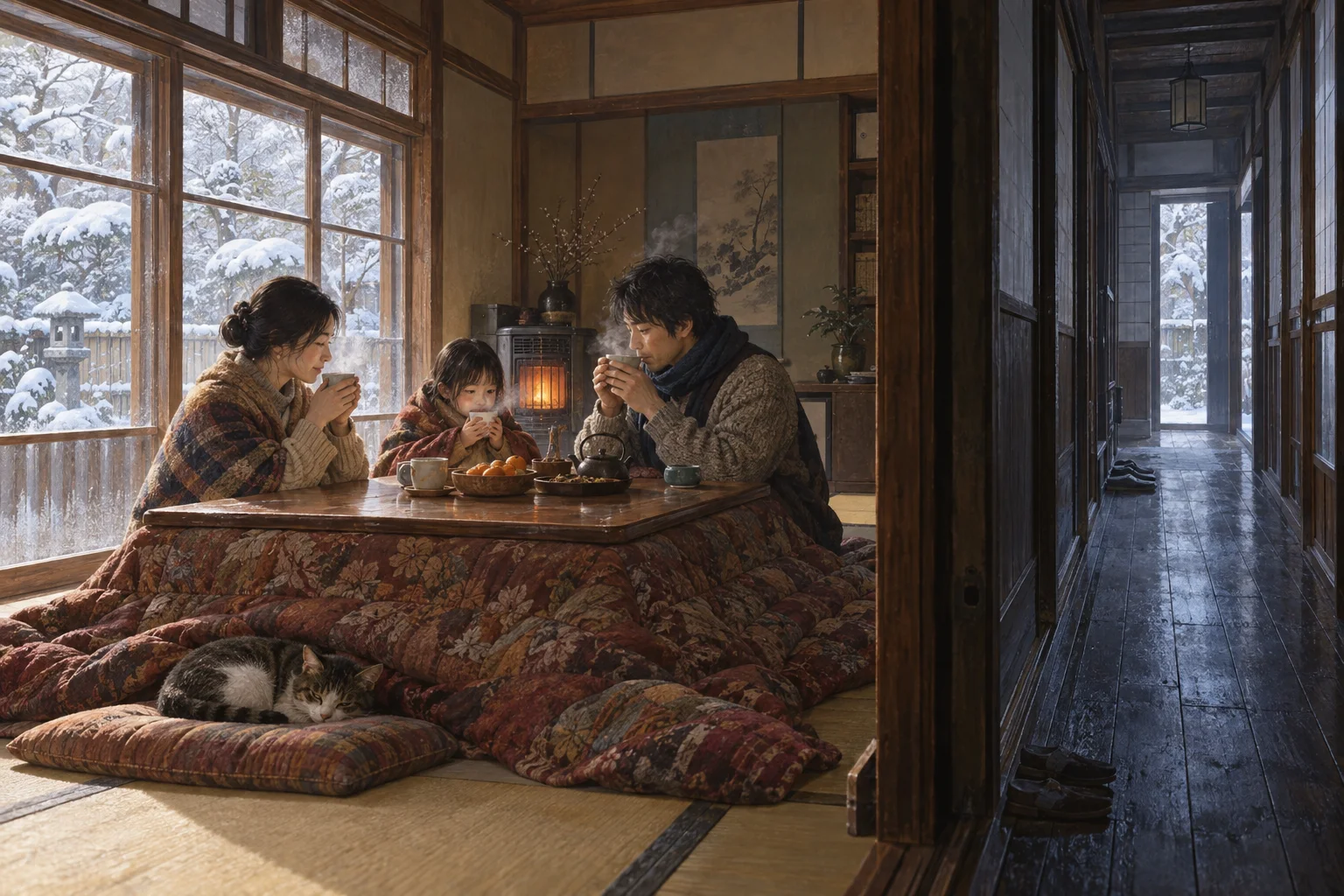
Visitors are regularly shocked by how cold Japanese houses are in winter, and the surprise is fair. Traditional Japanese building was designed against summer: raised floors, deep eaves, sliding panels that open the whole wall to a breeze.
That logic carried into modern housing for a long time, with thin insulation, single-glazed aluminum window frames and no central heating. Heating is per room, usually an air conditioner or a kerosene heater, so the living room is warm while the corridor, the toilet and the bathroom are close to outdoor temperature. That difference is not just uncomfortable.
Moving from a heated room into a cold bathroom and then into very hot water causes sharp blood pressure swings, and the resulting deaths among elderly people each winter are a recognized public health problem with its own name in Japanese. This is changing: from April 2025 all new houses must meet national energy efficiency standards.
訪れた人が日本の家の冬の寒さに驚くのは、もっともなことです。日本の伝統的な建築は夏に向けて設計されていました。床を上げ、庇を深く出し、引き戸を開ければ壁一面が風の通り道になる。その考え方は近代の住宅にも長く引き継がれ、断熱は薄く、窓はアルミの枠に一枚ガラス、全館の暖房もありませんでした。
暖房は部屋ごとで、たいていはエアコンか石油ストーブなので、居間は暖かくても、廊下と便所と浴室は外気に近い温度になります。この差はただ不快なだけではありません。暖かい部屋から冷えた浴室へ移り、そこから熱い湯に入ると血圧が大きく振れます。
それによって毎年冬に亡くなる高齢の方がいることは、日本語に専用の呼び名があるほど認識された公衆衛生の問題です。状況は変わりつつあり、2025年4月からは新築の住宅すべてに国の省エネ基準への適合が義務づけられました。
Questions people actually ask
And how to answer them.
Why is there no central heating?
Historically because houses were built to be opened up in summer and were too leaky to heat as a whole, and because per-room heating was cheaper to install. Newer, better-insulated homes increasingly do heat the whole space.
もともと家が夏に開け放つ前提で造られ、すきま風が多く全体を暖めるのに向かなかったこと、部屋ごとの暖房のほうが設備費が安かったことによります。断熱の良い新しい住宅では、家全体を暖める例が増えています。
What is the bathing risk exactly?
Undressing in a cold room raises blood pressure, then hot water drops it quickly, and the swing can cause loss of consciousness or a cardiac event. The advice is to warm the changing room and bathroom first, keep the water below about forty-one degrees, and tell someone before you bathe.
冷えた脱衣所で服を脱ぐと血圧が上がり、熱い湯に入ると急に下がります。この振れ幅が失神や心臓の発作につながることがあります。脱衣所と浴室を先に温める、湯温を四十一度ほどまでに抑える、入る前にひと声かける、というのが勧められている対策です。
A common misunderstanding
MYTHJapan is a warm country, so cold houses do not matter.
FACTMuch of Japan has a genuinely cold winter, and indoor temperatures in poorly insulated homes can fall close to outdoor levels. Cold-related deaths in the home are a documented problem.
Phrases you can use
- Only the room you're in gets heated.暖房は今いる部屋だけです。
- The corridor is as cold as outside.廊下は外と同じくらい寒いです。
- Warm the bathroom before you get in.入る前に浴室を温めてください。
- New houses have to meet insulation standards now.新築は断熱の基準を満たす義務があります。
Words you need
- insulation断熱
- single glazing一枚ガラス
- draftすきま風
- blood pressure血圧
Watch
From YouTubeBackground (Japanese)
暖かい部屋と寒い場所を行き来することで血圧が急変することを「ヒートショック」と呼び、冬季の入浴中の事故として注意が呼びかけられています。日本の住宅の断熱基準は長く努力目標にとどまっていましたが、建築物省エネ法の改正により、2025年4月からすべての新築建築物に省エネ基準への適合が義務づけられました。断熱等級4以上が求められ、建築確認の中で審査されます。既存の住宅については、窓の内側にもう一枚窓を足す改修に補助が出る制度があります。