amado
sliding storm shutters
雨戸(あまど)
In one line
The shortest answer that works
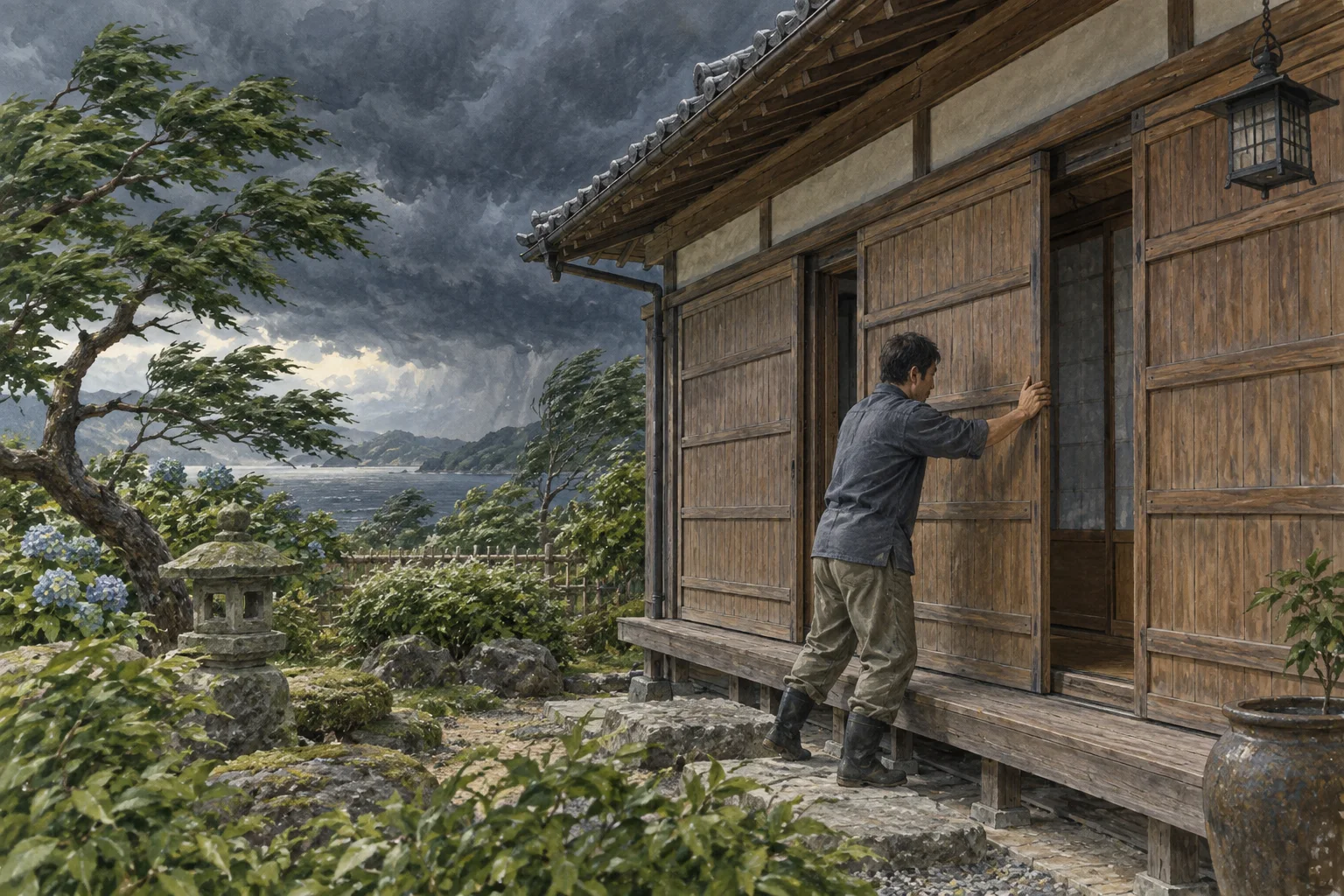
Amado are sliding shutters outside the windows that close the house up at night and in typhoons.
雨戸とは窓の外にある引き戸式の戸で、夜や台風のときに家を閉ざすものです。
In 30 seconds
The standard explanation
Amado are solid panels that slide along a rail outside the glass windows and stack into a box at the end when not in use. Older houses have wooden ones, newer ones metal or roll-down shutters. They keep out typhoon winds, flying debris, cold and burglars. In many households they are still closed every night and opened every morning, which surprises guests who find the room pitch dark.
雨戸とは、ガラス窓の外側のレールを滑る板戸で、使わないときは端の戸袋に重ねてしまいます。古い家は木製、新しい家は金属製かシャッター式です。台風の風や飛来物、寒さ、泥棒を防ぎます。今も毎晩閉めて毎朝開ける家庭が多く、部屋が真っ暗になるので泊まった客は驚きます。
As a short speech
A full paragraph you can read aloud
If you stay in a Japanese house, you may hear a rattling sound at dusk and find every window suddenly sealed. Those are the amado, sliding shutters that run on a rail outside the glass. Traditionally they were plain wooden boards, pushed along one by one and stacked into a cupboard-like box at the end of the rail.
Modern houses usually have metal panels or a roll-down shutter that does the same job. The shutters matter most in typhoon season, when they protect the glass from wind and flying branches, but many families close them every single night, partly against cold and partly against intruders, and open them again first thing in the morning.
It is such a routine that opening the amado is a classic image of a household waking up. I find the morning ritual pleasant, with light flooding in panel by panel, though the total darkness at night can be disorienting for a guest.
日本の家に泊まると、夕方にガラガラという音がして、すべての窓が急に閉ざされることがあります。それが雨戸で、ガラスの外側のレールを走る引き戸式の戸です。昔は無地の木の板で、一枚ずつ押して動かし、レールの端にある戸棚のような箱に重ねて収めました。
今の家はたいてい金属の板か、同じ役目をする巻き上げ式のシャッターです。雨戸が最も大事なのは台風の季節で、風や飛んでくる枝からガラスを守りますが、多くの家庭は寒さや侵入者を防ぐために毎晩必ず閉め、朝一番にまた開けます。
あまりに日常なので、雨戸を開けることは家が目覚める光景の定番です。板を一枚ずつ開けるたびに光が差し込む朝の儀式は気持ちのよいものだと思いますが、夜の完全な暗さは客には戸惑いのもとかもしれません。
Questions people actually ask
And how to answer them.
Why close them every night if there's no storm?
Habit, warmth and security. Single-glazed windows lose a lot of heat, so shutters help in winter, and a closed shutter is a simple barrier against break-ins. Many people also just sleep better in a fully dark room. Younger households often skip it.
習慣と保温と防犯です。一枚ガラスの窓は熱を逃がすので冬は雨戸が効きますし、閉めた雨戸は侵入を防ぐ簡単な壁です。真っ暗な部屋のほうがよく眠れるという人も多いです。若い世帯では省くことも多いです。
What is the box at the end of the rail?
It is called a tobukuro, literally a door pocket. The shutters slide into it and stack there during the day so the window is clear. In old houses it is a wooden cabinet built onto the wall; in new ones it is a slim metal case.
戸袋といい、文字どおり戸のポケットです。昼間は雨戸をそこに滑り込ませて重ねておくので、窓がすっきりします。古い家では壁に取り付けた木の箱、新しい家では薄い金属のケースです。
Should I close them if a typhoon is coming?
Yes, and do it before the wind picks up, because the panels are hard to handle in a gust. Close them fully and lock the latch. If the house has no shutters, people tape the glass and move things away from windows instead.
はい、そして風が強くなる前にしてください。突風の中では板を扱いにくいからです。完全に閉めて錠を掛けます。雨戸のない家では、代わりにガラスにテープを貼り、窓の近くの物を動かします。
Phrases you can use
- We close the shutters every night.うちは毎晩雨戸を閉めます。
- Could you open the shutters in the morning?朝、雨戸を開けてもらえますか。
- The shutters slide into that box at the end.雨戸は端のあの箱に入ります。
- A typhoon's coming, so let's shut everything up.台風が来るので、全部閉めましょう。
- Sorry, the room gets completely dark at night.すみません、夜は部屋が真っ暗になります。
Words you need
- storm shutters雨戸
- rail / trackレール・敷居
- shutter box戸袋
- roll-down shutterシャッター
- latch錠・掛け金
Watch
From YouTubeBackground (Japanese)
雨戸は江戸時代の民家や町家で普及した建具で、それ以前の蔀戸や板戸に代わって、細い敷居の上を滑る軽い板戸として広まったとされます。障子やガラス窓の外側に立てて雨風を防ぐことから名がつきましたが、実際には防犯と保温の役割も大きく、夜に閉めて朝に開ける習慣が長く続いてきました。木製の雨戸は乾燥や反りで動きが渋くなるため、敷居に蝋を塗って滑りをよくするのが昔ながらの手入れです。近年の住宅では電動シャッターや、羽根を開閉して風だけ通す「通風雨戸」が増え、台風の多い地域では新築時に付けられることが多くあります。マンションの高層階では雨戸そのものがない住戸も多くあります。