hanten
the padded winter jacket worn at home
半纏(はんてん)
In one line
The shortest answer that works
A hanten is a short padded jacket worn over indoor clothes in winter.
半纏とは、冬に部屋着の上から羽織る、綿の入った短い上着です。
In 30 seconds
The standard explanation
A hanten is a short cotton jacket with wadding inside, worn indoors in winter over whatever else you have on. It has straight sleeves, no fastening beyond a simple tie, and a wide body that traps warm air. It exists because Japanese houses are heated by room rather than throughout.
半纏とは、中に綿の入った短い木綿の上着で、冬に室内で、着ているものの上から羽織ります。袖はまっすぐで、留めるのは簡単な紐だけ、身頃はゆったりしていて暖かい空気をためます。日本の家が全体ではなく部屋ごとに暖められるために生まれた衣です。
As a short speech
A full paragraph you can read aloud
A hanten is a short padded jacket worn indoors in winter, and it is one of those objects that only makes sense once you understand Japanese housing. Because homes are heated room by room rather than centrally, the problem is not being cold in the living room, it is crossing the corridor to the kitchen.
A hanten solves that: quilted cotton wadding between two layers of cloth, straight wide sleeves so it goes over anything, no buttons, and a simple tie at the front. Older ones are printed on the outside in dark patterns and lined in bright red or floral cloth.
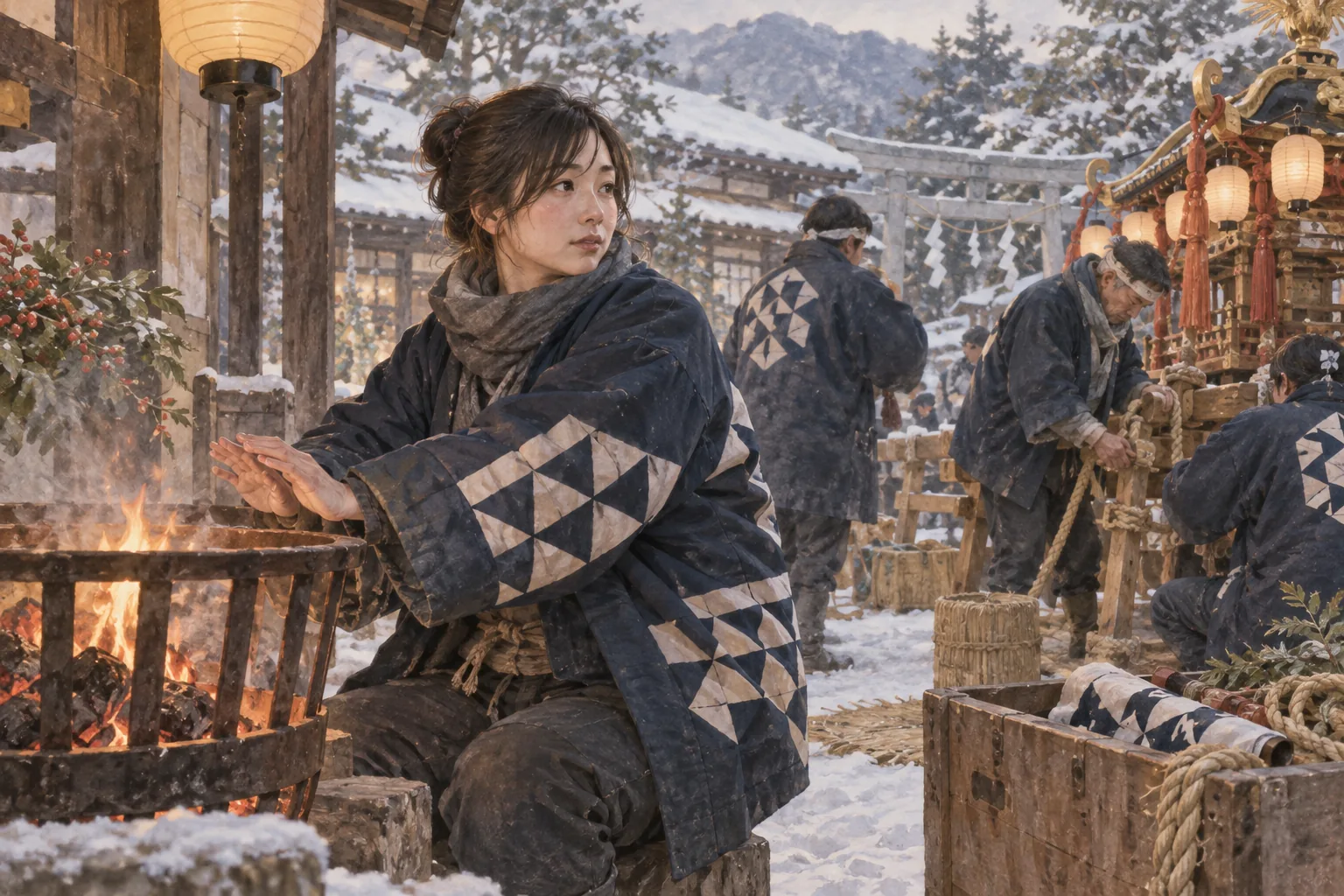
It is not outdoor wear and not fashion; it is the Japanese equivalent of a bathrobe, worn over your ordinary clothes while you eat dinner. The related but different garment is the happi, the short unlined coat worn at festivals with a shop or neighborhood name on the back, which is for wearing outside and carries no wadding.
半纏は冬に室内で着る綿の入った短い上着で、日本の住まいの事情が分かって初めて腑に落ちる品のひとつです。家が全体ではなく部屋ごとに暖められるため、困るのは居間で寒いことではなく、廊下を通って台所へ行くことです。半纏はそれを解きます。
二枚の布の間に綿を入れ、何の上からでも羽織れるようまっすぐで広い袖をつけ、ボタンはなく、前は紐で結ぶだけです。古いものは外側に濃い色の柄が刷られ、裏地に鮮やかな赤や花柄が使われています。外出着でも流行の服でもありません。
よその国の部屋着の上っ張りに当たるもので、ふだんの服の上に羽織って夕食を食べます。似ていて違うのが法被で、こちらは祭りで着る裏のない短い上着、背中に店や町内の名が入り、外で着るもので、綿は入っていません。
Questions people actually ask
And how to answer them.
How is it different from a happi?
A happi is unlined, worn outdoors at festivals, and usually carries a name or crest on the back. A hanten is padded and worn indoors for warmth. They look similar in outline but do completely different jobs.
法被は裏のない一枚で、祭りのとき外で着て、背中に屋号や紋が入っているのがふつうです。半纏は綿が入っていて、暖をとるために室内で着ます。輪郭は似ていますが、役目はまったく違います。
Can I wear it outside?
It would read as going out in a bathrobe. Taking out the trash or checking the mailbox in it is tolerated in a residential area, but it is indoor clothing and not warm enough for a real winter walk.
部屋着のまま外へ出たように見えます。住宅地でごみ出しや郵便受けまでなら許されますが、これは室内着で、本気の冬の外歩きには足りません。
Phrases you can use
- It goes over whatever you're wearing.着ているものの上から羽織ります。
- It's for indoors, not outside.外ではなく室内のための服です。
- The padding is cotton wadding.中に入っているのは綿です。
- A happi is a different thing.法被は別のものです。
Words you need
- padded jacket綿入れの上着
- wadding綿
- lining裏地
- indoor wear室内着
Watch
From YouTubeBackground (Japanese)
半纏は綿入れの上着で、「どてら」「丹前」と呼ばれる似た衣もあります。丹前は半纏より丈が長く、旅館で浴衣の上に羽織るものがこれにあたります。背中に屋号を染めた印半纏は職人や商家が仕事着として用いたもので、こちらは法被に近い使われ方をしました。こたつと組み合わせると上半身だけでも十分に暖かくなるため、冬の家庭で今も現役です。洗える素材のものや、袖のないベスト型も売られています。