jinbei and samue
easy Japanese clothes you can actually wear
甚平と作務衣(じんべいとさむえ)
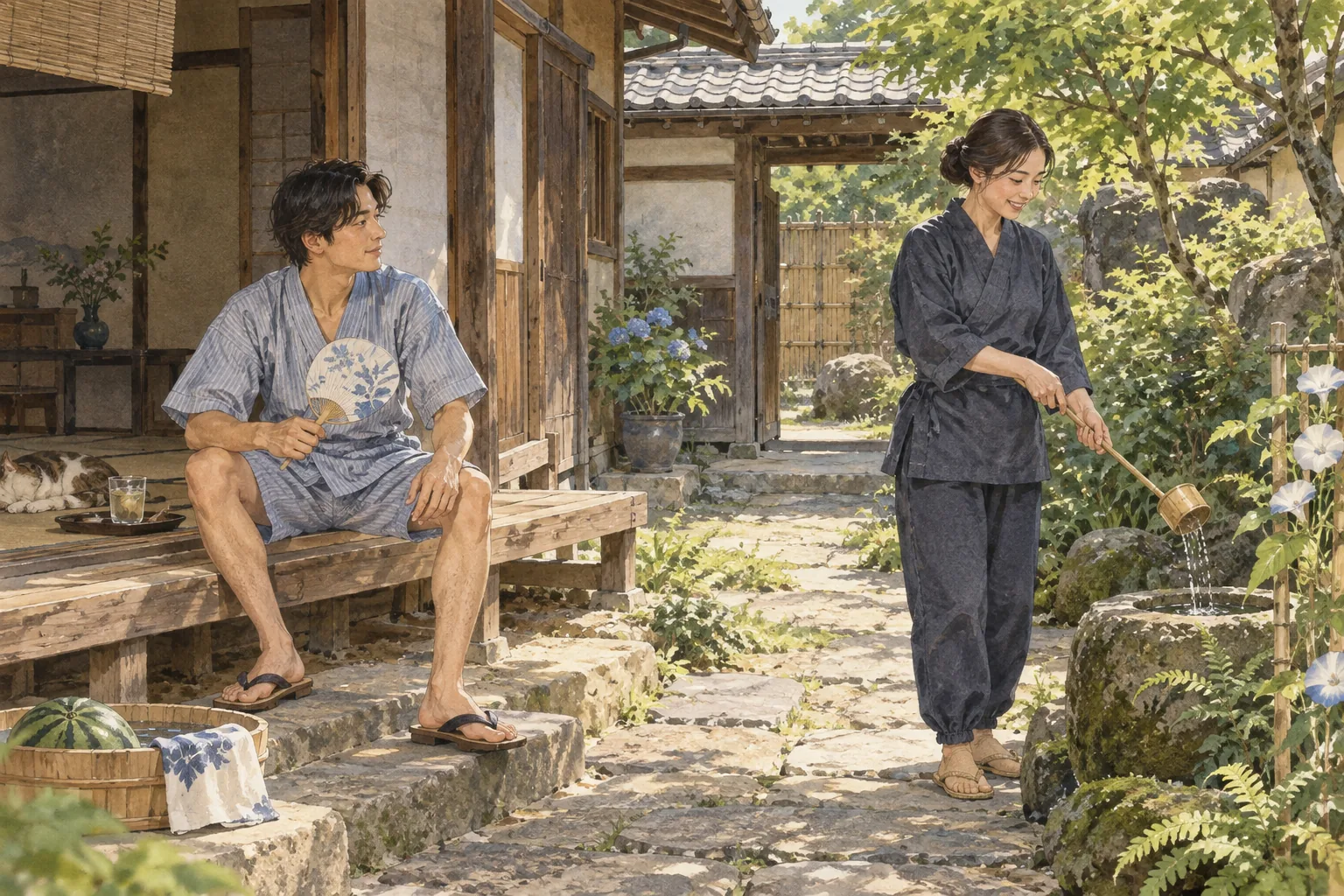
In one line
The shortest answer that works
Jinbei and samue are simple two-piece Japanese outfits that you can put on without any training.
甚平と作務衣は、稽古なしで着られる上下に分かれた簡単な和服です。
In 30 seconds
The standard explanation
Jinbei is a summer set of a short-sleeved top and shorts, tied at the side, worn at home and at summer festivals. Samue is a similar two-piece with long sleeves and trousers, originally work clothing for Buddhist monks and now worn by craftsmen and as relaxed indoor wear. Neither needs any of the skill a kimono demands.
甚平は半袖の上衣と短い下衣の組み合わせで、脇で紐を結び、家や夏祭りで着ます。作務衣は同じような上下二部式で、袖と裾が長く、もとは禅寺の作業着でしたが、今では職人が着たり、くつろぎ着として使われたりします。どちらにも、着物に要る技術はまったく要りません。
As a short speech
A full paragraph you can read aloud
If you want to buy Japanese clothing that you will genuinely wear, buy jinbei or samue rather than a kimono. A jinbei is a summer two-piece: a short-sleeved top that ties at the side with two pairs of cords, and matching shorts with an elastic or drawstring waist.
It is made of loosely woven cotton so the air moves through it, and Japanese people wear it at home in summer, at fireworks displays and at neighborhood festivals, on adults and children alike. A samue is the same construction with long sleeves and full-length trousers, in heavier cloth.
It is said to have begun as the work clothing worn by monks in Zen temples for cleaning and manual tasks, and it is still worn that way, as well as by craftsmen, by staff in traditional restaurants, and by a lot of people at home in winter. Both take fifteen seconds to put on. The only rule worth remembering is the same as for a kimono: the left side crosses over the right.
本当に着る和服を買いたいなら、着物より甚平か作務衣を買ってください。甚平は夏の上下二部式で、上衣は半袖、二組の紐を脇で結んで留め、下はゴムか紐で締める短い下衣です。
目の粗い木綿で織られているので風が通り、日本人は夏に家で、花火大会で、町内の祭りで、大人も子どもも着ます。作務衣は同じ作りで袖と裾が長く、生地は厚めです。
もとは禅寺で僧が掃除や作業のときに着た作業着だとされ、今もそのように使われるほか、職人や、和食の店の従業員、そして冬に家で過ごす多くの人が着ています。どちらも十五秒で着られます。覚えておきたい決まりは着物と同じ一つだけで、左の身頃を右の上に重ねることです。
Questions people actually ask
And how to answer them.
Can I wear a jinbei outside?
In summer, yes, to a festival, a fireworks display or the local shops. It reads as relaxed home wear, so not to a restaurant with a dress code or an office, roughly the way sweatpants work elsewhere.
夏なら、祭りや花火大会、近所の買い物には着て出られます。くつろぎ着として読まれるので、服装の決まりのある店や職場には向きません。よその国でスウェットの下を着ていくのと同じくらいの感覚です。
What's the difference from a yukata?
A yukata is one long robe closed with a sash, and putting it on properly takes some practice. A jinbei is a top and shorts that tie at the side. The yukata is dressier; the jinbei is closer to loungewear.
浴衣は一枚の長い衣を帯で締めるもので、きちんと着るには少し慣れが要ります。甚平は脇で結ぶ上衣と短い下衣です。浴衣のほうが格が上で、甚平はくつろぎ着に近いものです。
Phrases you can use
- You can put it on in seconds.数秒で着られます。
- The top ties at the side.上衣は脇で結びます。
- It's for home and summer festivals.家と夏祭りのための服です。
- Samue was originally temple work clothing.作務衣はもとは寺の作業着です。
Words you need
- two-piece set上下二部式
- cord / tie紐
- loosely woven目の粗い
- loungewearくつろぎ着
Watch
From YouTubeBackground (Japanese)
作務衣の「作務」は、禅寺で行う掃除や畑仕事などの労働を指す言葉で、修行の一部とされます。甚平は袖の下や脇を紐で編んだ作りのものがあり、風を通すための工夫です。どちらも既製品として洋服と同じ寸法の表示で売られていて、寸法直しも着付けも要りません。作務衣は和食の店や陶芸の工房で仕事着として使われ、冬用に中綿の入ったものもあります。土産物としても扱いやすく、洗濯機で洗えるものが大半です。