setta
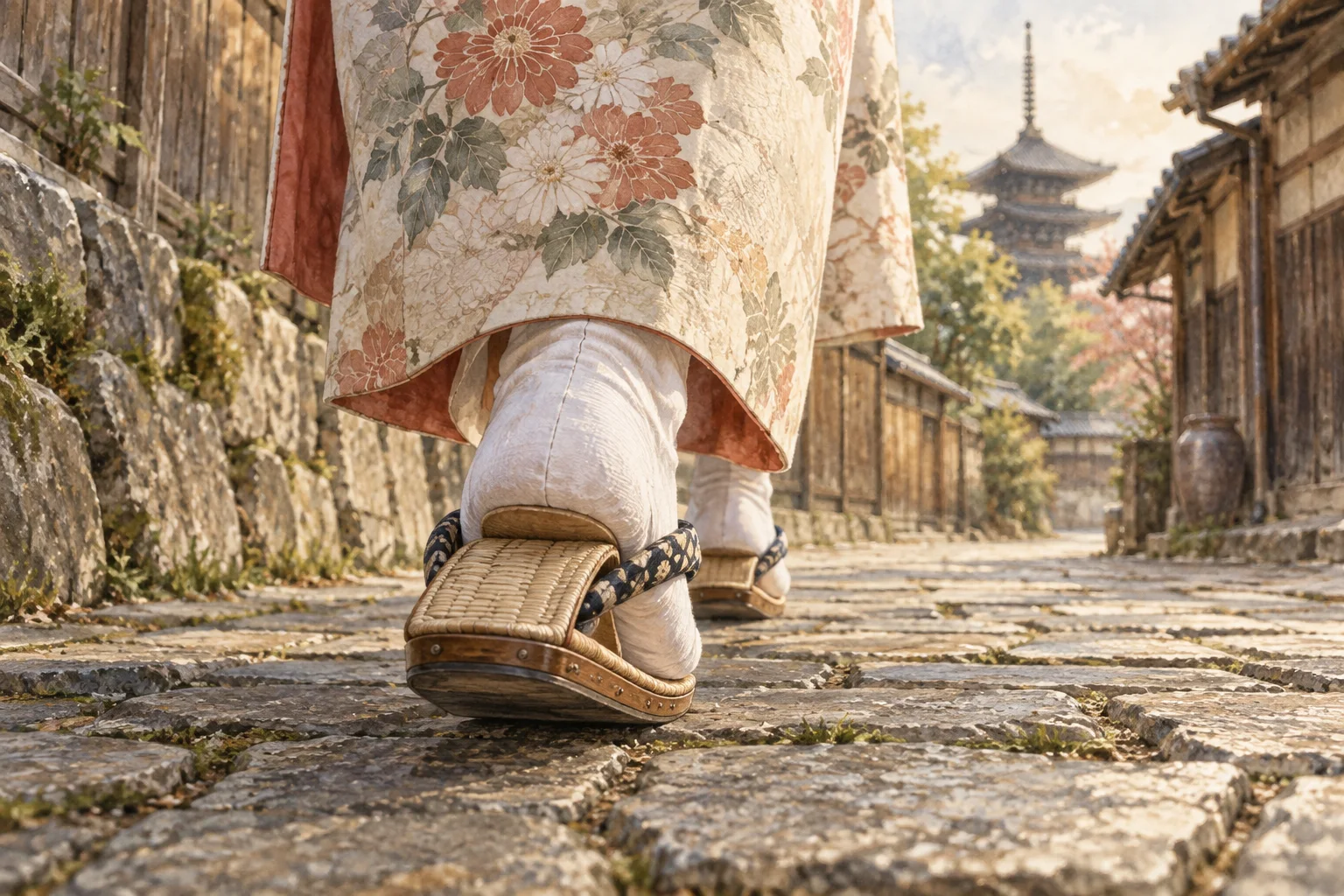
flat sandals with a bamboo-sheath top and a leather sole, worn with kimono
雪駄(せった)
In one line
The shortest answer that works
Setta are flat Japanese sandals with a woven bamboo top and a leather sole.
雪駄は、表を竹の皮で編み、裏に革を貼った平たい履物です。
In 30 seconds
The standard explanation
Setta are a kind of zori, the flat thong sandals worn with kimono. The top is traditionally woven from bamboo sheath, and the sole is leather, which holds up well on wet ground. Some have a small metal plate on the heel that clicks as you walk. Today they are worn mostly by men, with kimono, yukata or jinbei, and at festivals.
雪駄は、着物に合わせる平たい鼻緒の履物、草履の一種です。表は伝統的に竹の皮で編み、裏はぬれた地面にも強い革です。かかとに小さな金具がついていて、歩くと音が鳴るものもあります。今は主に男性が、着物や浴衣、甚平に合わせたり、祭りで履いたりします。
As a short speech
A full paragraph you can read aloud
If you look at the feet of a man in a kimono, you will often see setta. They look like simple flip-flops, but the top is woven from bamboo sheath, the thin skin that falls from bamboo shoots as they grow, and the sole is leather.
That leather sole was the key idea, because it kept your feet drier on wet ground than straw alone. A popular story says the tea master Sen no Rikyu designed them for walking through a snowy tea garden, but this is generally treated as a legend, and the real origin is not clear.
Some setta have a metal plate on the heel that clicks on hard ground, a sound that people in Edo are said to have found stylish. I like them because they are cool in summer and go with almost any casual Japanese outfit.
着物姿の男性の足元を見ると、雪駄を履いていることがよくあります。ただのビーチサンダルのように見えますが、表は竹の皮、つまりタケノコが育つときに落ちる薄い皮で編まれ、裏は革です。
この革底がいちばんの工夫で、わらだけの草履よりも、ぬれた地面で足がぬれにくくなりました。茶人の千利休が雪の積もった茶庭を歩くために考えたという話がよく知られていますが、これは一般に言い伝えとされ、本当の起源ははっきりしません。
かかとに金具がついていて硬い地面で音が鳴る雪駄もあり、江戸の人はその音を粋だと感じたと言われます。夏は涼しく、気軽な和装ならたいてい何にでも合うので、私は雪駄が好きです。
Questions people actually ask
And how to answer them.
What's the difference between setta and zori?
Setta are one type of zori. What makes them setta is the leather sole, usually with a bamboo-sheath top. Women's formal zori usually have a thicker, raised base covered in cloth, leather or vinyl.
雪駄は草履の一種です。雪駄と呼ばれるのは革の底があるからで、表はたいてい竹の皮です。女性の礼装用の草履は、台が厚く高めで、布や革、ビニールなどで覆われているのが普通です。
Why do some setta make a clicking sound?
Traditional ones have a small metal plate, called shirigane, on the heel to keep the leather from wearing down. It clicks on stone or pavement. Some people love the sound, and others find it too loud.
昔ながらの雪駄には、革がすり減らないように、かかとに「尻金」という小さな金具がついています。これが石や舗装の上で音を立てます。その音が好きな人もいれば、うるさいと感じる人もいます。
Can I wear setta with Western clothes?
Sure. Many people wear them with jeans or shorts in summer. They are open sandals, though, so they don't go with formal Western outfits.
もちろんです。夏はジーンズや短パンに合わせる人もたくさんいます。ただ、つっかけるサンダルなので、洋装の正装には合いません。
Phrases you can use
- These are setta, a kind of Japanese sandal.これは雪駄という日本の履物です。
- The strap goes between your big toe and second toe.鼻緒は親指と人差し指の間にはさみます。
- They're easy to slip on and off.さっと履けて、さっと脱げます。
- They go really well with a yukata.浴衣にとてもよく合いますよ。
- You can find them at shops that sell festival gear.お祭り用品の店で買えます。
Words you need
- thong sandals鼻緒のある履物
- bamboo sheath竹の皮
- leather sole革底
- strap鼻緒
- heel plate尻金(かかとの金具)
Watch
From YouTubeBackground (Japanese)
雪駄は「雪踏」とも書き、千利休が雪の日の露地を歩くために草履の裏に牛革を貼らせたのが始まりだとする話が、江戸時代の書物に見られる。ただしこれは俗説とされ、平安時代から使われた、裏に獣の皮をつけた「尻切(しきれ)」から発達したとする説もあって、はっきりしない。かかとの尻金は革底のすり減りを防ぐ金具で、歩くと音が鳴る。江戸では、この音を立てて歩くのが粋とされたとも言われる。今は裏をゴムやウレタンにした手ごろな雪駄も多く、夏祭りや甚平に合わせて履く人も多い。