hachimaki
a cloth headband tied around the head to show focus and team spirit
鉢巻(はちまき)
In one line
The shortest answer that works
A hachimaki is a cloth headband Japanese people tie on to get fired up.
鉢巻は、気合を入れるために頭に巻く布です。
In 30 seconds
The standard explanation
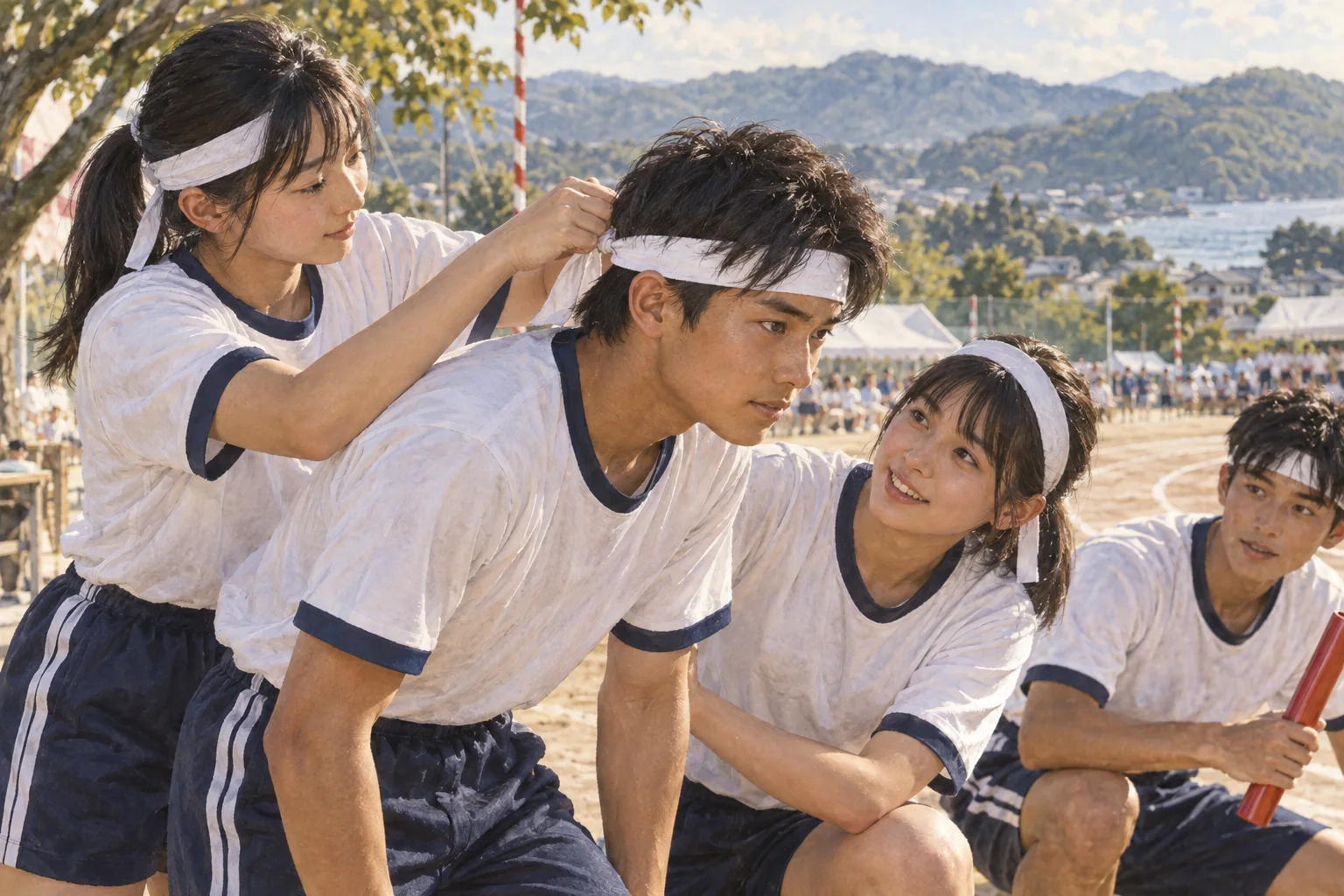
A hachimaki is a long strip of cloth tied around the forehead. You see it at school sports days, where teams wear red or white, and at festivals, where people carrying portable shrines twist it into a rope. Students cramming for exams sometimes wear one with words like "certain victory" on it. It is less about fashion and more about showing that you are ready to give it everything.
鉢巻は、額のまわりに巻く細長い布です。運動会では紅組・白組の色の鉢巻を、祭りではみこしを担ぐ人がねじって縄のようにした鉢巻を締めています。受験勉強の追い込みで「必勝」などと書いた鉢巻を巻く人もいます。おしゃれというより、全力を出す準備ができていることを示すものです。
As a short speech
A full paragraph you can read aloud
If you watch a Japanese school sports day, you will notice that many children wear a headband, usually red or white to show their team. This is a hachimaki. It is simply a strip of cloth tied around the head, but it carries a clear message: I am focused and ready.
In the past, warriors tied cloth around their heads under their helmets, and people also wore headbands during festivals and religious events. Today you see them on festival crowds carrying portable shrines, on some fishmongers and sushi chefs, and on students studying for entrance exams.
Some have words printed on them, such as "hissho," meaning "certain victory." For me, tying a hachimaki works like a switch. The moment it is on, I feel it is time to get serious.
日本の学校の運動会を見ると、多くの子どもたちが、たいていは赤か白の鉢巻を巻いてチームを示していることに気づくでしょう。これが鉢巻です。頭に巻いた布の帯にすぎませんが、「集中している、準備はできている」というはっきりした意味があります。
昔は武士が兜の下で頭に布を巻き、祭りや神事のときにも人々は鉢巻を締めました。今では、みこしを担ぐ祭りの人たち、一部の魚屋さんやすし職人、入試の勉強をする受験生が巻いている姿を見かけます。
「必勝」のように、字が入ったものもあります。私にとって鉢巻を締めることは、スイッチのようなものです。巻いた瞬間に、さあ本気を出そうという気持ちになります。
Questions people actually ask
And how to answer them.
Why do kids wear red and white headbands at sports day?
Many schools split everyone into a red team and a white team, and the headband shows which side you are on. Red and white are also a traditional pair of colors for contests in Japan, as in the New Year's Eve singing show.
多くの学校では全員を紅組と白組に分けていて、鉢巻でどちらのチームかを示します。紅白は日本で勝負ごとの伝統的な組み合わせの色でもあり、大みそかの歌番組でも使われています。
Is it only for men?
No. Girls wear them at sports day, and women wear them at festivals and in sports teams too. The image of a man with a twisted headband is common, but anyone can wear one.
いいえ。運動会では女の子もしますし、祭りやスポーツのチームで女性も巻きます。ねじり鉢巻の男性の姿がよく思い浮かびますが、誰でも巻いてかまいません。
A common misunderstanding
MYTHA hachimaki is a martial arts or military item.
FACTIt has been used in battle in the past, but today it is an everyday item for sports days, festivals, hard work and exam study.
Phrases you can use
- Tie your headband tight so it won't come off while you run.走っても取れないように、鉢巻をきつく結んでね。
- Our team wears red headbands this year.今年うちのチームは赤い鉢巻です。
- It says "hissho," which means "certain victory."「必勝」と書いてあります。「必ず勝つ」という意味です。
- Wearing it helps me focus.これを巻くと集中できるんです。
- At festivals, people twist it into a rope before tying it.祭りでは、ねじって縄のようにしてから結びます。
Words you need
- headband鉢巻
- to tie something around your head頭に巻く
- twisted headbandねじり鉢巻
- to get fired up気合を入れる
- portable shrineみこし
Watch
From YouTubeBackground (Japanese)
「鉢巻」の鉢は、頭の横まわりのことを指す。武装したときに、かぶり物が落ちないよう頭に布を巻き、その上に兜をかぶったのが名前の由来とされる。布を額の前で結ぶものは「向こう鉢巻」、ねじって縄のようにしたものは「ねじり鉢巻」と呼ばれ、祭りではねじり鉢巻がよく見られる。歌舞伎では、病気の人物が紫の鉢巻を頭の横で結ぶ「病鉢巻」という決まった姿がある。運動会では、表が赤で裏が白のように、裏返すだけで色を変えられる鉢巻がよく使われる。