juken
the entrance exam system
受験(じゅけん)
In one line
The shortest answer that works
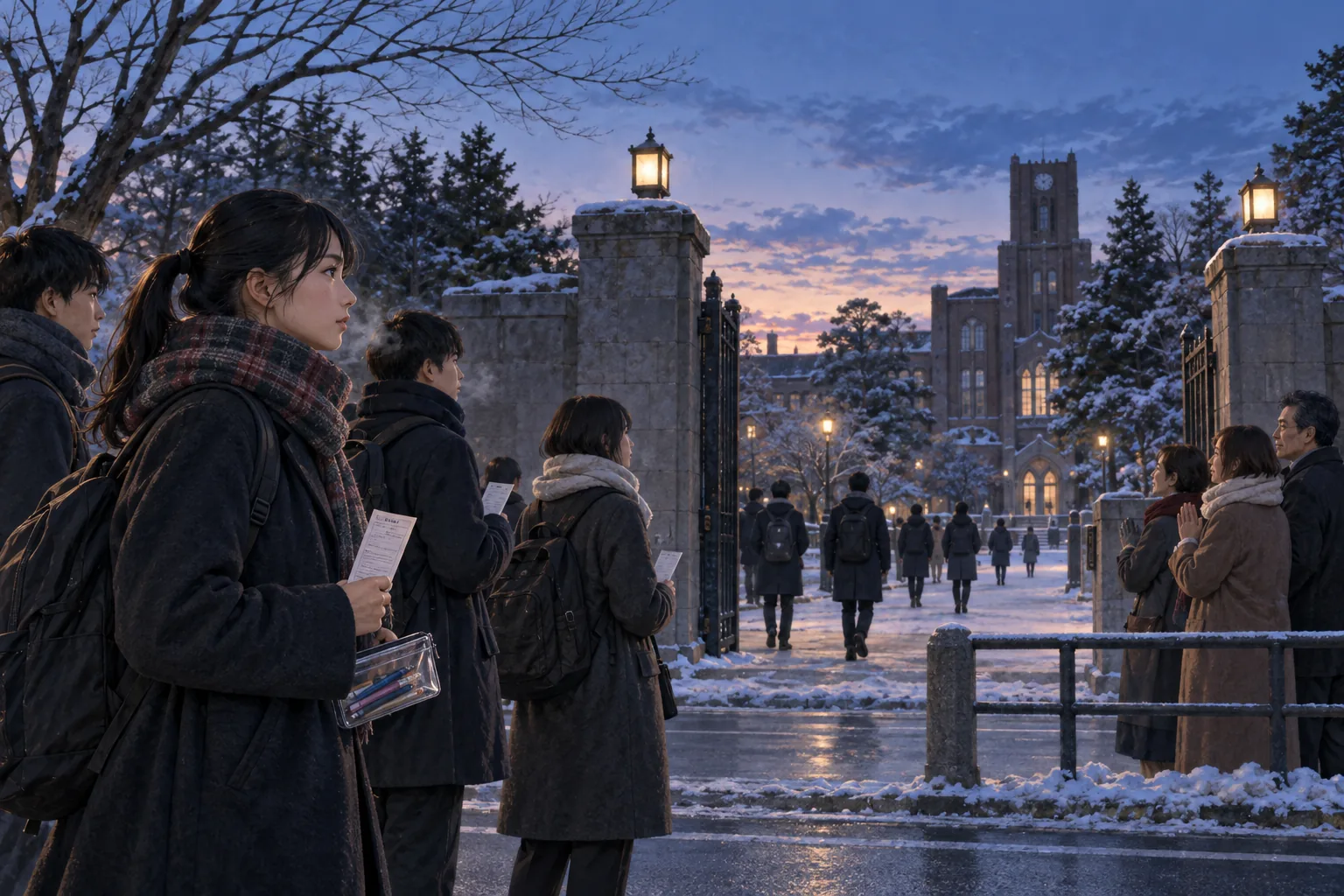
Juken means preparing for and sitting the entrance exams that decide which school or university you enter.
受験とは、どの学校や大学に入るかを決める入学試験に向けて準備し、それを受けることです。
In 30 seconds
The standard explanation
Japanese students take competitive entrance exams to enter high school at fifteen and university at eighteen. For many, the exam score carries the most weight, so the year before is spent in intensive study, often including evening classes at a private cram school. During that year a student is called a jukensei, and the household adjusts around it. Admission by recommendation and interview is also growing.
日本の生徒は、15歳で高校、18歳で大学に入るための競争的な入学試験を受けます。多くの場合、試験の点数が最も重く見られるため、その前年は集中的な勉強に費やされ、夜は塾に通うことも多くあります。その1年、生徒は「受験生」と呼ばれ、家じゅうがそれに合わせて動きます。推薦や面接による入学も増えています。
As a short speech
A full paragraph you can read aloud
In Japan there are two points where your education is decided by an exam: entry to high school at fifteen, and entry to university at eighteen. On the traditional route, the result depends largely on how you perform on the day rather than on years of coursework and references, although recommendation-based admissions now fill a large share of university places.
Because of the exam's weight, the year before it has its own name. You become a jukensei, an exam student, and everything else is put aside. Many students attend a private cram school called a juku in the evening after their ordinary school day, and study through the winter holidays.
The exams themselves are held in the coldest weeks of the year, in January and February, which is why you see students buying good-luck charms at shrines in the new year. The system is efficient and fair in a narrow sense, since the same test is marked the same way for everybody. What it costs is a year of everything else.
日本には、進路が試験で決まる地点が二つあります。15歳の高校入試と、18歳の大学入試です。従来の一般入試では、何年分の成績や推薦状よりも当日の出来が大きくものを言います。ただし大学では、推薦などによる入学がいまでは大きな割合を占めています。
試験の重みが大きいため、試験前の1年には専用の呼び名があります。「受験生」になり、ほかのすべてが脇へ置かれます。多くの生徒は通常の学校のあと、夜に塾へ通い、冬休みも勉強を続けます。試験そのものは1月から2月、一年で最も寒い時期に行われます。
正月に神社で合格祈願のお守りを買う生徒が多いのはそのためです。この制度は、同じ試験を同じ基準で採点するという狭い意味では効率的で公平です。その代償が、それ以外のすべてを失う1年なのです。
Questions people actually ask
And how to answer them.
What is a juku?
A private after-school school for exam preparation. Students go in the evening and on weekends on top of regular school, and the industry is large. Cost is a real factor in how well a family can support a child.
受験のための私塾です。通常の学校に加えて夜や週末に通い、業界の規模は大きいです。費用は、家庭がどこまで支援できるかを左右する現実的な要素です。
What happens if you fail?
You can spend an extra year studying full time to retake, and a student doing that is called a ronin, the word for a masterless samurai. Taking a year is common enough not to carry much stigma.
もう1年かけて勉強し直し、再受験できます。その状態の人は「浪人」と呼ばれます。主君を持たない武士を指す語です。珍しくないため、大きな不名誉とはされません。
Is it really that stressful?
Yes, and Japan discusses this openly. Sleep loss, pressure from family and the narrow measure of worth are all recognized problems, and reforms to broaden how students are assessed keep being proposed.
本当に大変で、日本でも率直に議論されています。睡眠不足、家族からの圧力、評価軸の狭さはいずれも認識された問題で、評価方法を広げる改革が繰り返し提案されています。
Phrases you can use
- The exams are in January and February.入試は1月と2月にあります。
- He's in his exam year, so he's at cram school every night.彼は受験生なので、毎晩塾に通っています。
- The result often depends heavily on one exam.合否は一回の試験に大きく左右されることが多いです。
- Spending an extra year to retake is quite common.浪人してもう一年というのは、よくあることです。
- Students buy charms at shrines for good luck.受験生は神社で合格祈願のお守りを買います。
Words you need
- entrance exam入学試験
- cram school塾、予備校
- sit an exam試験を受ける
- retake受け直す
- competitive競争の激しい
Watch
From YouTubeBackground (Japanese)
大学入試の共通試験は、1979年の共通一次試験、1990年の大学入試センター試験を経て、2021年から大学入学共通テストに変わった。例年1月中旬の土日に実施され、受験者数は40万人台で推移している。「浪人」は主君を失った武士を指す語で、進学先が決まらず次の機会を待つ状態に転用された。合格祈願で知られる神社には学問の神・菅原道真を祀る天満宮が多く、太宰府天満宮や湯島天満宮には受験期に絵馬が集中する。「すべらない」ことにかけて滑り止め対策のお菓子が売られるなど、語呂合わせの縁起かつぎも定着している。