happi
the straight-sleeved festival coat
法被(はっぴ)
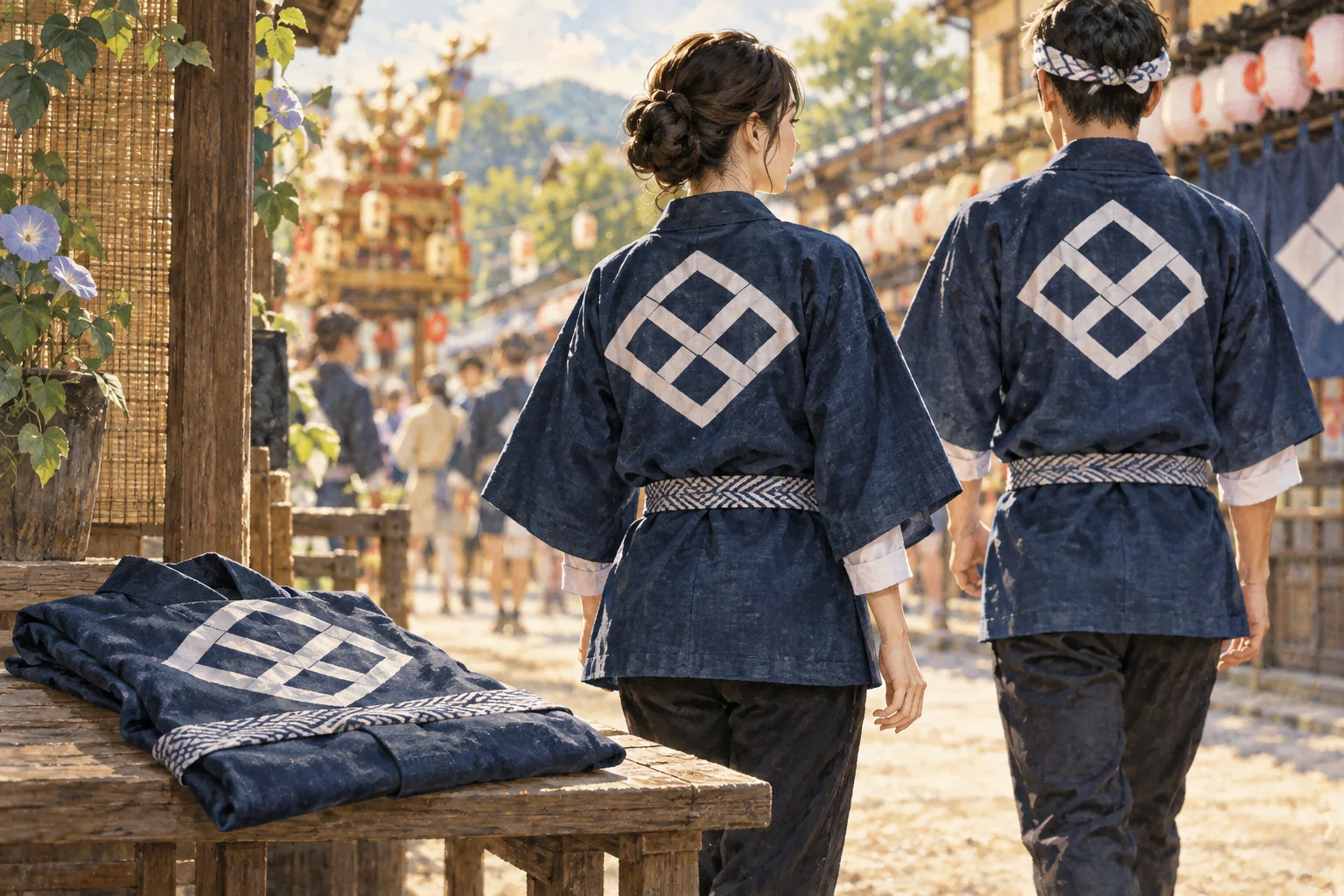
In one line
The shortest answer that works
A happi is the short straight-sleeved coat worn at festivals, printed with the name of the group wearing it.
法被とは、祭りで着る丈の短い直線的な上着で、着ている集団の名前が染め抜かれています。
In 30 seconds
The standard explanation
A happi is a straight-cut cotton coat reaching to the hip or thigh, worn open or tied with a narrow sash. It carries a large crest or name on the back identifying the neighborhood association, shop or team. Originally it was work and household livery; today it is mostly festival wear, and also appears at shop openings and sales events.
法被は腰から腿までの丈の、直線裁ちの木綿の上着で、前を開けるか細い帯で留めて着ます。背中には町会・店・団体を示す大きな紋や名前が入ります。もとは仕事着であり家の印を示す仕着せでしたが、今は主に祭りの装いで、店の開店や催事でも見かけます。
As a short speech
A full paragraph you can read aloud
If you go to a Japanese festival, you will see everyone carrying the portable shrine wearing the same short coat. That is a happi. It is a simple straight-cut cotton garment, about hip length, with wide straight sleeves, and the important part is on the back: a large crest or the name of the neighborhood association, written in bold characters.
The garment's original job was identification. In the Edo period, households gave these coats to their employees with the family crest on them, and firefighters and craftsmen wore them as working dress. That is why it reads as a uniform rather than as a costume.
At a festival today, wearing the happi of a particular neighborhood means you belong to that group carrying that shrine, so if someone offers you one to wear, it is not a souvenir. It is an invitation to join in, and you should accept it.
日本の祭りに行くと、神輿を担ぐ人が全員同じ短い上着を着ています。それが法被です。腰丈ほどの単純な直線裁ちの木綿の衣で、袖もまっすぐ。大事なのは背中で、大きな紋か、町会の名前が太い文字で入っています。
この衣のもとの役目は識別でした。江戸時代、家は奉公人に家紋入りのこの上着を与え、火消しや職人も仕事着として着ました。だから衣装というより制服として読めるのです。
今日の祭りでは、ある町会の法被を着ることは、その神輿を担ぐ集団に属していることを意味します。ですから誰かが着てみるかと差し出してきたら、それは土産ではありません。仲間に入れという誘いですから、受けてください。
Questions people actually ask
And how to answer them.
What's written on the back?
Usually the name of the neighborhood association, the shrine's parish district, or a shop's name, in a bold traditional lettering style. Sometimes it is the family or group crest instead.
たいてい町会名、氏子の地区名、あるいは店名が、太い伝統的な書体で入っています。紋だけのこともあります。
Can I buy one as a souvenir?
You can buy plain or generic ones easily. A happi with a specific neighborhood's name on it belongs to that group, so wearing one you have no connection to would be odd rather than offensive.
無地や汎用のものは簡単に買えます。特定の町会名の入った法被はその集団のものなので、関係のない人が着るのは失礼というより、ちぐはぐに映ります。
What's the difference from a hanten?
They overlap and the words are often used loosely. In general a hanten is a padded winter coat for warmth worn at home, while a happi is unlined and worn for work or festivals.
重なる部分が多く、語も厳密には使い分けられていません。一般に半纏は綿入れで家で暖を取るための冬の上着、法被は裏地のない仕事着・祭り着です。
Phrases you can use
- The name on the back says which group they belong to.背中の名前で、どの町会かが分かります。
- It was originally a work uniform.もとは仕事着でした。
- If they offer you one, they're inviting you to join.差し出されたら、仲間に入れという誘いです。
- Shops wear them at opening events too.店の催事でも着ます。
- It's tied with a narrow sash.細い帯で留めます。
Words you need
- coat / jacket上着
- crest紋
- livery / uniform仕着せ、制服
- neighborhood association町会、自治会
- belong to〜に属する
Watch
From YouTubeBackground (Japanese)
法被は、武家の奉公人が着た家紋入りの上着に始まるとされ、のちに町人の「印半纏(しるしばんてん)」と区別なく呼ばれるようになった。家紋や屋号を背に染め抜いて所属を示す点は共通している。江戸の火消しが着た刺子の半纏は分厚く、水を含ませて火に耐える実用的な装備でもあった。背中の文字には「江戸文字」と呼ばれる太い書体の系統がよく使われ、隙間を詰めた字形には縁起をかつぐ意味があるとされる。祭りでは法被の下に鯉口シャツと股引を合わせ、腹に晒を巻くのが伝統的な装いの一つ。近年は企業の販促イベントでも法被が使われ、「その集団の一員である」ことを示す記号として機能し続けている。