tabi
split-toe socks
足袋(たび)
In one line
The shortest answer that works
Tabi are Japanese socks with a split between the big toe and the rest, made for thonged sandals.
足袋とは親指と他の指の間が分かれた日本の靴下で、鼻緒の履物のために作られています。
In 30 seconds
The standard explanation
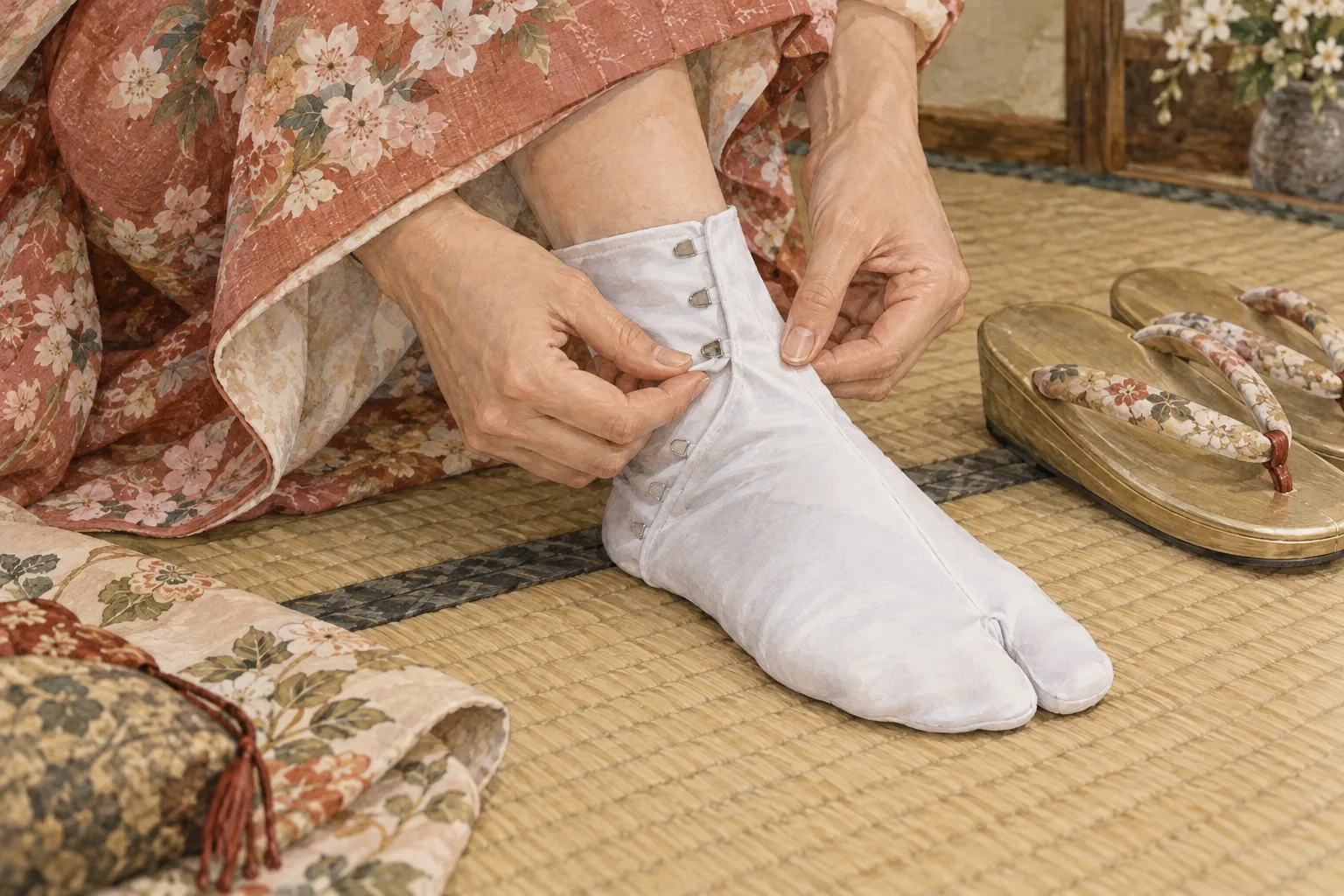
Tabi are socks with the big toe separated, so the thong of a sandal can sit between the toes. Formal white tabi are worn with kimono, fastened at the back with small metal clasps rather than elastic. There is also a work version with a rubber sole, worn directly as outdoor footwear by builders, gardeners and festival carriers.
足袋は親指だけが分かれた靴下で、履物の鼻緒を指の間に通せるようになっています。着物には白い足袋を合わせ、ゴムではなくかかと側の小さな金具で留めます。ゴムの底をつけた作業用のものもあり、大工や庭師、祭りの担ぎ手が屋外の履物としてそのまま履きます。
As a short speech
A full paragraph you can read aloud
Tabi are Japanese socks with the big toe separated from the other four. The reason is simple: Japanese sandals are held on by a thong that passes between the toes, so an ordinary sock would not work.
Formal tabi are white, made of stiff cotton rather than knitted stretch fabric, and they fasten up the back with small metal clasps that hook into loops. Because they do not stretch, they are sized precisely and should be snug, and putting them on takes a moment of effort. Colored and patterned ones exist for casual wear.
There is also a completely different member of the family, the jika-tabi, which has a rubber sole and is worn outdoors as a shoe. You still see them on construction sites, on gardeners and on people carrying portable shrines at festivals, because the split toe and thin sole give a very good sense of the ground.
足袋は親指だけが他の四本と分かれた日本の靴下です。理由は単純で、日本の履物は指の間を通る鼻緒で留めるため、ふつうの靴下では履けないからです。
礼装用の足袋は白く、伸びる編み地ではなく張りのある木綿でできていて、かかと側の小さな金具を糸の輪に掛けて留めます。伸びないので寸法は正確で、ぴったりしているのが正しく、履くのに少し力が要ります。
ふだん着用には色や柄のついたものもあります。まったく別の仲間として地下足袋があり、ゴムの底がついていて屋外の靴として履きます。今も建設の現場や庭師、祭りで神輿を担ぐ人が履いているのは、分かれたつま先と薄い底が地面をよく感じさせるからです。
Questions people actually ask
And how to answer them.
Why don't they just stretch like normal socks?
Because the clean line at the ankle matters with kimono, and stretch fabric wrinkles. The stiff cotton and the metal clasps hold a smooth shape. Stretch versions are sold for everyday use, but they are not worn with formal dress.
着物では足首のところの線がきれいに出ることが大事で、伸びる生地はしわが寄るからです。張りのある木綿と金具がなめらかな形を保ちます。ふだん用に伸びる素材のものも売られていますが、礼装には使いません。
What size should I buy?
Your actual foot length in centimeters, not your shoe size, and buy them to fit closely. If they are loose they bag at the ankle, which looks untidy. Try them on if you can, since cut varies between makers.
靴のサイズではなく、実際の足の長さをセンチで。ぴったり合うものを選んでください。緩いと足首でたるみ、だらしなく見えます。作り手によって形が違うので、可能なら試し履きを。
Phrases you can use
- The toe is split so the thong fits between.鼻緒が入るようにつま先が分かれています。
- They fasten with clasps at the back.後ろの金具で留めます。
- White ones are for formal wear.白いものは礼装用です。
- The ones with rubber soles are worn outdoors.ゴム底のものは屋外で履きます。
Words you need
- split toe分かれたつま先
- thong (of a sandal)鼻緒
- claspこはぜ
- to fit snuglyぴったり合う
Watch
From YouTubeBackground (Japanese)
足袋の留め具は「こはぜ」と呼ばれ、四枚のものが標準で、日本舞踊などでは五枚のものも使われます。枚数が多いほど足首が深く覆われます。ゴム底のついた地下足袋は大正時代に考案されたとされ、のちにタイヤ会社になる企業が広めました。海外の運動靴の会社が、この分かれたつま先の形からヒントを得た製品を出したこともあります。白い足袋は汚れが目立つため、洗いたての清潔なものを履くこと自体が身だしなみとされてきました。