shirotabi to irotabi
why the color of tabi socks signals how formal the occasion is
白足袋と色足袋(しろたびといろたび)
In one line
The shortest answer that works
Shirotabi to irotabi, white and colored split-toe socks, are worn for formal occasions and everyday wear, respectively.
白足袋と色足袋とは、それぞれ格式の高い場と日常の装いではく、白い足袋と色のある足袋のことです。
In 30 seconds
The standard explanation
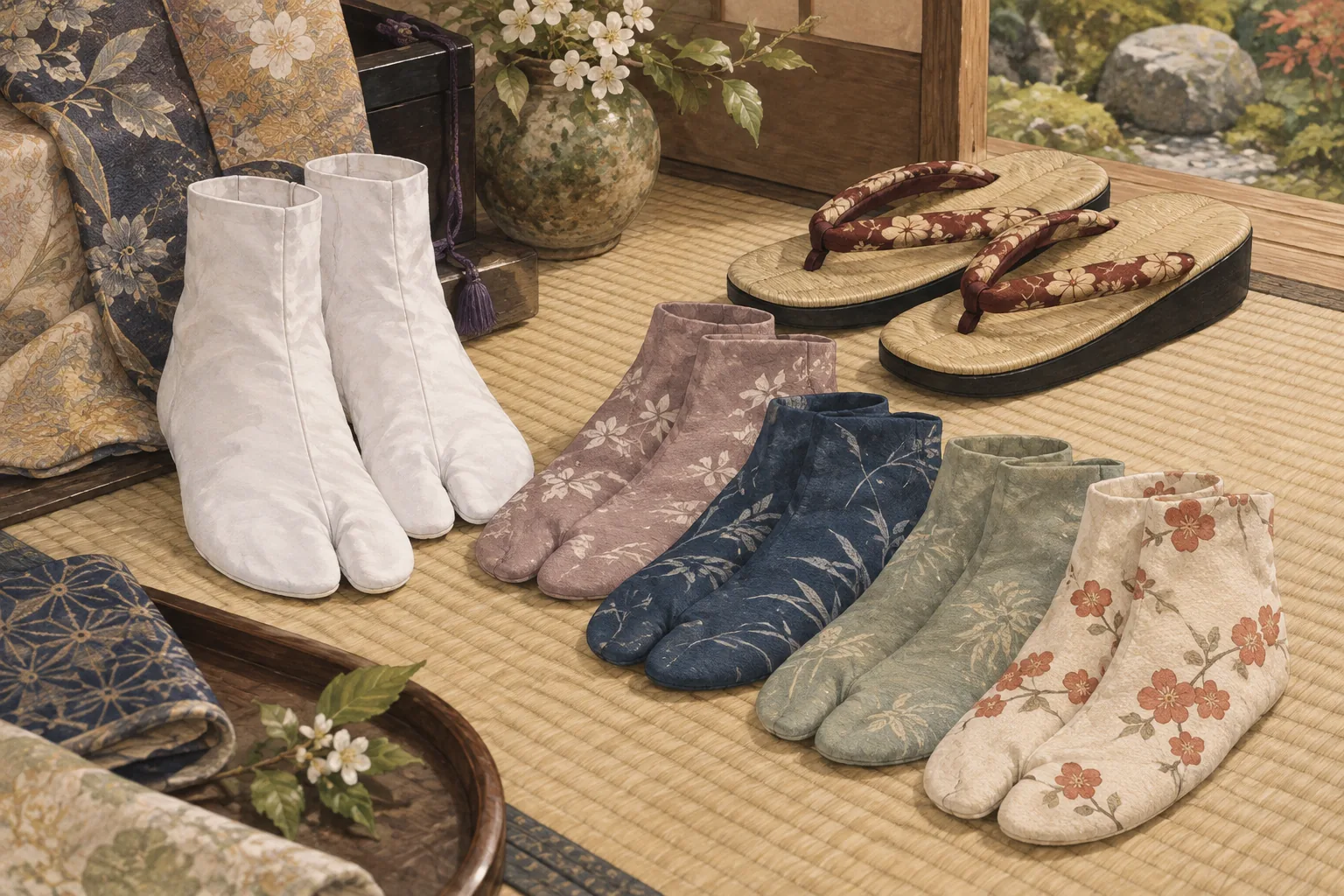
White tabi are close to mandatory at tea ceremony, on the noh stage, and with formal kimono, because plain white reads as clean and correct. Outside those formal settings, tabi come in solid colors, stripes and playful patterns, often worn with casual kimono or by festival performers who want their feet to stand out. Craftspeople wear a rubber-soled cousin, jika-tabi, usually in navy or black, purely for work rather than fashion. So a glance at someone's tabi hints at how formal the moment is.
茶道や能の舞台、正装の着物には白い足袋がほぼ必須で、白は清潔で正しいものと受け取られます。そうした改まった場以外では、足袋は無地の色や縞、遊び心のある柄もあり、普段着の着物や、足元を目立たせたい祭りの担ぎ手が着けます。職人はゴム底の地下足袋という別の系統を、おしゃれではなく仕事のために紺や黒で履きます。つまり足袋の色を見れば、その場がどれくらい改まっているか見当がつくのです。
As a short speech
A full paragraph you can read aloud
If you watch a tea ceremony or a noh performance, you'll notice everyone's feet are the same: plain white. White tabi are the expected choice wherever kimono is worn formally, because white is read as clean, correct and unobtrusive, the opposite of drawing attention to your feet. Step outside those formal settings and tabi open up completely: solid colors, stripes, checks and playful prints are common with casual kimono, and festival carriers sometimes wear bold patterns on purpose, since a portable shrine is one place feet are allowed to stand out.
There is also jika-tabi, a rubber-soled work boot with the same split toe, worn by construction workers and gardeners in navy or black for grip, not style. None of this is written law; it is closer to an unspoken dress code that most Japanese people absorb without ever being taught it directly.
茶道や能を見ていると、誰の足元も同じ、無地の白であることに気づきます。着物を正装として着る場面ではどこでも白い足袋が当たり前で、白は清潔で正しく、目立たないものと受け取られるからです。足元に注目を集めるのとは正反対です。
そうした改まった場を出ると、足袋は一気に幅が広がります。無地の色や縞、チェック、遊び心のある柄が普段着の着物によく合わせられ、祭りの担ぎ手はあえて派手な柄を選ぶこともあります。神輿を担ぐ場では足元が目立ってもよい数少ない場面だからです。
同じ二股のつま先を持つ地下足袋というゴム底の作業用もあり、建設現場や庭師が紺や黒で履きますが、これはおしゃれではなく足場をつかむためです。これは成文の決まりではなく、多くの日本人が直接教わらないまま身につけている、暗黙の服装のルールに近いものです。
Questions people actually ask
And how to answer them.
Is it rude to wear colored tabi to a tea ceremony?
Generally yes, unless the host says otherwise. Plain white is the safe default for tea ceremony and formal kimono events, so pack a white pair even if your everyday tabi are colorful.
亭主から特に言われない限り、たいてい失礼にあたります。茶道や正装の着物の行事では白が無難なので、普段の足袋が色つきでも白い一足を用意しておきましょう。
Why do festival carriers sometimes wear patterned tabi?
A festival is one of the few settings where standing out with your feet is welcomed, and a group carrying a shrine often matches patterns to show they belong to the same team.
祭りは足元が目立ってもよい数少ない場面の一つで、神輿を担ぐ一団は同じ柄をそろえて、自分たちが同じ組の仲間だと示すことがあります。
Are jika-tabi the same thing as regular tabi?
No. Jika-tabi have a rubber sole built in and are worn directly outdoors as footwear, mainly by construction workers and gardeners, while regular tabi are cloth socks worn indoors or with zori and geta.
違います。地下足袋はゴム底が付いていて、そのまま屋外の履物として使われ、主に建設現場や庭師が履きます。ふつうの足袋は布の靴下で、室内で、または草履や下駄に合わせて履くものです。
How do they fasten?
With metal clasps called kohaze at the back of the ankle, hooked through loops. They should fit tightly; loose tabi wrinkle at the ankle and that is considered untidy.
足首の後ろにある「こはぜ」という金具を、糸の輪に掛けて留めます。きつめに履くもので、緩んで足首にしわが寄るのは、だらしないとされます。
Phrases you can use
- White tabi are safest for a formal kimono event.正装の着物の行事には白い足袋が無難です。
- Those festival tabi have a really bold pattern.その祭りの足袋、柄がずいぶん派手ですね。
- Jika-tabi have a rubber sole for outdoor work.地下足袋は屋外の作業用にゴム底が付いています。
- Colored tabi are fine for a casual kimono outing.普段着の着物なら色足袋でも大丈夫です。
- Do I need white tabi for this ceremony?この式には白い足袋が必要ですか。
Words you need
- split-toe sock足袋
- rubber-soled work boot地下足袋
- formal wear正装
- unspoken dress code暗黙の服装のルール
- to stand out目立つ
Watch
From YouTubeBackground (Japanese)
足袋の色に関する決まりは法律ではなく慣習だが、茶道や能、正装の着物では白足袋がほぼ標準とされる。白は清浄さや控えめさを表すと受け取られてきたためという説がある。一方、普段着の着物や祭りの装いでは色柄物の足袋も広く使われ、特に神輿を担ぐ祭りでは、同じ柄の足袋で連帯感を示す団体もある。建設現場などで履くゴム底の地下足袋は、屋外の作業用として発達したもので、茶道などで履く室内用の足袋とは別の系統にある。