nagajuban
the underlayer worn beneath a kimono
長襦袢(ながじゅばん)
In one line
The shortest answer that works
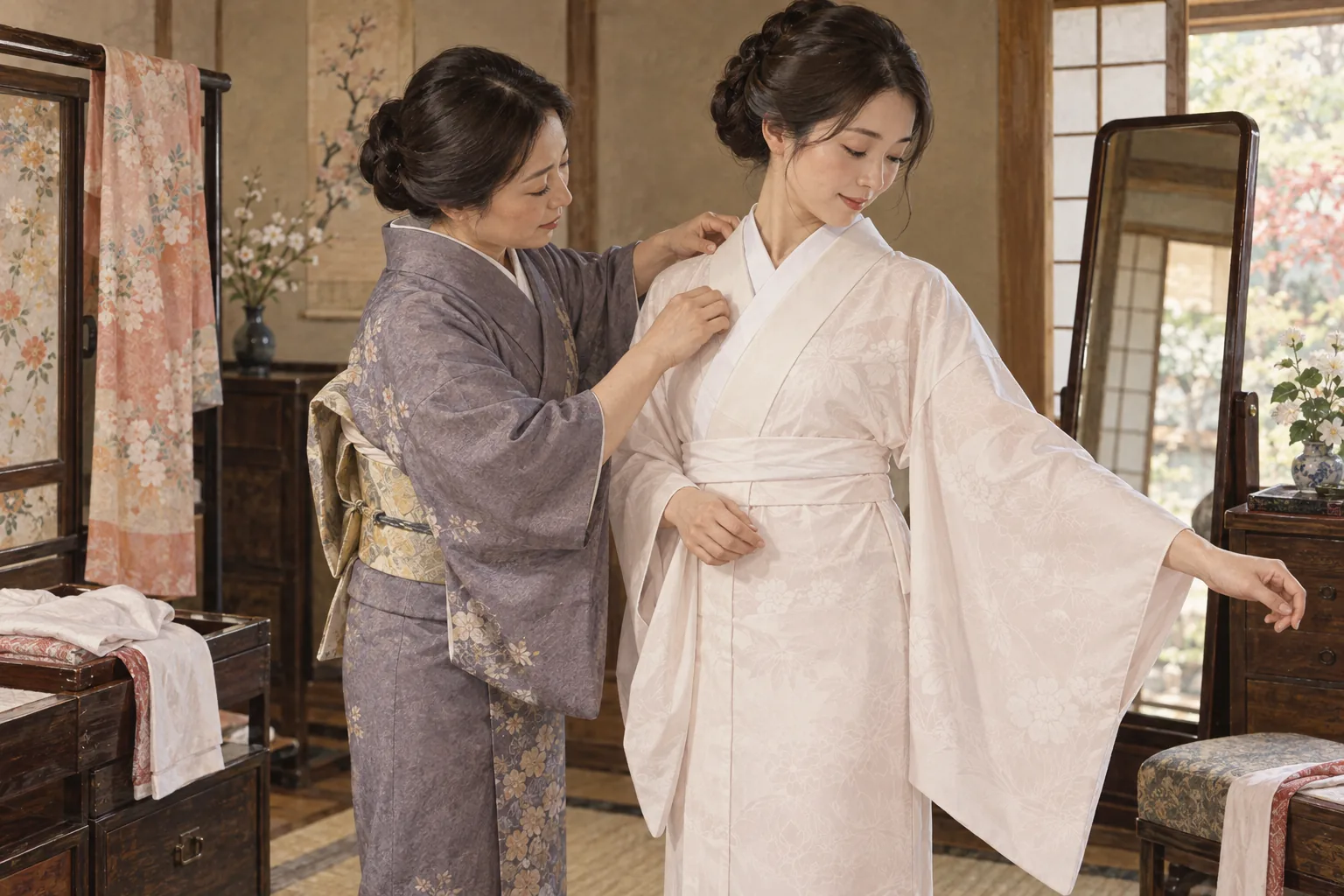
A nagajuban is the underlayer worn beneath a kimono, and its collar is the thin white edge you see at the neck.
長襦袢は着物の下に着る下着で、衿元にのぞく白い細い線がその衿にあたります。
In 30 seconds
The standard explanation
A nagajuban is a full-length undergarment worn underneath a kimono, over a thin undershirt called a hadajuban, protecting the outer fabric from sweat and body oil while giving the kimono its structure underneath. Its collar, called a han-eri, is deliberately left showing a few millimeters above the kimono's own collar, which is why a worn kimono appears to have two layers at the neck even though only one visible robe is on top. Because a formal kimono is expensive and hard to wash, the nagajuban does the job of an undershirt, and it's the part that actually gets cleaned often.
長襦袢は着物の下、肌襦袢という薄い肌着の上に着る、丈の長い下着で、汗や皮脂から表地の着物を守りながら、下から着物の形を整える役目も持っています。半衿と呼ばれるその衿は、着物本体の衿より数ミリだけわざと見えるように出され、これが着物姿の首元がまるで二枚重ねのように見える理由です。表に見えているのは実際には一枚の着物だけなのに、そう見えるのです。正式な着物は高価で洗いにくいため、長襦袢が下着の役目を引き受け、実際に頻繁に洗われるのはこちらの方です。
As a short speech
A full paragraph you can read aloud
The white or patterned line visible at the neck of someone wearing a kimono is not a second robe. It belongs to the nagajuban, a full-length underlayer worn beneath the kimono itself, over a thinner undershirt, and only its collar, the han-eri, is meant to be seen, peeking out a few millimeters above the outer kimono collar.
That small visible strip is one of the more deliberate details in kimono dressing: a plain white han-eri signals a formal or bridal occasion, while an embroidered or colored one is worn for something more casual or festive. The reason the system exists is practical.
A formal silk kimono is expensive, hard to wash, and not meant to touch skin directly, so the nagajuban absorbs sweat and body oil instead and can be washed or swapped far more easily than the kimono on top of it. Some even have a removable collar exactly so a plain white one can become colorful without laundering the whole garment. To an outsider it looks like fine tailoring; to the wearer, it's closer to knowing which undershirt goes with which jacket.
着物を着ている人の首元に見える白い、あるいは柄のある線は、二枚目の着物ではありません。それは長襦袢という、着物本体の下、薄い肌着の上に着る丈の長い下着の一部で、見えていいのはその半衿という衿だけです。着物本体の衿より数ミリだけ、あえて外に出しています。
この小さく見える一筋の布は、着物を着つける上でかなり意図的に決められた部分の一つで、無地の白い半衿は改まった場や花嫁衣装であることを示し、刺繍や色物の半衿はもっと気軽な、あるいは華やかな場面を示します。この仕組みが存在する理由は実用的です。正式な絹の着物は高価で洗いにくく、肌に直接触れさせるものではないため、代わりに長襦袢が汗や皮脂を受け止め、上に着る着物よりずっと簡単に洗ったり交換したりできます。
長襦袢の中には取り外せる衿がついているものもあり、それはまさに、着物全体を洗わずに白い衿を色物の衿に変えられるようにするためです。外から見ればただの仕立ての巧みさですが、着ている本人にとっては、どのシャツをどの上着に合わせるかを知っているようなものです。
Questions people actually ask
And how to answer them.
Is the nagajuban a kind of kimono itself?
No, it's an undergarment worn beneath the kimono and normally not seen except for its collar, though it's cut and wrapped in a similar way to the kimono above it.
いいえ、着物の下に着る下着で、衿以外はふつう見えません。ただし仕立て方や体への巻き方は、上に着る着物と似ています。
Why does the collar color matter?
A plain white collar usually signals a formal or bridal occasion, while a patterned or colored one is worn for something more casual, so the small visible strip actually tells you something about the event.
無地の白い衿はふつう改まった場や花嫁衣装を示し、柄物や色物の衿はより気軽な場面で着られます。そのため見えている小さな一筋が、その場がどんな場面かを実は語っています。
Do people wash it separately from the kimono?
Yes, that's largely the point. A silk kimono is expensive and hard to clean, so the nagajuban takes the sweat and body contact and gets washed on its own, sometimes with a detachable collar for easy swapping.
はい、それがこの仕組みの大きな目的です。絹の着物は高価で洗いにくいため、長襦袢が汗や肌との接触を引き受け、単独で洗われます。衿を取り外せるようにして、交換しやすくしていることもあります。
Phrases you can use
- You can see a bit of the nagajuban collar here.ここから長襦袢の衿が少し見えます。
- A white collar is for formal occasions.白い衿は改まった場面用です。
- The nagajuban protects the kimono from sweat.長襦袢は着物を汗から守ります。
- This collar is removable for washing.この衿は洗濯のために取り外せます。
- Make sure the collar shows evenly on both sides.衿が左右均等に見えるようにしてください。
Words you need
- kimono underlayer長襦袢
- detachable collar半衿
- to peek outのぞく
- formal occasion改まった場
- silk絹
Watch
From YouTubeBackground (Japanese)
長襦袢は肌襦袢の上、着物のすぐ下に身につける下着で、汗や皮脂から表地の着物を守る役割を持つ。衿もとにつける半衿はふつう白無地が正式とされ、七五三や成人式などでは刺繍入りや色物の半衿を選んで華やかさを出すこともある。半衿は長襦袢本体に縫い付けるか、取り外せるようにしておき、汚れたら半衿だけ交換して洗える仕立てが一般的である。着物初心者が最初に戸惑う工程の一つが、この衿元の出し加減の調整だとされる。