kitsuke
putting a kimono on
着付け(きつけ)
In one line
The shortest answer that works
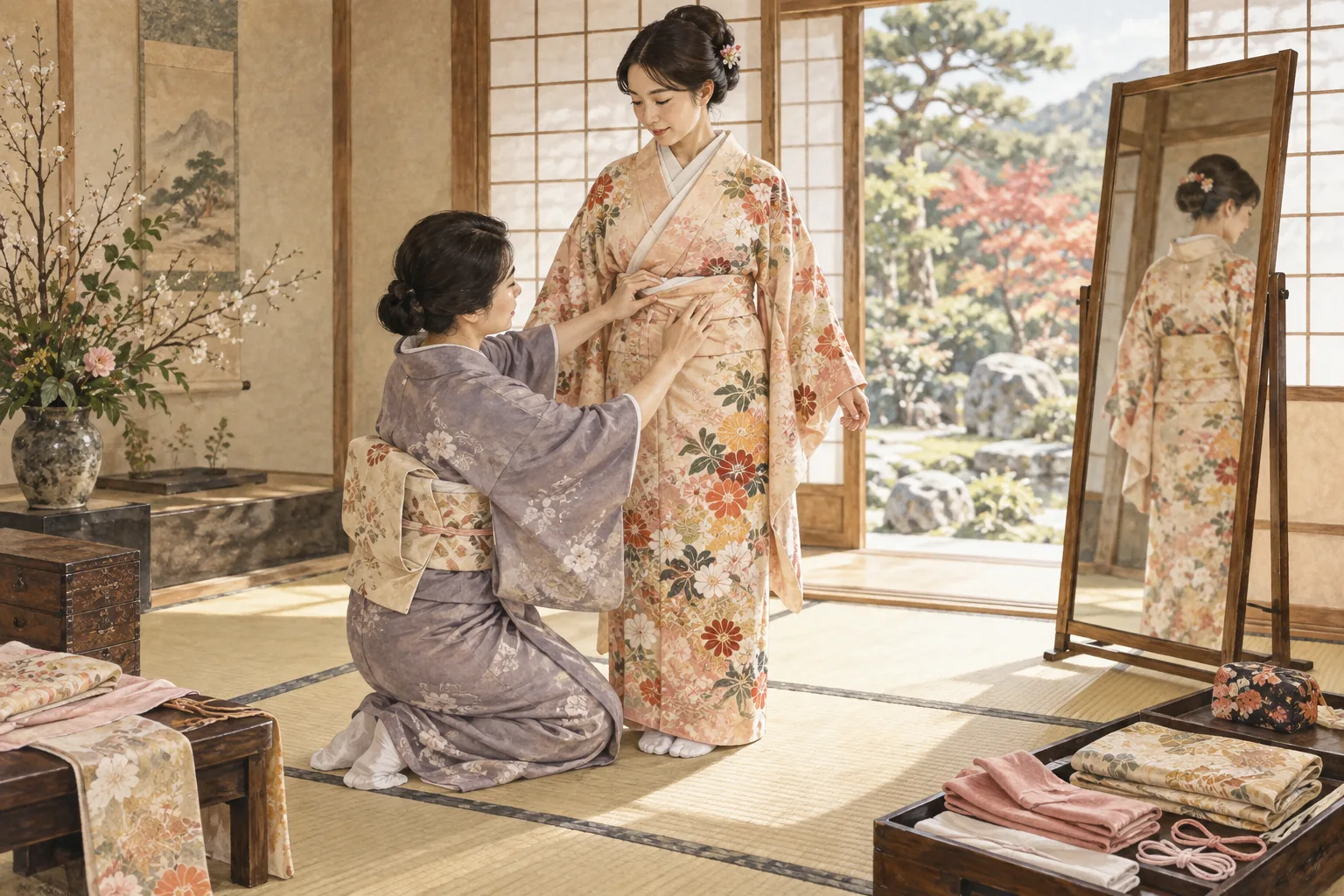
Kitsuke is the skill of putting a kimono on properly, and most Japanese people cannot do it alone.
着付けとは着物をきちんと着る技術のことで、日本人の多くは一人では着られません。
In 30 seconds
The standard explanation
Kitsuke means dressing in kimono. It takes practice: the garment has no buttons, the length is adjusted by folding at the waist, and the sash alone can involve several cords and a complicated knot. Most Japanese people cannot manage it unaided, so there are dressing schools and salons, and hotels arrange dressers for weddings and coming-of-age ceremonies.
着付けとは着物を着ることです。稽古が要ります。留め具はなく、丈は腰で折り上げて合わせ、帯だけでも数本の紐と複雑な結びが要ります。日本人の多くは一人では着られないので、着付け教室や着付けの店があり、婚礼や成人式ではホテルが着付けの人を手配します。
As a short speech
A full paragraph you can read aloud
Kitsuke is the skill of putting on a kimono, and visitors are often surprised to learn that most Japanese people cannot do it by themselves. A kimono has no buttons, no zip and no fixed length.
It is made long and the excess is folded up at the waist and held with cords, so the hem sits exactly right, and then the collar has to be set at the correct depth at the back. The sash is a separate problem: a formal obi is several meters long and the knot may need pads, cords and a board to hold its shape.
For a wedding or a coming-of-age ceremony people book a professional dresser, and getting ready often starts before dawn. There are dressing schools that teach it as a course. One rule is absolute and worth memorizing: the left side goes over the right, for everyone. The opposite way is how the dead are dressed.
着付けは着物を着る技術で、日本人の多くが自分では着られないと知って、訪れた人はよく驚きます。着物には留め具も、ファスナーも、決まった丈もありません。長めに仕立てられていて、余った分を腰で折り上げ、紐で押さえることで裾の位置をぴたりと決めます。
それから襟を、後ろで正しい深さに合わせなければなりません。帯はまた別の難しさです。礼装の帯は数メートルあり、形を保つために芯や紐、板が要ることもあります。婚礼や成人式では着付けの専門家を予約し、支度は夜明け前から始まることもよくあります。
これを課程として教える着付け教室もあります。ひとつだけ絶対の決まりがあり、覚えておく値打ちがあります。誰であっても左側を上に重ねること。逆に重ねるのは、亡くなった人の装いです。
Questions people actually ask
And how to answer them.
Which side goes on top?
The left side over the right, for men and women alike. The reverse is used only when dressing the dead, so this is one mistake that genuinely upsets people. Check yourself in a mirror: from the front, the fold should look like a lowercase y.
男女とも左側を上に重ねます。逆にするのは亡くなった方の装いだけなので、これは本当に人を不快にさせる間違いです。鏡で確かめてください。正面から見て、合わせが小文字の y のように見えれば正しい形です。
Can a tourist rent one and get dressed?
Yes, easily. Rental shops in Kyoto, Kanazawa, Asakusa and other tourist areas include dressing in the price, take about thirty minutes, and often offer hair styling too. They also tell you how to sit, walk and use a toilet in it.
簡単にできます。京都、金沢、浅草などの観光地の貸衣装店は、料金に着付けが含まれ、30分ほどで仕上げ、髪のセットも頼める店が多いです。座り方、歩き方、着たままの手洗いの使い方も教えてくれます。
Why is it so complicated compared with a yukata?
A yukata is a single unlined layer with a simple sash, and many people can put one on themselves. A formal kimono has underlayers, multiple cords, a collar to shape and a stiff obi, and every one of those has to be adjusted on the body.
浴衣は裏のない一枚の衣に簡単な帯で、自分で着られる人も多くいます。礼装の着物は下に重ねる衣があり、紐が何本もあり、襟の形を整える必要があり、帯も固く、そのすべてを体の上で合わせなければならないからです。
A common misunderstanding
MYTHJapanese people grow up knowing how to put on a kimono.
FACTMost do not. Everyday dress shifted to Western clothing over the twentieth century, and formal kimono is now an occasional garment that people pay to be dressed in.
Phrases you can use
- Left side over right, always.必ず左側を上に重ねます。
- Most people can't put one on alone.ほとんどの人は一人では着られません。
- The rental shop dresses you.貸衣装店で着せてもらえます。
- Take small steps and keep your arms low.歩幅を小さく、腕は上げすぎないでください。
Words you need
- to dress someone着付ける
- sash帯
- cord腰紐
- collar襟
Watch
From YouTubeBackground (Japanese)
左を上に重ねる決まりは奈良時代の法令に由来するとされ、亡くなった人にだけ逆の合わせを用いる習慣が今も残ります。着付け教室は戦後に広まり、着物が日常着でなくなった時代に技術を受け継ぐ役目を果たしました。成人式の朝は美容室が早朝から開き、予約が前年から埋まる地域もあります。近年は紐や帯を簡略にした作り帯や、二部式に仕立てた着物もあり、一人で着られる工夫が増えています。