junihitoe
the layered court robes of the Heian period
十二単(じゅうにひとえ)
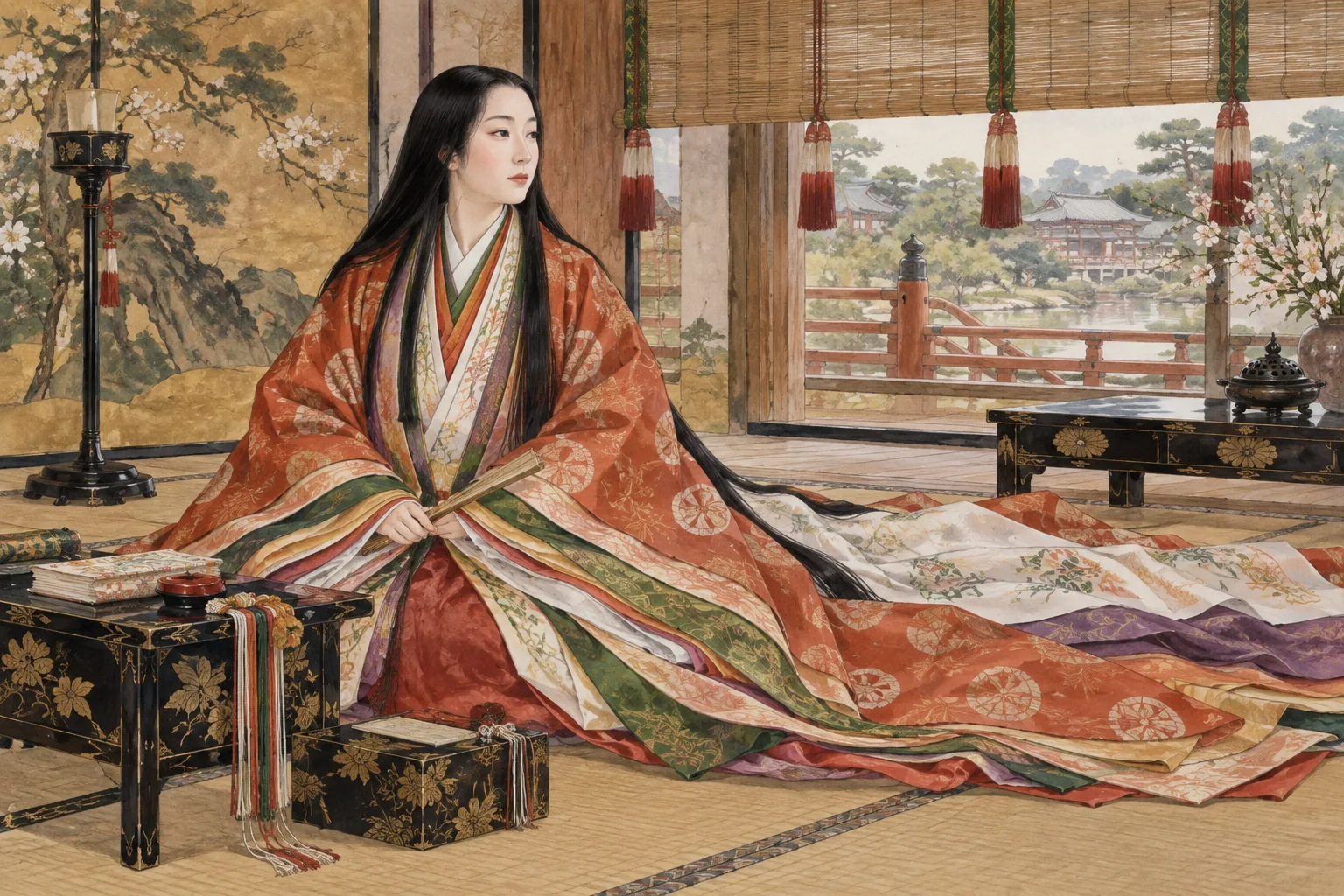
In one line
The shortest answer that works
Junihitoe is the many-layered robe worn by women of the Heian court, weighing well over ten kilograms.
十二単とは平安の宮廷の女性が着た何枚も重ねた装束で、重さは十数キロにもなります。
In 30 seconds
The standard explanation
Junihitoe is the formal dress of women at the Heian court: many robes layered one over another, with the colors at the sleeve and hem arranged in graded combinations that carried seasonal meaning. The name means twelve layers, but the number was never fixed. It is still worn at imperial weddings.
十二単は平安の宮廷の女性の正装で、衣を何枚も重ね、袖口と裾に現れる色の重なりに季節の意味を持たせたものです。名は十二枚の意味ですが、枚数が決まっていたわけではありません。皇室の婚礼では今も着用されます。
As a short speech
A full paragraph you can read aloud
Junihitoe is the layered formal dress of women at the Heian court, and it is one of the most visually specific things in Japanese history. Multiple robes are worn one over another, and because each is slightly shorter than the one beneath, the colors show in a graded band at the sleeve opening and along the hem.
Those combinations were not random. They had names, they followed the season and the occasion, and a woman's taste was judged on them, which is why classical literature spends so much time on what colors someone was wearing. The name means twelve layers, but the number varied and was never a rule.
The weight is real, commonly cited at well over ten kilograms, and moving in it meant a particular way of kneeling and sliding rather than walking. It is still worn at imperial weddings, at some shrine ceremonies, and at costume events where you can be dressed in a replica.
十二単は平安の宮廷の女性の重ね着の正装で、日本の歴史の中でも最も見た目のはっきりしたもののひとつです。衣を何枚も重ねて着ますが、それぞれが下の衣より少し短いため、袖口と裾に色が段になって現れます。その取り合わせは適当なものではありません。
名前がつけられ、季節と場面に従い、女性の趣味はそれで測られました。古典文学が誰が何色を着ていたかにあれほど紙幅を費やすのはそのためです。名は十二枚という意味ですが、枚数は一定せず、決まりでもありませんでした。
重さは本物で、十数キロという数字がよく挙げられます。そのまま動くには、歩くというより膝をついて滑るような身のこなしが必要でした。今も皇室の婚礼や、一部の神社の儀式で着用され、複製を着せてもらえる体験の催しもあります。
Questions people actually ask
And how to answer them.
Was it really twelve layers?
No. The number varied by period, rank and occasion, and the name is a later way of saying many layers. Records describe both fewer and considerably more, and at times the court issued limits on how many were allowed.
違います。枚数は時代、身分、場面によって変わり、この名は後から「たくさん重ねた」ことを言ったものです。記録にはこれより少ない例も、かなり多い例もあり、枚数を制限する定めが出されたこともあります。
How did anyone move in it?
Mostly they did not walk far. Court women spent their days seated behind screens, and moving meant kneeling and sliding, with the trailing hem left to follow. The garment assumes a life lived largely indoors and seated.
そもそも遠くへ歩きませんでした。宮廷の女性は几帳の陰に座って過ごし、移動は膝をついて滑るように行い、長い裾は後ろに引かれるままでした。この装束は、屋内で座って暮らすことを前提にしています。
A common misunderstanding
MYTHJunihitoe always consisted of exactly twelve robes.
FACTThe number was never fixed. The name is a general expression for many layers, and surviving accounts describe a range of counts.
Phrases you can use
- The number twelve isn't literal.十二という数は文字どおりではありません。
- The colors show at the sleeve and hem.色は袖口と裾に現れます。
- It weighs well over ten kilograms.重さは十数キロあります。
- It's still worn at imperial weddings.皇室の婚礼では今も着られます。
Words you need
- layer重ね
- court dress宮廷の装束
- color combination襲の色目
- hem裾
Watch
From YouTubeBackground (Japanese)
重ねた衣の色の取り合わせは「襲の色目」と呼ばれ、梅、桜、紅葉など季節に応じた名前が付けられていました。『源氏物語』や『枕草子』には、誰がどの色目を着ていたかについての記述が数多くあります。正式には女房装束と呼ばれ、「十二単」は後世の通称です。現在は皇室の儀式のほか、京都などの体験施設で複製を着ることができます。重さがあるため、着付けにも複数人の手が必要です。