kemari
the Heian court game of keeping a ball in the air
蹴鞠(けまり)
In one line
The shortest answer that works
Kemari is a court game in which players keep a deerskin ball in the air without letting it drop.
蹴鞠は、鹿革の鞠を落とさないように蹴り続ける、宮廷の遊びです。
In 30 seconds
The standard explanation
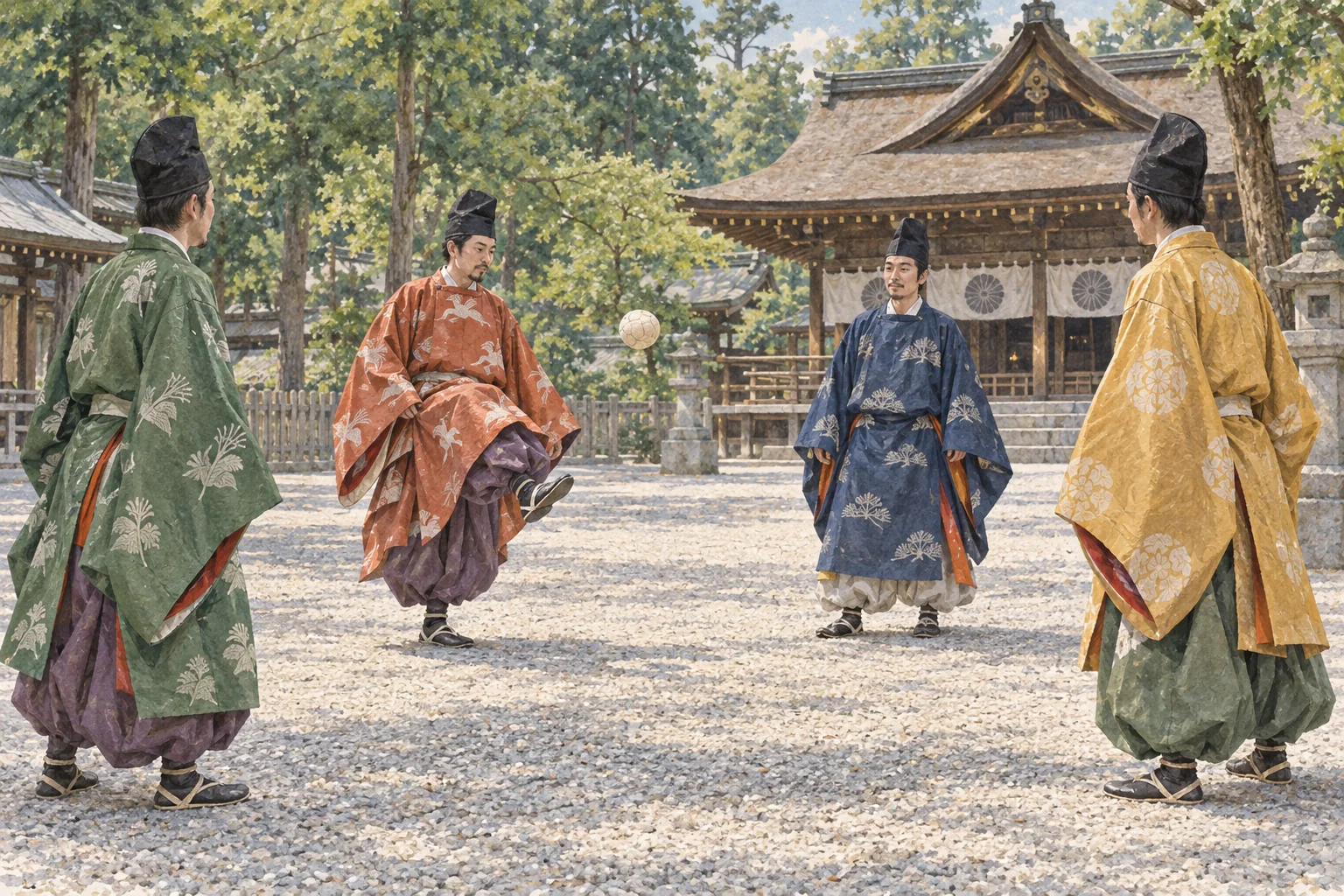
In kemari, players stand in a square marked by four trees and keep a light deerskin ball up with their feet. There are no teams, no goals and no winner: the aim is to keep it going, and to do so gracefully, passing so that the next player can receive it easily. It came from China, became a court pastime in the Heian period, and is still performed at a few shrines.
蹴鞠では、四隅に木を植えた区画に立ち、軽い鹿革の鞠を足で蹴り上げ続けます。組に分かれることも、得点も、勝者もありません。目的は続けることと、美しく続けることです。次の人が受けやすいように蹴るのが要点です。中国から伝わり、平安時代に宮廷の遊びとなり、今も一部の神社で奉納されています。
As a short speech
A full paragraph you can read aloud
Kemari is one of the oldest ball games in Japan and one of the few competitive-looking activities with no competition in it at all. Eight players stand in a square marked at the corners by four trees, wearing court dress and special shoes, and keep a hollow deerskin ball in the air with the instep of the foot. There are no sides and no score.
Success is measured by how long the ball stays up and by how well each player passes, which means putting it where the next person can take it comfortably, at a height they can handle. Showing off by making a difficult kick is considered a failure of manners, because it makes the next kick harder for someone else.
The game came from China, was played at the Heian court, spread to the warrior class, and nearly died out in the modern period. A preservation society keeps it going, and you can watch it performed at shrines in Kyoto and Nara on set days.
蹴鞠は日本でもっとも古い球技の一つで、競技に見えてまったく競わない、数少ない営みの一つです。八人が、四隅に木を植えた区画に立ちます。装束と専用の靴を着け、中が空洞の鹿革の鞠を足の甲で蹴り上げ続けます。
組もなく、点も数えません。よしあしを決めるのは、どれだけ長く続いたかと、一人一人の渡し方です。次の人が楽に受けられる場所へ、扱える高さで上げること。難しい蹴り方をして見せるのは、作法として失敗とされます。
次の一蹴りを人に難しくしてしまうからです。この遊びは中国から伝わり、平安の宮廷で行われ、武家にも広まり、近代に入って絶えかけました。保存の会が伝えており、京都や奈良の神社で、日を決めて奉納されるものを見ることができます。
Questions people actually ask
And how to answer them.
So nobody wins?
Nobody. There is no score and no opposing side. Participants will tell you the count of consecutive kicks afterwards, and a high count is a shared achievement rather than an individual one.
ありません。点も、相手方もありません。終わったあとに続いた数を言い合うことはありますが、それは誰か一人のものではなく、その場の全員のものとされます。
Is it related to soccer?
Only distantly, through a shared Chinese ancestor. In spirit it is closer to friends standing in a circle and keeping a ball in the air, like hacky sack.
遠い関係にとどまります。中国に共通の祖先があるという程度です。気分としては、輪になってボールを落とさずに蹴り続ける遊びに近いものです。
Where can I see it?
Shimogamo Shrine and Shiramine Shrine in Kyoto and Tanzan Shrine in Nara hold performances on fixed days. The costumes are as much of the attraction as the play.
京都の下鴨神社や白峯神宮、奈良の談山神社が日を決めて奉納しています。見どころは、蹴鞠そのものと同じくらい装束にもあります。
Phrases you can use
- The aim is not to let it drop.落とさないことが目的です。
- There are no teams and no score.組も点数もありません。
- The ball is made of deerskin.鞠は鹿革でできています。
- Pass it so the next person can take it.次の人が受けやすいように蹴ります。
- Four trees mark the corners.四隅に木が植えられています。
Words you need
- court ball game蹴鞠
- deerskin ball鞠
- instep of the foot足の甲
- court dress装束
- consecutive kicks続いた回数
Watch
From YouTubeBackground (Japanese)
蹴鞠は中国から伝わり、平安時代に貴族の遊びとして広まりました。鹿革を縫い合わせた中空の鞠を、足の甲で蹴り上げて続けます。四隅に松、桜、柳、楓を植えた区画で行うのが正式とされ、人数は八人が基本です。勝敗を決めず、長く続けること、次の人が受けやすい鞠を上げることを重んじます。明治以降に途絶えかけましたが保存団体によって伝えられ、下鴨神社や談山神社などで、日を決めて奉納が行われています。